New Jersey towns have a particular sensitivity to change. In a state where blocks can shift character over the course of a few years — where a waterfront that once felt forgotten becomes something people travel to, where a downtown that seemed stuck suddenly generates new restaurants and weekend foot traffic — residents pay attention to what’s being built. They have opinions before the ribbon is cut. Sometimes they have very strong ones.
This is the environment every new development enters before its doors open. Not a blank slate where a great project will speak for itself, but a community that’s already forming impressions from what little it can see.
The Building Has to Explain Its Relationship to the Street
A new building in Jersey City or Hoboken or Long Branch isn’t only evaluated as a structure. It’s evaluated in terms of what it does for — or to — the neighborhood around it. Will it activate the street or turn a blank wall toward it? Will it bring foot traffic that benefits nearby businesses or create a sealed environment that ignores the sidewalk? Does it feel like something that belongs here, or something that landed here?
These are the questions that generate the comments at planning meetings, the skeptical posts from local accounts, the cautious enthusiasm in neighborhood newsletters. Developers who understand this don’t wait for construction to finish before answering them. They start building the case earlier.
Parking, walkability, the relationship to nearby restaurants and shops, how the project connects to the waterfront or the transit corridor, whether the public spaces feel genuinely accessible — all of these shape local sentiment before anyone has set foot inside.
Plans Alone Don’t Tell the Story
A planning document doesn’t help most people picture a finished space. Neither does a floor plan, a single exterior elevation, or a paragraph in a press release about “luxury amenities” and “modern finishes.”
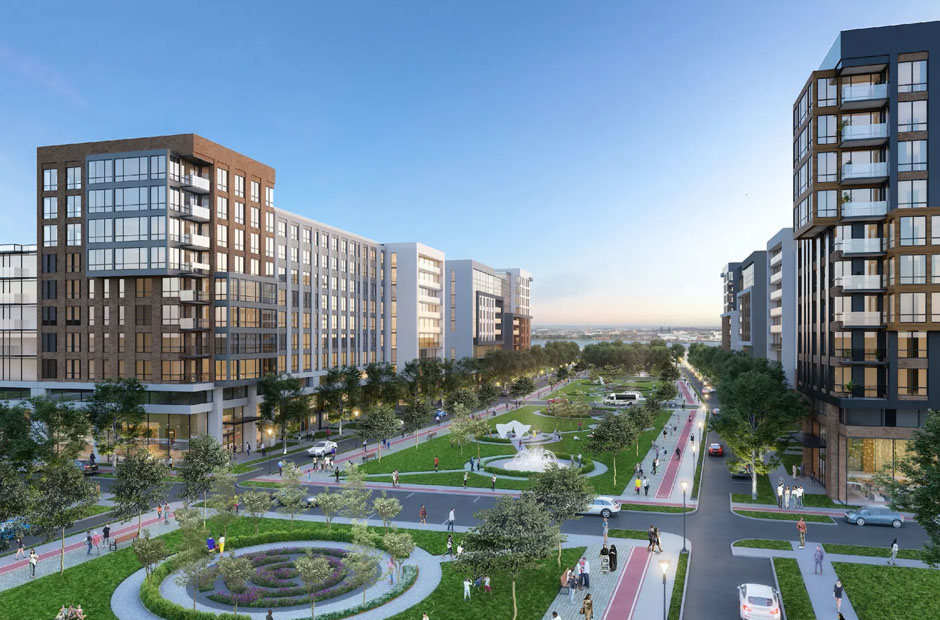
For projects still under construction, a simple announcement rarely tells the whole story. Tools such as drawings, neighborhood context images, model views, and architectural visualization animation can help show how people may arrive, move through, and experience a future space before the doors open. Seeing how guests might approach a hotel lobby, how retail connects to the street, how a rooftop relates to the surrounding skyline — this kind of storytelling closes the gap between abstract and understandable in a way that text and floor plans can’t.
The community’s first question is usually not “how many units?” It’s “what will it be like to walk past this every day?” That question deserves a more direct answer.
Start With Experience, Not Square Footage
The New Jersey places that become part of local life — the restaurants people recommend without being asked, the hotels that generate weekend trips, the mixed-use buildings that seem to have always been there — are remembered as experiences. The light in the dining room. The way the bar opens toward the water. The lobby that feels immediately familiar and a little surprising at the same time.
None of that lives in a specification sheet. A future development that leads with experience over square footage gives people something to imagine. They can project themselves into the space — picture the morning coffee in the courtyard, the dinner with friends, the afternoon in the public garden — in a way that technical information doesn’t enable.
For hospitality and retail projects especially, this matters enormously. Whether someone is going to drive to Long Branch for a new restaurant, or book a staycation at a boutique hotel in Asbury Park, or consider an apartment in a new Jersey City building, depends on whether they can picture the experience being worth their time. The developments that communicate that clearly before opening have a head start.
Making Change Feel Less Abstract
When a site has been vacant for years, or a building has sat derelict in a neighborhood, or an old mill is being converted, the change it represents is significant — but the finished result is genuinely hard for residents to visualize. This is when project storytelling matters most, and when developers who put in the work to explain it clearly earn the benefit of the doubt.
The clearest project stories often come from collaboration between architects, developers, designers, local stakeholders, and visual partners such as https://archicgi.com/, especially when a future building needs to be understood long before it can be visited. Sketches, neighborhood reference images, context visuals showing how the building relates to adjacent streets, walkthroughs, and interviews with the design team all help make an abstract project feel legible. The community wants to know what they’re getting. Giving them an honest answer before they have to ask reduces friction and builds goodwill.
Generic Luxury Doesn’t Land Here
“Modern.” “Luxury.” “Elevated.” These words appear in development announcements from Jersey City to Red Bank to Cape May, and they’ve become largely meaningless to readers who’ve seen them applied to projects that didn’t deliver.
New Jersey audiences respond better to specificity. What kind of restaurant is it? What does the chef cook? Where are the materials sourced? Is the hotel going to host local events or operate as its own closed world? Does the residential development have any community retail, or is the ground floor a parking podium?
The projects that successfully become part of local life tend to be the ones that have been specific about what they’re offering and how it connects to the character of the place they’re entering. The Long Branch coverage that The Digest has done around waterfront development works because it talks about the corridor — the downtown, the beach access, the distance to the boardwalk, the kind of day someone would actually have there. The development story becomes a place story, and place stories are what readers here respond to.
Adaptive Reuse Needs Extra Clarity
When a developer takes on a historic building — a Jersey City rowhouse, an industrial structure in Newark, a boardwalk building at the Shore — the project carries expectations about what will be preserved and what will change. Residents often have feelings about those buildings that predate the development announcement by years.
Clarity is especially important in these cases. Showing what’s being kept, what’s being restored, and what’s being added — with enough visual specificity to make the distinction legible — helps communities process change as something considered rather than something imposed. The projects that manage this communication well tend to generate interest rather than opposition, even when the changes are significant.
The First Visit Is Usually Online
By the time someone walks through a new space in New Jersey, they’ve almost certainly already formed an opinion of it. They read something in The Digest or a local newsletter. They saw a post on Instagram from someone who caught it during a preview. They noticed a sign on the construction fence and looked it up.
That first digital encounter sets expectations that the physical experience either fulfills or doesn’t. Developments that invest in telling their story clearly before opening — through local media, social platforms, neighborhood channels, and their own communications — arrive at opening with an audience that’s already curious, rather than one that has no idea what they’re walking into.
The strongest New Jersey developments understand that becoming part of a neighborhood is a process that starts before the doors open. It starts with an honest explanation of what kind of place this is trying to become, and why that place belongs here.