Choosing tiles for your home isn’t just about matching colors to your couch. Every room fights different battles. Bathrooms deal with constant moisture. Kitchens deal with grease and heat. Get the wrong tile in the wrong spot and you’ll be redoing the work within a few years.
Global ceramic tile production hit 14.95 billion square meters in 2024, yet worldwide consumption actually dropped by roughly 6.8 percent compared to the year before, a sign that buyers are getting pickier and demanding better quality per tile rather than just buying more. If you want to shop smart, start at one of the best tile shops melbourne has to offer, and use this room-by-room breakdown to make the right call every time.
Bathroom Floors Need to Survive Water, Not Just Look Nice
Water pools on bathroom floors constantly. Slip resistance isn’t optional here, it’s a safety issue. Look for tiles rated R10 or higher on the slip scale, especially near the shower entry. Small format tiles, like mosaics under 100mm, are often chosen for shower floors because the extra grout lines add grip that large-format tiles can’t match, even with a textured finish.
Matte finishes generally outperform glossy ones in wet areas. Glossy tiles look luxurious in photos, but they turn dangerously slick the moment water hits them. If you love the glossy look, save it for the walls and use a textured or honed finish on the floor instead.
Kitchens Care More About Stains Than Slip
Splashbacks and countertops in kitchens deal with oil, sauce splatters, and heat from pans. Porcelain wins here almost every time because its low water absorption, generally under 0.5 percent, means stains can’t soak deep into the surface. Ceramic can work for kitchen walls too, since it’s less exposed to foot traffic, but avoid it for kitchen floors if you cook often, since it scratches more easily under dropped pots and dragged chairs.
- Choose porcelain over ceramic for any kitchen floor used often.
- Pick a matte or textured finish for bathroom floors, not glossy.
- Use larger tiles in small rooms to reduce grout lines and open up the space.
- Use darker grout in high-traffic zones, since it hides dirt better.
- Save natural stone for low-moisture walls unless you’ll seal it regularly.
Living Rooms and Hallways: Durability Over Everything
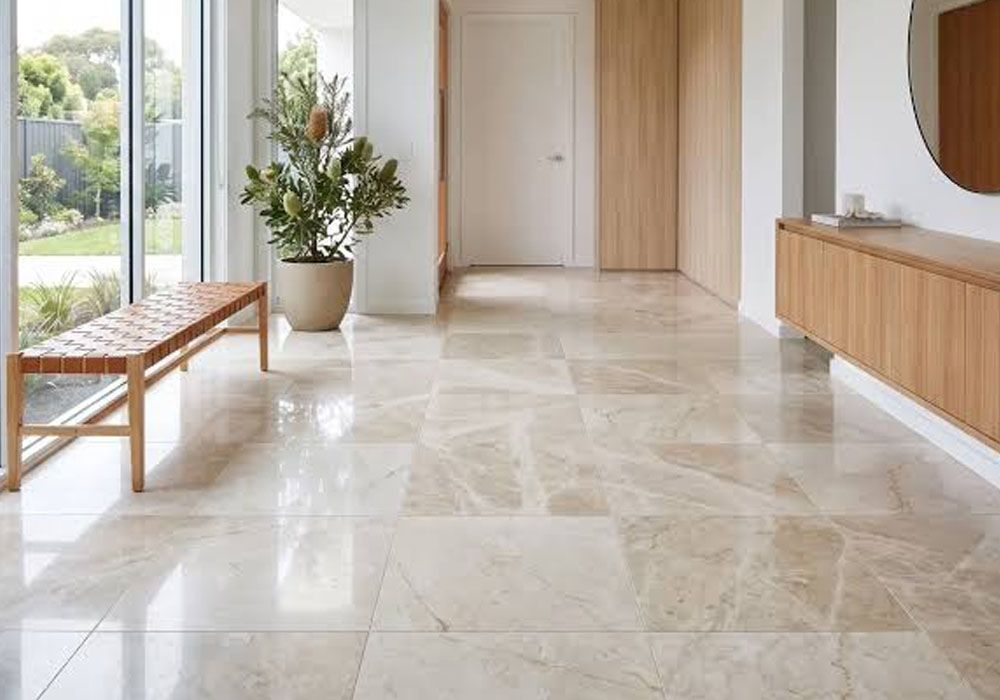
These spaces see the most daily footsteps in the entire house. A PEI rating of 3 or above is the minimum you should accept for a hallway or living room floor, and honestly, PEI 4 is safer if you have kids, pets, or both running through constantly. Thickness matters too. Anything under 8mm tends to flex slightly under heavy furniture, which can eventually crack the glaze even if the tile core stays intact.
Comparing Popular Home Zones and What Actually Works
| Room | Recommended Tile | Finish | Watch Out For |
|---|---|---|---|
| Bathroom Floor | Porcelain or mosaic | Matte or textured | Glossy finishes are too slippery |
| Kitchen Floor | Porcelain | Matte or satin | Ceramic scratches under heavy use |
| Living Room | Large-format porcelain | Matte or lightly polished | Thin tiles crack under furniture |
| Outdoor Patio | Frost-resistant porcelain | Textured, slip-rated | Standard ceramic cracks in frost |
| Feature Wall | Natural stone or mosaic | Any | Stone needs regular sealing |
Why Melbourne’s Climate Changes the Answer
Melbourne swings from scorching summer days to frosty winter mornings, sometimes within the same week. That range matters for anything installed outdoors, like a patio or an alfresco kitchen. Standard ceramic can crack when trapped moisture freezes and expands inside the tile’s pores. Frost-resistant porcelain, with its near-zero water absorption, handles those temperature swings without cracking, which is exactly why most outdoor ranges sold by serious Melbourne suppliers are porcelain-based rather than ceramic.
If you’re tiling an outdoor space, always confirm with the shop that the specific range you’re buying is rated for exterior use. Not every porcelain tile is automatically outdoor-safe, since the slip rating and thickness also need to meet exterior standards, not just the water absorption number.