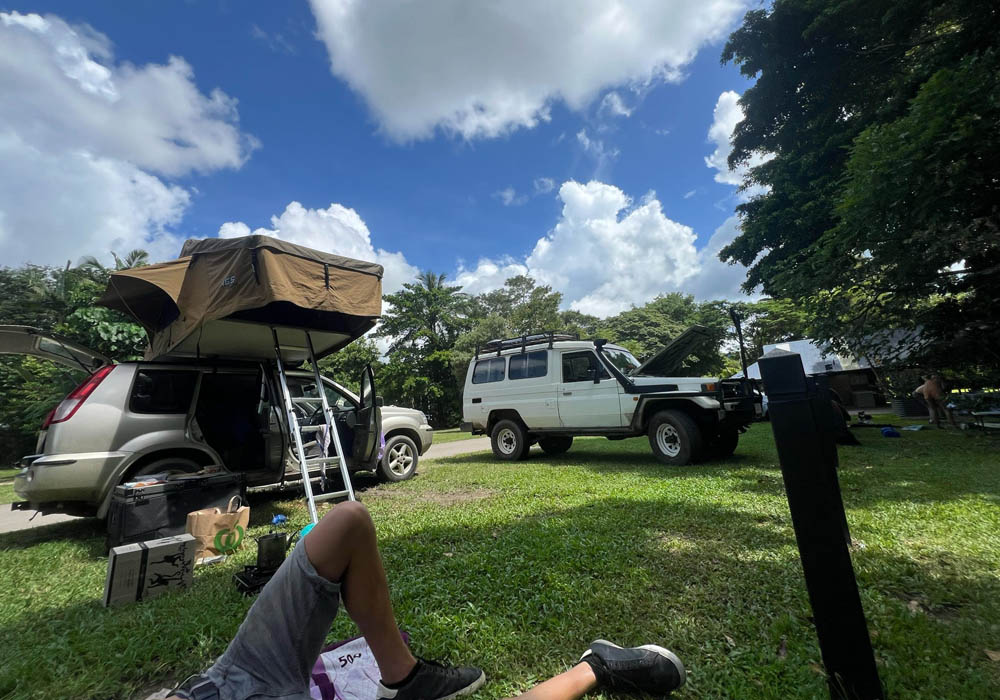
Australian outback exploration has never been more popular. Data from the Federal Chamber of Automotive Industries reveals that Australian new-car sales hit a record 1.24 million in 2025. This surge is heavily dominated by 4×4 utes like the Ford Ranger, Toyota HiLux, and Isuzu D-Max. However, rolling straight off the showroom floor and into the Simpson Desert is rarely a good idea. Preparing a vehicle for extended backcountry travel requires careful planning, strict adherence to weight regulations, and targeted mechanical upgrades to ensure reliability.
Understanding Payload and Towing Limits
Before investing in any modifications, drivers must understand their vehicle’s weight limits. Roadside weight and safety checks conducted by Australian police have previously revealed that up to 90 percent of towing combinations operate overweight on at least one metric. Fines for exceeding a vehicle’s Gross Vehicle Mass (GVM) or Aggregate Trailer Mass (ATM) can range from a $447 infringement up to more than $10,000 for severe overloading offences.
A common trap for overland travellers is the tow ball download. Because this weight is subtracted from the vehicle’s payload, popular dual-cab utes towing off-road campers near their 3,500kg limit can be left with less than 300kg of usable payload. That remaining allowance must cover passengers, fuel, recovery gear, and food. For those hauling heavier loads, it is worth noting that towing combinations exceeding a Gross Combination Mass of 4.5 tonnes automatically fall under the jurisdiction of the National Heavy Vehicle Regulator, subjecting the driver to much stricter mass management obligations.
Essential Mechanical Upgrades
Factory suspension systems are designed for unladen comfort on sealed roads. They are rarely engineered to handle the relentless punishment of corrugated tracks while carrying heavy loads. The newly developed Hydraulic Ride and Damping Assist System (HRDAS) is one Australian engineering innovation designed to resolve the harsh unladen ride quality often caused by heavy-duty aftermarket suspension setups.
If you plan to tackle remote routes, certain mechanical standards are absolutely mandatory. According to the Western Australian Government, safe hauling on unsealed remote roads requires four-wheel-drive tyres with high clearance, upgraded suspension that can withstand corrugations, and placing the majority of trailer weight directly over the axles to lower the centre of gravity and maintain stability. Reviewing official safety advice before your departure is highly recommended to ensure compliance. Upgrading your suspension is not just about clearance, it is a critical safety requirement to prevent rollovers.
To legally carry more weight, many owners turn to aftermarket GVM upgrades from brands like Terrain Tamer, Lovells Automotive, and Ironman 4×4. Interestingly, manufacturers are now responding to this demand directly. In mid-2026, Toyota introduced a factory-fitted GVM upgrade for specific new-generation HiLux models. This allows an increased total payload of up to 1,525kg without the need for aftermarket engineering certification.
Powering Your Off-Grid Adventure
Extended remote travel requires a dependable power source. Running fridges, lighting, and communication equipment demands a robust dual-battery system. Browsing the latest automobile resources can help you understand the vast array of 12V accessories available to modern tourers, but powering them efficiently is the real challenge.
Upgrading to a modern lithium iron phosphate (LiFePO4) setup is now the industry standard for serious travellers. Australian manufacturers like Custom Lithium and Canogee engineer vehicle-specific lithium systems with integrated Battery Management Systems. These setups utilise technology trusted by local emergency services for reliable off-grid power.
Transitioning to a lithium-based power system provides several distinct advantages for overlanders:
- Weight Reduction: A modern lithium setup can reduce power system weight by up to 50 percent compared to traditional AGM setups, freeing up crucial payload capacity.
- Usable Capacity: Lithium batteries can be safely discharged to a much lower level than lead-acid equivalents, providing more usable amp-hours for your appliances.
- Faster Charging: These systems accept higher charge currents from alternators and solar panels, significantly reducing the time required to replenish your power reserves.
- Lifespan: LiFePO4 cells typically offer thousands of charge cycles, heavily outlasting standard deep-cycle batteries in harsh conditions.
Whether you are driving a heavy-duty RAM 2500 or the mid-2026 Toyota LandCruiser 300 Series Hybrid, successfully exploring the Australian outback comes down to preparation. By respecting legal weight limits, upgrading your suspension to handle rough terrain, and investing in a reliable lithium power system, you can build a 4×4 setup capable of sustaining you safely on the most remote tracks.