
Understanding Legal Planning and Advocacy in Modern Family Protection
The decisions you make today will shape your family’s security for decades to come. Whether you are navigating the complexities of elder law, protecting the future of a loved one with disabilities, or simply ensuring your own wishes are respected, proactive preparation is the most powerful tool you have. Many people wait until a crisis occurs to address these matters, but by then, the legal system—rather than your own personal values—often dictates the outcome.
Legal Planning and Advocacy is more than just drafting documents; it is a comprehensive strategy for maintaining autonomy and protecting your legacy. It involves identifying your goals, choosing trusted individuals to act on your behalf, and understanding how to navigate both private legal arrangements and public systems.
In this guide, we will explore the essential difference between legal counsel and lay advocacy, identify the critical documents every family needs, and discuss how to build a support network that safeguards your independence. If you or a loved one are facing the complexities of advocacy for serious injury claims, understanding these foundational principles is the first step toward reclaiming control and ensuring your voice remains central to every decision.
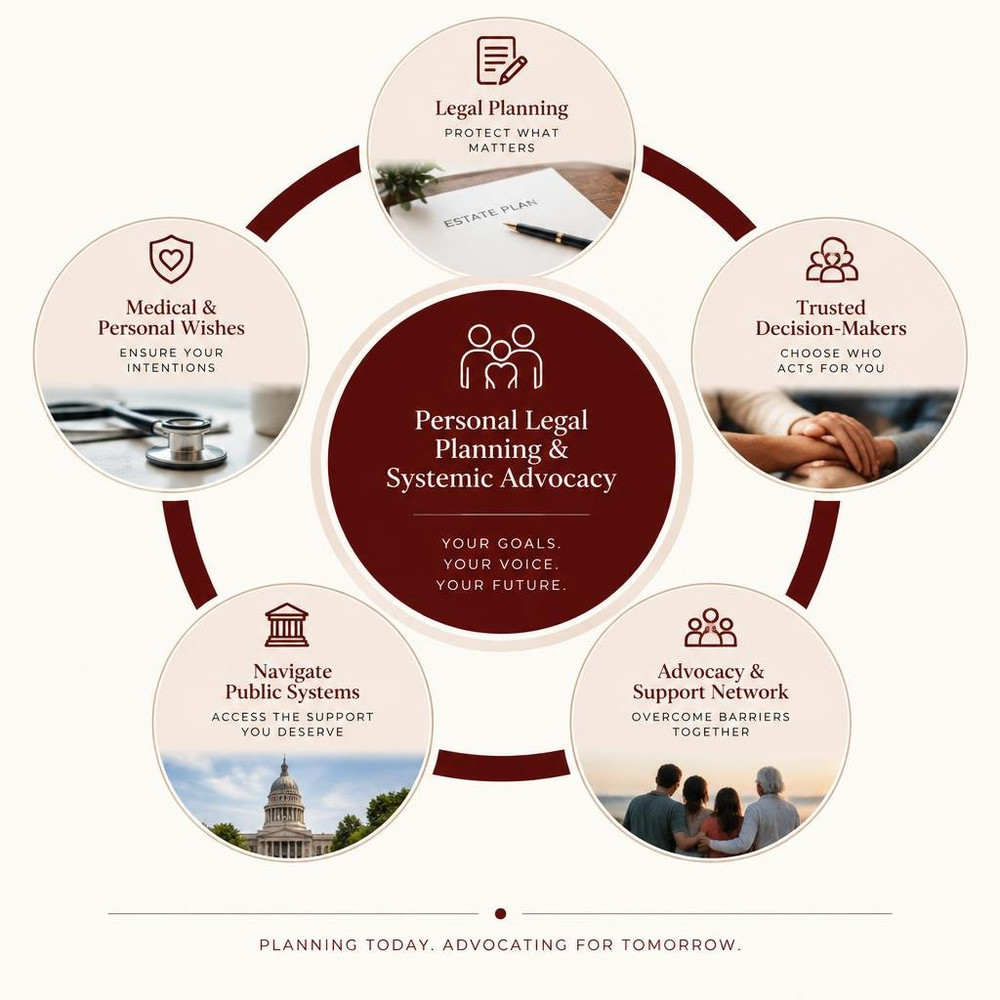
The distinction between legal planning and advocacy is often misunderstood. Legal planning is the proactive process of structuring your affairs—financial, medical, and personal—to reflect your intentions. Advocacy, by contrast, is the act of ensuring those intentions are honored, particularly when you are facing systemic barriers or physical limitations.
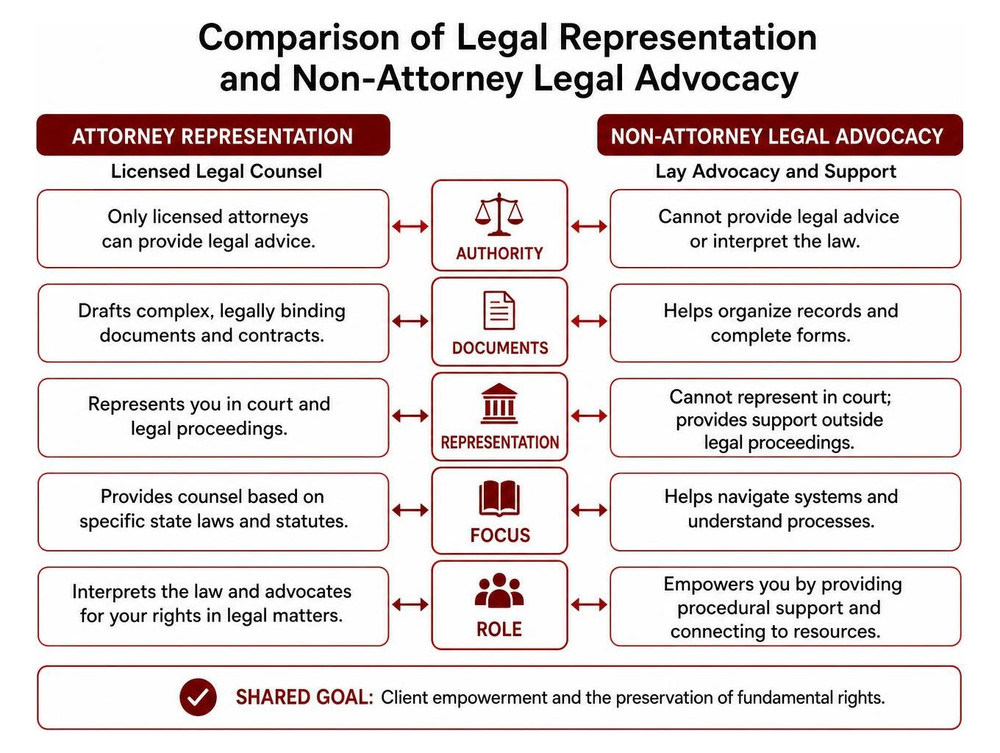
While the practice of law is restricted to licensed attorneys who provide specific legal advice and representation, legal advocacy is a broader field. It includes the work of social workers, community advocates, and family members who help individuals navigate complex bureaucracies, such as the Social Security Administration, healthcare systems, or housing authorities. Both paths aim for the same result: client empowerment and the preservation of fundamental rights.
Legal Counsel Versus Lay Legal Advocacy
It is vital to distinguish between a licensed attorney and a lay legal advocate. A licensed attorney is the only professional authorized to provide legal advice, draft complex binding contracts, and represent you in a court of law. Their role is to interpret statutes, provide counsel based on specific state laws, and serve as your advocate in litigation.
Lay legal advocates, however, provide essential procedural support. They can help you organize your medical history, assist in filling out forms for government benefits, or accompany you to meetings to ensure you understand the information being presented. They cannot provide legal advice, but they are often the bridge that makes the legal system accessible to those who might otherwise be overwhelmed.
Comparing Attorney Representation and Non-Attorney Legal Advocacy
Essential Instruments for Proactive Family Estate and Healthcare Planning
Effective planning requires a suite of documents that work in harmony. Without these, you risk leaving your affairs to “default” outcomes, which are often dictated by state statutes that may not align with your personal wishes. Comprehensive estate planning and trust administration ensures that your assets are managed by people you trust, rather than court-appointed strangers.
Protecting Assets and Healthcare Wishes Across Life Stages
The foundation of any plan includes a Will, which governs the distribution of assets after death, and a Revocable Living Trust, which can bypass the costly and public probate process. Equally important are your healthcare documents. A Durable Power of Attorney allows a designated agent to handle your financial affairs if you become incapacitated, while a Healthcare Surrogate Designation ensures that the person you choose—not the state—makes medical decisions on your behalf.
In our digital age, we must also account for digital assets. From social media accounts to cryptocurrency and domain names, these assets should be clearly addressed in your estate plan. By naming a digital executor, you ensure that your online legacy is managed according to your values.
Special Considerations for Single Adults and Non-Traditional Families
For single adults, the need for intentional planning is even more acute. Without a spouse or children, state law often defaults to distant relatives in the event of incapacity or death. By creating a personalized plan, you can designate “chosen family”—friends or partners—to inherit your assets and make your medical decisions. You can also establish pet trusts to ensure your companions are cared for by a trusted neighbor or friend, preventing them from entering the shelter system.
Tailored Strategies for Vulnerable Populations and Specialized Needs

Vulnerable populations, including older adults and those with disabilities, require specialized attention. The legal landscape for these individuals is often defined by the need to preserve eligibility for government benefits like Medicaid or SSI.
Integrating Legal Planning and Advocacy for Vulnerable Individuals
For families of individuals with disabilities, a Special Needs Trust is an indispensable tool. It allows for the management of assets that can improve the quality of life for a loved one without disqualifying them from essential public assistance programs. Similarly, for older adults, elder law advocacy focuses on protecting against financial exploitation, ensuring access to quality housing, and navigating the nuances of long-term care insurance.
Navigating Systemic Complexity and Injury Recovery
When a family faces a life-altering event such as a catastrophic injury, the legal and financial burden can be immense. Beyond the immediate medical needs, there is a long-term requirement for financial recovery and care management. Professional advocacy in these instances ensures that you are not just reacting to the crisis, but planning for the long-term stability of the injured individual.
Resolving Disputes and Driving Reform Through Strategic Advocacy
Family disputes often arise from a lack of clarity. When wishes are not documented, or when communication is poor, the resulting conflict can tear families apart.

The Role of Public Policy in Legal Planning and Advocacy
Individual planning is only one side of the coin; systemic change is the other. Many legal advocates work at the intersection of private planning and public policy. By engaging in legislative reform and impact litigation, these professionals help shape the laws that protect the rights of seniors and individuals with disabilities. Whether it is advocating for better accessibility in housing or pushing for clearer statutes regarding guardianship, systemic advocacy ensures that the legal environment becomes more equitable for everyone.
Best Practices for Selecting Qualified Legal Professionals
When choosing a professional to assist with your planning, consider these vetting criteria:
- Specialization: Does the attorney focus specifically on your area of need (e.g., elder law, special needs planning, or estate administration)?
- Ethical Standards: Are they recognized by reputable legal organizations or bar associations?
- Transparency: Do they clearly explain their fee structure and the scope of their services?
- Conflict-of-Interest Checks: Do they have a robust system to ensure they have no prior relationships that could compromise your case?
- Communication Style: Do they prioritize plain-language explanations over complex legal jargon?
Frequently Asked Questions About Legal Planning and Advocacy
How does comprehensive legal planning prevent costly court-ordered guardianship?
By establishing a Durable Power of Attorney and a Healthcare Proxy, you appoint your own decision-makers before a crisis occurs. This proactive step removes the need for a court to intervene and appoint a guardian, which is often an expensive, public, and emotionally taxing process.
What is the difference between a legal advocate and a licensed attorney?
A licensed attorney provides legal advice and representation in court. A legal advocate—often a layperson—provides procedural guidance, emotional support, and assistance with administrative tasks, helping you navigate systems without providing formal legal counsel.
How often should families review and update their legal documents?
We recommend a review every three to five years, or following any major life event, such as a marriage, divorce, the birth of a child, a significant change in assets, or changes in state or federal tax laws.
Conclusion
Legal planning and advocacy represent a commitment to your future and the well-being of your family. By moving from a reactive stance to a proactive one, you secure your autonomy and ensure that your legacy is preserved. Whether you are seeking to protect your assets through estate planning and trust administration or require specialized advocacy for serious injury claims, the right support system makes all the difference. Start the conversation today—your future self, and your family, will thank you.