Key Takeaways
- Vehicle layouts should be built around the tasks crews perform most often.
- High-use equipment should be accessible without having to search through multiple compartments.
- Lighting should improve awareness without creating unnecessary nighttime glare.
- Storage, mounts, and drawers should keep equipment secure during travel and at the scene.
- Electrical systems need clear labeling, protected wiring, and capacity for future changes.
- Crews should test a layout before it is finalized and inspect it regularly afterward.
Emergency vehicles are more than transportation. They are mobile workspaces that must support communication, patient care, traffic control, equipment access, and crew safety under difficult conditions. Agencies planning a new build or updating an existing unit can discover more about emergency vehicle configurations while keeping the central question in view: Does the layout help responders complete their real work safely and quickly?
The strongest designs are based on everyday operational needs rather than a long list of accessories. A clear layout, thoughtful lighting, secure storage, dependable power, and routine inspections can reduce confusion when crews are working in traffic, darkness, poor weather, or other demanding environments.
Why Vehicle Layout Matters During Emergency Calls
A poorly organized vehicle can add avoidable steps to a time-sensitive response. If a paramedic needs to open several compartments to locate patient-care supplies, or a firefighter must move heavy gear to reach traffic-control equipment, the layout is working against the crew. Good placement supports predictable movements, helps limit distractions, and makes it easier to return equipment to the correct location after a call.
Consider a nighttime medical response on a roadside shoulder. The crew may need gloves, a trauma bag, lighting, communications equipment, and warning devices within moments of arrival. Keeping those items in consistent, reachable locations helps the team establish a safer work area before attention shifts fully to patient care.
Start With a Task-Based Vehicle Assessment
Before selecting cabinets, consoles, lights, or electronics, map how the vehicle is actually used. Include drivers, officers, paramedics, technicians, supervisors, and maintenance staff in the review. Their day-to-day experience often reveals access problems that are not obvious on a drawing.
- List the department’s most common call types and operating environments.
- Identify the tools and supplies used first at each type of incident.
- Record where those items are currently stored and how they are retrieved.
- Note tasks that become difficult when users wear gloves, turnout gear, body armor, or other protective equipment.
- Document delays, awkward lifting, obstructed sightlines, and recurring sources of confusion.
Build Clear Work Zones
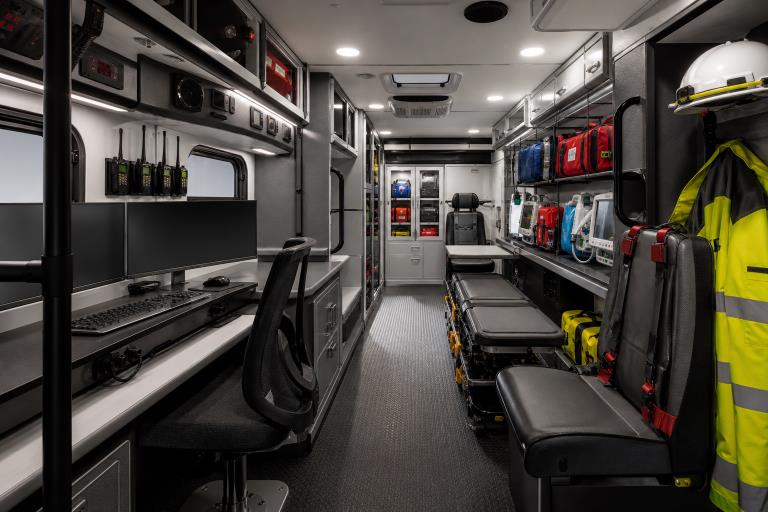
Dividing the vehicle into functional zones can make training, restocking, and on-scene work more consistent. The exact arrangement will vary by vehicle type, but each zone should have a clear purpose.
- Command zone: radios, mobile computers, navigation tools, maps, and communication controls.
- Medical zone: patient-care bags, trauma supplies, gloves, and other immediate-response equipment.
- Safety zone: high-visibility clothing, cones, flares where authorized, warning devices, and traffic-control supplies.
- Utility zone: tools, cables, battery-powered equipment, and recovery gear.
- Secure zone: controlled-access items that should not remain loose or accessible in the passenger area.
Improve Visibility Without Creating Glare
More light is not automatically better light. Warning lights, scene lighting, reflective markings, flash patterns, and vehicle position should work together to alert approaching drivers while allowing responders to see one another and nearby hazards. U.S. Fire Administration guidance on emergency vehicle lighting and visibility at roadway incidents notes that lower nighttime light intensity and modest steady illumination around a vehicle can improve responder visibility.
Lighting should be evaluated in daylight, darkness, rain, and locations with reflective signs or barriers. Aim scene lights where work occurs, avoid directing intense light into oncoming traffic, and confirm that rear-facing warning systems provide useful direction without producing visual clutter. Clean lenses and visible reflective markings are also part of the safety plan, not merely appearance details.
Keep Equipment Secure and Easy to Reach
Loose equipment can shift during hard braking, turns, or collisions. Use appropriate brackets, trays, dividers, drawers, and locking compartments to hold equipment in place. Frequently used gear belongs close to the access point where it is needed, while lower-priority or infrequently used items can be stored farther away.
Access must also account for real-world conditions. A compartment that is convenient for an ungloved person in a parking bay may be difficult for a responder wearing bulky protective gear to use on uneven ground. Test doors, drawer latches, mounts, and compartment lighting on rough roads and during realistic drills.
Plan for Safe Power, Wiring, and Communications
Every added light, radio, camera, computer, charger, or inverter affects the electrical plan. Label circuits and switches clearly, protect wiring from heat, moisture, sharp edges, and movement, and leave practical access for future maintenance. Critical vehicle functions should not be compromised by poorly planned accessory loads.
Communication tools should support the mission rather than distract from it. Mount screens where drivers can maintain focus on the roadway, simplify controls in high-pressure situations, and reduce duplicate alerts. Include a backup communication method if a network, device, or power source fails.
Design for Roadside and Nighttime Hazards
Roadway incidents introduce moving traffic, low visibility, distracted drivers, weather, smoke, and unstable footing. Vehicle placement, cones, arrow boards, warning lights, and high-visibility clothing should be planned as one scene-management system. The national standards for traffic control devices provide an important reference for agencies coordinating temporary traffic control with road authorities.
Match the Layout to the Vehicle’s Role
- Law enforcement vehicles: often prioritize secure storage, communications, visibility, and safe passenger transport.
- Ambulances: require organized patient-care access, infection-control considerations, and room for safe crew movement.
- Fire and rescue units: need dependable access to protective equipment, tools, breathing apparatus, and scene-support gear.
- Emergency management vehicles: may emphasize workstations, mapping tools, charging capacity, and extended field storage.
Test, Inspect, and Improve the Layout
Before final installation, ask end users to complete common tasks in daylight and at night. Check access from both sides and the rear, observe how users move while wearing normal work gear, and record any blocked compartments, awkward reaches, or confusing controls. Correcting these issues before deployment is simpler than modifying a completed build.
After deployment, use a weekly or monthly inspection routine. Test lights, sirens, radios, cameras, charging ports, locks, mounts, drawers, and wiring protection. Remove expired or duplicate supplies, keep safety markings clean, and document repairs or recurring defects to keep the vehicle ready for service.
Conclusion
A safer emergency vehicle is built around real work. Agencies that define the mission, organize equipment by use, control glare, secure gear, plan electrical systems, and test designs with crews can create work zones that are easier to use under pressure. Practical design and consistent maintenance remain the foundation of a vehicle that supports responders in the most demanding conditions.