Comparing Tankless vs. Traditional Storage Systems
When considering a water heater upgrade, understanding the fundamental differences between tankless and traditional storage systems is crucial. Traditional tank models operate by continuously heating and storing a large volume of water, ready for use. This method, while familiar, inherently leads to “standby loss” – energy expended to keep water hot even when no one is using it. Tankless water heaters, in contrast, activate only when a hot water tap is opened, heating water on demand as it flows through the unit. This on-demand approach is the cornerstone of their efficiency.
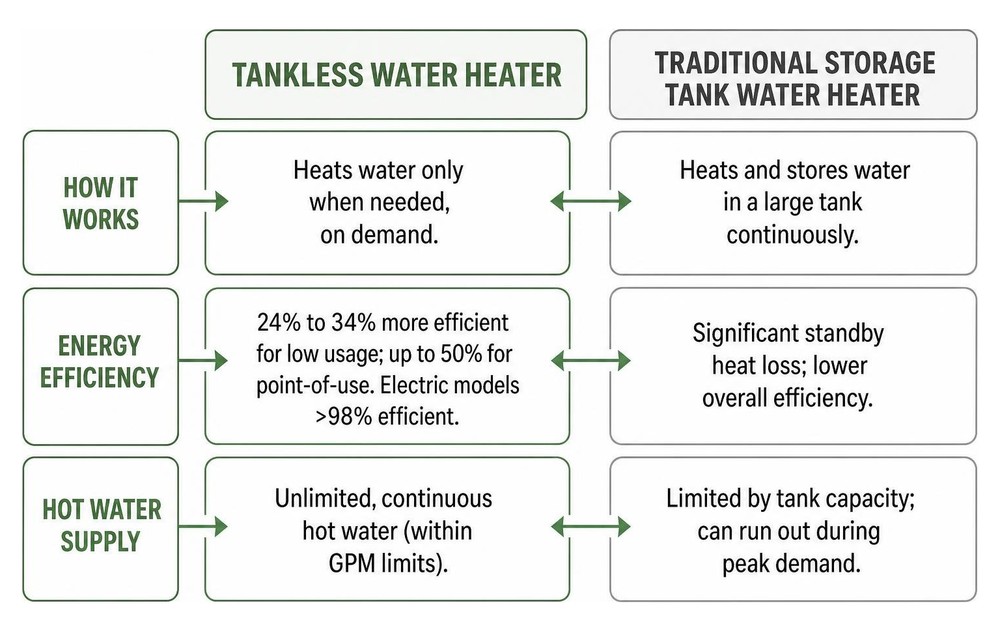
Let’s delve into a direct comparison of these two primary types:
| Feature | Tankless Water Heater | Traditional Storage Tank Water Heater |
|---|---|---|
| How it Works | Heats water only when needed, on demand. | Heats and stores water in a large tank continuously. |
| Energy Efficiency | 24% to 34% more efficient for low usage; up to 50% for point-of-use. Electric models >98% efficient. | Significant standby heat loss; lower overall efficiency. |
| Hot Water Supply | Unlimited, continuous hot water (within GPM limits). | Limited by tank capacity; can run out during peak demand. |
| Lifespan | 20+ years | 10-15 years |
| Physical Footprint | Compact, wall-mounted, saves significant space. | Large, bulky, takes up floor space. |
| Standby Loss | Virtually none. | Constant, as water is always kept hot. |
| Simultaneous Demand | Can be challenged by multiple high-flow fixtures if not properly sized; delivers a specific GPM. | Can run out of hot water if demand exceeds tank capacity. |
| Temperature Consistency | Generally consistent once flow is established, but can experience “cold water sandwich.” | Consistent until tank depletes, then cold. |
| Installation Cost | Higher upfront cost due to complexity and potential utility upgrades. | Generally lower initial installation cost. |
| Operating Cost | Lower annual energy costs, potentially saving $70-$80 annually. | Higher annual energy costs due to standby loss. |
Tankless units are significantly more energy-efficient, especially in homes with lower hot water demand (under 41 gallons per day), where they can be 24% to 34% more efficient than tank heaters. Even for homes with higher usage, efficiency gains are notable. This efficiency translates into potential annual energy savings, contributing to a quicker return on investment over their extended lifespan of 20 years or more, which is nearly double that of traditional tank models.
While traditional tanks offer a simpler, often lower upfront installation, their continuous operation and limited hot water supply can be drawbacks for modern households. The decision between the two often boils down to balancing initial investment against long-term operational savings, space considerations, and the desire for unlimited hot water.
Key Factors in Water Heater Installation Costs and Planning
The decision to install a tankless water heater comes with a unique set of considerations, particularly regarding upfront costs and the planning process. While the long-term benefits in energy savings and lifespan are compelling, the initial investment is often higher than that for a traditional tank unit. Understanding the various factors that influence installation costs and planning can help homeowners budget effectively and avoid surprises.
Average tankless water heater installation costs typically range from $800 to $3,500. This can be up to three times more than the average installation cost for a tank-style model, which often falls around $900. These figures encompass not just the unit itself but also labor rates, potential plumbing and electrical upgrades, and the necessary permits.

When planning your project budget, it’s important to account for these variables. Labor rates can fluctuate based on location and the complexity of the installation. For instance, converting from a tank to a tankless system often requires modifications to gas lines, electrical wiring, and venting, which adds to the labor and material costs. Securing the proper permits from your local municipality is also a critical step, ensuring the installation meets safety codes and regulations.
On the brighter side, the government often incentivizes energy-efficient home improvements. For instance, a federal tax credit of 30% of the project cost, averaging around $600, may be available for qualifying Energy Star gas tankless water heaters. These incentives can significantly offset the initial investment, improving your overall return on investment (ROI) over the unit’s lifespan. We recommend researching current incentives in your area, as these programs can change.
Gas vs. Electric Water Heater Installation Requirements
The type of tankless water heater you choose—gas or electric—will profoundly impact its installation requirements and associated costs.
Gas Tankless Water Heaters:
- Gas Line: These units require a dedicated gas line that can supply sufficient BTU (British Thermal Unit) output. Existing gas lines may need to be upgraded to a larger diameter to meet the higher demand of a tankless unit, especially if converting from a traditional tank.
- Venting: Proper venting is critical for gas units to safely expel combustion byproducts.
- Non-condensing gas units typically require expensive stainless steel venting, which can add considerably to installation costs.
- Condensing gas units are more energy-efficient because they capture and utilize exhaust heat. This process also produces condensate, which needs to be drained. Their venting requirements are often less complex and costly than non-condensing models, sometimes allowing for PVC venting, making them a popular choice for efficiency and easier installation.
- Combustion Safety: Adequate combustion air must be available, and safety measures like backflow prevention and proper clearances must be observed.
Electric Tankless Water Heaters:
- Dedicated Circuits: Electric tankless units demand substantial electrical power, often requiring multiple dedicated high-amperage circuits (e.g., two 40-amp or 50-amp breakers).
- Amperage Capacity: Your home’s electrical panel must have sufficient amperage capacity to support these new circuits. An older or undersized electrical panel may necessitate an expensive upgrade, which can be a significant hidden cost.
- Wiring: Heavy-gauge wiring is required to handle the high electrical load safely.
Understanding these specific requirements is paramount. A professional plumber or HVAC technician can assess your home’s existing infrastructure and advise on the necessary upgrades for either gas or electric tankless models.
Preparing Your Home for Tankless Water Heater Installation
Beyond the utility connections, several other factors need to be considered when preparing your home for a tankless water heater:
- Groundwater Temperature: The temperature of the incoming cold water significantly impacts a tankless unit’s performance. In colder climates, where groundwater temperatures are lower, a unit needs to work harder to achieve the desired hot water temperature. This means you might need a larger, more powerful unit to maintain adequate flow rates, or accept a slightly lower GPM output.
- Peak Flow and Fixture Count: Accurately assessing your household’s peak hot water demand is crucial for sizing the unit correctly. Consider how many hot water fixtures (showers, sinks, dishwashers, washing machines) might be used simultaneously. Each fixture has a specific flow rate (e.g., a shower typically uses 2.5-3 GPM, a bathtub 4 GPM). The tankless unit’s maximum GPM output must meet or exceed your peak simultaneous demand to prevent inconsistent temperatures or inadequate hot water supply.
- Supply Lines and Pressure Relief: Your existing plumbing supply lines may need to be upgraded to handle the continuous flow and pressure generated by a tankless unit. Additionally, proper pressure relief valves are essential safety components that must be correctly installed and maintained.
- Spatial Constraints: While tankless units are space-saving, they still require a suitable location. This includes adequate clearance for ventilation (for gas models), access for maintenance, and proximity to gas, electrical, and water lines. The wall where the unit is mounted must also be structurally sound.
Careful planning and a thorough assessment by a qualified professional are essential to ensure your tankless water heater is installed safely, efficiently, and meets your household’s hot water needs.
Essential Maintenance and Water Heater Troubleshooting
Even the most advanced tankless water heaters require regular maintenance to ensure optimal performance, efficiency, and longevity. Neglecting these tasks can lead to common issues, reduced efficiency, and potentially costly repairs.
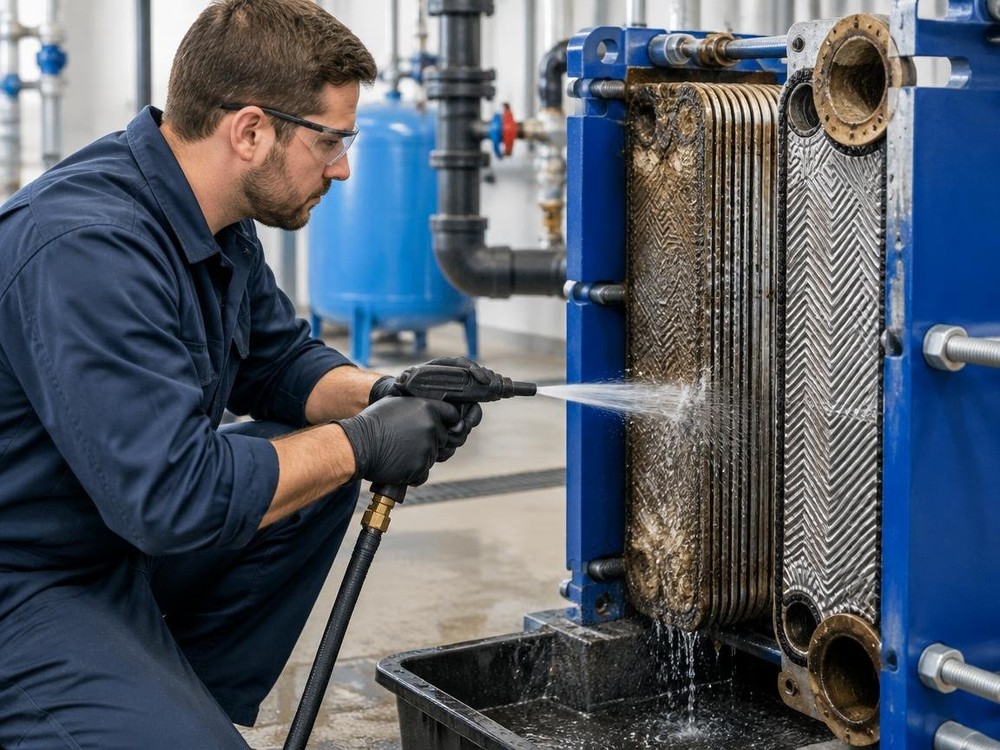
The most common issue encountered with tankless water heaters, particularly in areas with hard water, is mineral buildup or scaling. Hard water contains dissolved minerals like calcium and magnesium, which, when heated, precipitate out and form deposits on the heat exchanger. This scale acts as an insulator, reducing the unit’s ability to transfer heat efficiently and leading to higher energy consumption and decreased hot water output. If left unaddressed, severe scaling can damage the heat exchanger, leading to system failure.
To combat this, annual maintenance is crucial. This typically involves a process called descaling or flushing, where a professional technician circulates a vinegar solution or a specialized descaling agent through the heat exchanger. This dissolves the mineral deposits, restoring the unit’s efficiency. The annual cost for this professional maintenance generally ranges from $45 to $200. Many manufacturers require proof of annual maintenance to uphold their warranty. In addition to professional flushing, some units may benefit from monthly cleaning of an inline filter to catch sediment before it enters the system.
Beyond scaling, homeowners might encounter other troubleshooting scenarios. One common phenomenon unique to tankless systems is the “cold water sandwich.” This occurs when hot water is briefly turned off and then back on. The water that was sitting in the pipes between the tankless unit and the faucet cools down, while the unit takes a moment to reignite and heat the new incoming water. This results in a momentary burst of cold water before the hot water returns. While generally harmless, it can be an unexpected experience for new tankless users.
Another aspect of troubleshooting involves sensor calibration. Tankless units rely on sophisticated sensors to monitor water flow and temperature. If these sensors become dirty, faulty, or out of calibration, they can lead to inconsistent water temperatures, error codes, or the unit failing to activate. Regular professional checks include verifying sensor function to maintain optimal thermal efficiency.
For any complex issues or if you notice your unit displaying error codes, it’s always best to consult a qualified professional for water heater repair. Attempting DIY repairs on intricate systems like tankless water heaters can void warranties and potentially cause further damage or safety hazards. Proactive maintenance and prompt attention to any performance issues are key to enjoying the full benefits and extended lifespan of your tankless water heater.
Frequently Asked Questions About Water Heater Systems
Navigating tankless water heaters often brings up a host of questions for homeowners. Here, we address some of the most common inquiries to help clarify key aspects of these modern systems.
How do I size a tankless unit for household flow rate?
Sizing a tankless water heater correctly is paramount to ensuring it meets your household’s hot water demands without disappointment. The primary metric for sizing is gallons per minute (GPM), which indicates how much hot water the unit can deliver at a specific temperature rise.
To determine the right GPM for your home, you need to consider two main factors:
- Concurrent Usage: Identify all the hot water fixtures that might be used at the same time during peak demand. For example, if someone is showering (typically 2.5-3 GPM), another person is washing dishes (1-2 GPM), and the washing machine is running (1.5-3 GPM), your total concurrent GPM demand could be 5-8 GPM. Gas tankless heaters typically support 5-10 GPM flow rates, while electric models usually range from 2-5 GPM.
- Temperature Rise: This is the difference between your incoming cold groundwater temperature and your desired hot water temperature. In colder climates, where incoming water might be 40°F, and you desire 120°F hot water, you need an 80°F temperature rise. A unit’s GPM output decreases as the required temperature rise increases.
To accurately size a unit, list all your hot water fixtures, estimate their individual GPM ratings, and then calculate your maximum simultaneous GPM demand. It’s always advisable to consult a plumbing professional who can perform a detailed assessment, considering your local groundwater temperatures and specific fixture ratings, to recommend the optimal size for your home.
What is the most common issue with tankless water heaters?
As discussed in the maintenance section, the most prevalent issue with tankless water heaters is mineral buildup or scaling on the heat exchanger. This problem is particularly acute in regions with hard water, which contains high concentrations of minerals like calcium and magnesium.
When hard water is heated, these minerals solidify and adhere to the internal surfaces of the heat exchanger. This layer of scale acts as an insulating barrier, preventing efficient heat transfer from the burner or electric coils to the water. The consequences include:
- Reduced Efficiency: The unit has to work harder and longer to heat the water, leading to increased energy consumption and higher utility bills.
- Decreased Hot Water Output: The flow rate of hot water can diminish, and temperatures may become inconsistent.
- Damage to Heat Exchangers: Prolonged scaling can cause overheating and stress on the heat exchanger, leading to cracks, leaks, and premature failure of expensive components.
- Error Codes: Many tankless units are equipped with sensors that detect issues like restricted flow or overheating due to scale, triggering error codes on the display.
Regular annual flushing and descaling by a qualified technician are the best preventative measures against mineral buildup. Installing a water softener can also significantly mitigate this problem, especially in very hard water areas, by removing minerals before they enter the water heater.
Can I replace a 40-gallon tank with a tankless unit?
Yes, you can absolutely replace a traditional 40-gallon tank water heater with a tankless unit. In fact, this is a common upgrade for homeowners seeking greater efficiency, endless hot water, and space savings. However, the conversion process involves several considerations that go beyond simply swapping units:
- Retrofitting Challenges: The physical footprint is smaller, but the utility connections are different.
- Utility Upgrades:Gas: A 40-gallon tank typically uses a smaller gas line than a high-demand tankless unit. You might need to upgrade your gas line to a larger diameter to provide sufficient fuel.
- Electric: If switching to an electric tankless unit, your home’s electrical panel will likely need to accommodate new, dedicated high-amperage circuits. This could involve a panel upgrade if your current one lacks capacity.
- Venting Routes: Gas tankless units require specific venting. If you’re replacing a tank that vented through a chimney, the tankless unit might require a new, dedicated vent pipe, potentially stainless steel for non-condensing models or PVC for condensing units, running directly to an exterior wall or through the roof.
- Fuel Supply: Ensure your home’s overall gas or electrical supply can handle the increased demand from the tankless unit without affecting other appliances.
- Plumbing Modifications: The water inlet and outlet connections will be in different locations, requiring plumbing modifications.
While a direct replacement is feasible, it’s rarely a simple plug-and-play operation. A professional assessment is crucial to determine the feasibility, necessary upgrades, and overall cost of converting from a traditional tank to a tankless system in your home. They can ensure proper sizing, safe installation, and compliance with all local codes.
Conclusion
Deciding whether a tankless water heater is the right choice for your home involves weighing a variety of factors, from initial investment to long-term operational benefits. We’ve explored how these innovative systems provide on-demand hot water, eliminate standby energy loss, and offer a significantly longer operational lifespan compared to their traditional tank counterparts. While the upfront costs for purchase and installation can be higher, especially due to potential utility upgrades and specialized venting, the promise of substantial energy savings and federal incentives can make them a worthwhile investment over time.
For homeowners seeking unlimited hot water, reduced energy bills, and valuable reclaimed space, tankless water heaters present a compelling solution. However, careful consideration of your household’s specific hot water demands, local groundwater temperatures, and existing utility infrastructure is essential. The type of unit (gas vs. electric, condensing vs. non-condensing) also plays a critical role in installation complexity and overall efficiency.
The key to a successful transition to a tankless system lies in professional sizing and expert installation. A qualified professional can accurately assess your needs, recommend the appropriate unit, and ensure all necessary upgrades are performed safely and efficiently. Furthermore, committing to preventative care, such as annual descaling, is vital to maintaining your unit’s efficiency, preventing common issues like mineral buildup, and maximizing its impressive 20+ year lifespan.
By understanding the pros and cons, planning diligently, and prioritizing professional guidance and maintenance, you can unlock the full long-term value of a tankless water heater, enjoying endless hot water and lower energy costs for years to come.