Key Takeaways
- Use short, clear, and familiar prompts for first graders.
- Let children talk and draw before writing.
- Try personal, narrative, informational, and opinion prompts.
- Keep writing activities brief and manageable.
- Use sentence starters and word banks when needed.
- Focus feedback on one skill at a time.
- Connect writing with everyday experiences and other subjects.
- Encourage regular practice to build confidence and writing skills.
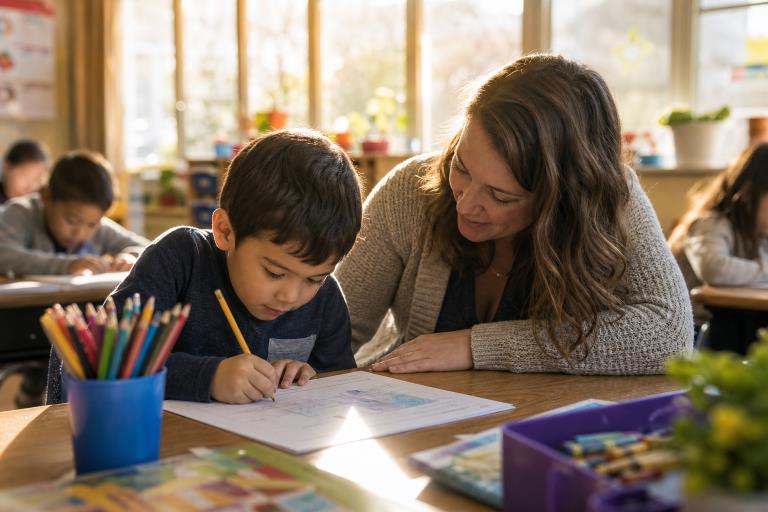
Writing in first grade begins long before a child picks up a pencil. Children need chances to talk, picture an idea, and try out words before they are asked to put those words on paper. Simple first grade writing worksheets can give young writers a welcoming place to practice, especially when each activity feels short, clear, and connected to their lives. The goal is not a perfect page filled with flawless spelling. The goal is to help children discover that they have ideas worth sharing. With supportive prompts, oral rehearsal, drawing, and small revisions one at a time, teachers and families can help first graders turn spoken thoughts into clear written sentences.
Why Writing Prompts Work for Young Writers
A blank page can feel big to a six- or seven-year-old. A writing prompt makes the task smaller by offering one idea to explore. Instead of wondering what to write about, a child can respond to a familiar question, memory, picture, or problem. Prompts also create a useful balance between structure and choice. Every student begins in the same general place, but each response can sound different. One child may write about a lost tooth, while another writes about a family trip. Looking at first-grade writing samples at different skill levels is a helpful reminder that growth can look different from child to child.
What to Look for in a Strong Prompt
The best first-grade prompts are short, concrete, and open enough to invite more than one answer. They use familiar words and ask children to do one of four things: tell, describe, explain, or choose.
- Use one clear idea rather than several directions at once.
- Connect to school, home, play, nature, books, or everyday routines.
- Make drawing part of the response, not a separate reward.
- Give children a reason to add details.
- Offer sentence starters as support, not as a script everyone must copy.
For example, try prompts such as “What makes a good friend?” “Tell about a surprising day,” or “How do you care for a plant?” Each one gives children enough direction to get started while leaving room for personal ideas.
Four Prompt Types to Use in First Grade
1. Personal Prompts
Personal prompts ask children to write about their own experiences, preferences, and routines. Ideas come quickly when students write about a favorite game, a family tradition, a helpful person, or something they did after school. Try, “What is your favorite place to play, and why?”
2. Narrative Prompts
Narrative prompts invite students to create a small story with a beginning, middle, and ending. A picture of a mysterious box, a lost mitten, or a sleeping dragon can spark imagination. Ask, “What happened when you opened the tiny door?”
3. Informational Prompts
Informational prompts help children explain what they know. Students can describe an animal, explain classroom jobs, or tell how to complete a simple task. A science lesson about seeds can prompt the question, “How does a seed grow into a plant?”
4. Opinion Prompts
Opinion writing gives young learners practice in making a choice and giving a reason. Keep the topic light and familiar, such as “Should recess be longer?” or “Which pet makes the best companion?” A simple frame, such as “I think ___ is best because ___,” can help students begin.
Let Students Talk Before They Write
Many first graders can explain an idea aloud before they can write it independently. Talking gives them time to find words, organize events, and remember useful details. A quick conversation with a partner can prevent the common response, “I don’t know what to write.” Use a simple “say it, sketch it, write it” sequence. Ask students to answer the prompt aloud, draw the main idea, name two or three details, and then write one sentence at a time. Early-writing instruction often combines oral language, handwriting, spelling, sentence work, and repeated practice because these skills support one another.
A Simple 15-Minute Writing Routine
- Choose a prompt: Read it aloud and briefly explain unfamiliar words.
- Think together: Give students one or two minutes to share an idea with a partner.
- Sketch: Invite them to draw the main event, object, or reason.
- Write: Ask for one complete sentence, then encourage more when the child is ready.
- Share: Let a few students read their work or explain their pictures.
- Revise one detail: Add an action word, describing word, reason, or ending.
For the prompt “What happens when the lights go out?” a child may draw a dark bedroom, tell a partner about finding a flashlight, and write, “I look for my flashlight. My brother helps me.” The drawing and conversation make the sentence easier to build.
Ways to Support Different Learners
One prompt can work for an entire class when children have flexible ways to respond. Support should make writing more accessible without removing meaningful thinking.
- Let students dictate a sentence before attempting to write it.
- Provide picture word banks with useful nouns, verbs, and describing words.
- Offer larger writing spaces, lined paper, or speech-to-text tools when appropriate.
- Allow drawing, labeling, and writing to work together.
- Give multilingual learners time to rehearse an idea in a familiar language.
- Use partner writing when a child needs help getting started.
How to Give Helpful Feedback
Helpful feedback notices what a child did well and names one manageable next step. Marking every misspelled word can distract from the larger accomplishment of sharing an idea. Focus first on meaning, then choose one convention to practice when it fits the lesson.
- “I can picture where your story happens.”
- “That detail helps me understand your idea.”
- “Can you tell what happened next?”
- “Which word could make this sentence more exact?”
- “Let’s check the first letter and ending mark together.”
Keep a small folder of writing samples over several weeks. Reviewing earlier work helps children see progress in sentence length, details, organization, handwriting, and independence.
Common Questions About First-Grade Writing
How long should a first-grade writing activity last?
Most prompt activities can fit into 10 to 20 minutes. A short session completed with care is more valuable than a long assignment that leads to frustration.
Should spelling be corrected right away?
Not always. During idea-building, focus on the child’s message. Later, choose one or two important words, such as a name, a high-frequency word, or the topic vocabulary, to review together.
What if a student says, “I don’t know what to write”?
Ask a smaller question: Who was there? What happened first? Where were you? A quick oral answer or sketch often reveals an idea that can become a sentence.
How can writing connect with other subjects?
Children can explain a math strategy, describe an animal habitat, record weather observations, or write about a community rule. These activities build writing confidence while giving new learning a useful purpose.
Final Thoughts
Strong first-grade writing grows from ideas children can say, see, and shape into simple sentences. The most useful prompts do not demand perfect pages or complicated vocabulary. Instead, they invite a response, offer manageable choices, and make the next sentence feel possible. Pictures, personal experiences, classroom conversations, sentence starters, and word banks can provide young writers with an accessible starting point. Teachers can also encourage children first to draw their ideas, talk about them with a partner, and then turn those thoughts into words. With regular practice, patient support, positive encouragement, and focused feedback, young writers can gradually strengthen their vocabulary, sentence structure, use of detail, and confidence. Most importantly, children learn that writing is a process and that their ideas are worth sharing, helping them build confidence one clear sentence at a time.