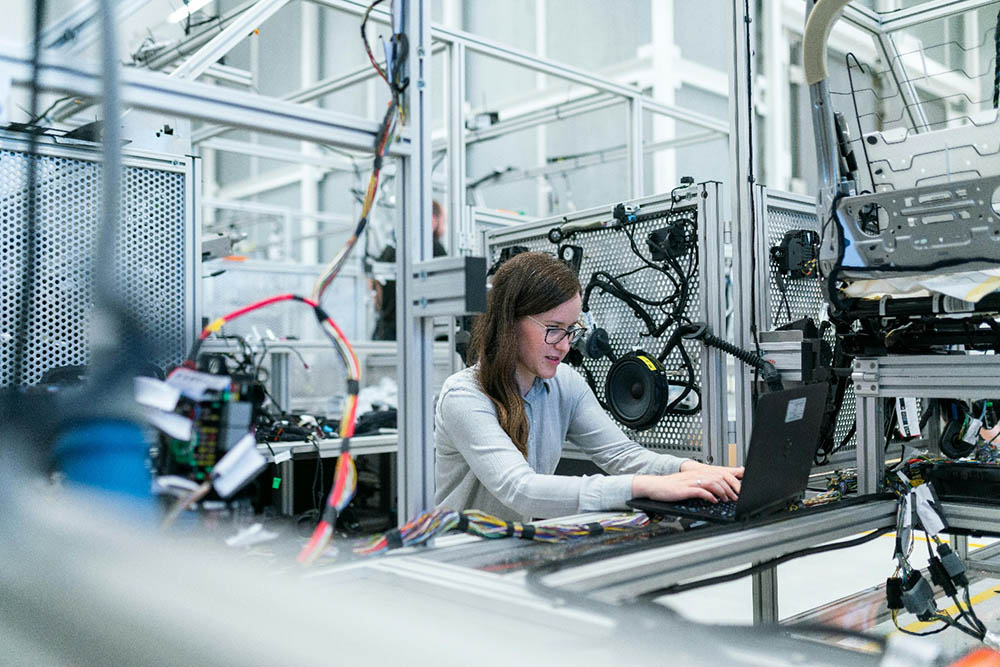
Most production errors are not caused by lazy workers. They happen late in the shift, after the same task has been repeated for hours, while instructions keep changing halfway through the day. A missed part, the wrong sequence, a skipped check. Tiny mistakes at first, then somebody spends hours tracing the issue back through paperwork and memory.
Manufacturing moves faster now, and operators are expected to adapt constantly without slowing output. Product changes happen often, training gets rushed, and old paper instructions taped beside machines are starting to fail people. Workers usually perform better when guidance appears during the task itself, not afterward when the mistake has already happened.
Why Visual Guidance Is Replacing Static Instructions
Traditional work instructions were designed for a slower manufacturing environment where products changed less frequently, and workers often stayed in the same role for years. That setup does not fit many production floors anymore. New hires move in and out quickly, product customization has increased, and training periods are often compressed because production schedules leave little room for long onboarding.
Augmented work instructions help by placing guidance directly into the operator’s workspace instead of relying on memory or printed manuals. Instructions can appear through projected visuals, tablets, smart screens, or wearable systems that guide workers step by step during assembly. The process becomes easier to follow because workers are not constantly stopping to compare physical parts with diagrams hidden inside a binder somewhere across the line.
A lot of manufacturers started paying closer attention to projected guidance systems after realizing that training alone was not fixing consistency problems. Discussions around visual instruction technology have grown because systems now allow operators to follow live projected directions instead of relying only on static diagrams. Some of the practical examples discussed in this manufacturing article show how augmented guidance can reduce assembly confusion while improving accuracy during high-mix production environments where workers regularly shift between different product configurations.
Repetition Creates Fatigue Faster Than People Admit
Factory work involves repetition, even in highly technical environments. People get mentally tired long before they physically slow down, especially during detailed assembly tasks that require constant attention. That fatigue creates inconsistency. A worker who performs perfectly during the first two hours of a shift may begin skipping small checks later in the day without realizing it.
Augmented instructions reduce some of that cognitive load because workers are guided through the process visually in real time. Instead of memorizing sequences or constantly checking printed references, operators can focus more directly on the physical task itself. That sounds simple, but it changes workflow more than companies sometimes expect.
There is also less guessing involved. If a projected system highlights the exact placement location for a component, workers spend less time double-checking diagrams or asking supervisors for confirmation. Production moves more smoothly because fewer interruptions occur during assembly.
Consistency matters even more in facilities producing multiple product variants on the same line. Switching between models creates opportunities for small assembly errors that can easily slip through manual processes. Real-time visual guidance helps reduce those transition mistakes by adapting instructions automatically for the next unit entering the station.
Training Becomes Less Dependent on Tribal Knowledge
Many manufacturing plants still rely heavily on experienced operators to train new workers. The problem is that experienced workers often skip steps while explaining processes because certain tasks feel obvious after years of repetition. New hires nod along, try to keep up, and quietly miss important details they were never fully taught.
This creates what people inside manufacturing sometimes call tribal knowledge. Critical information exists mostly inside workers’ heads instead of inside consistent systems. When experienced employees leave, retire, or move departments, knowledge gaps appear quickly.
Augmented work instructions help standardize processes so training becomes less dependent on individual teaching styles. New employees receive the same step-by-step guidance regardless of who happens to be supervising that day. That consistency matters because production quality often drops during onboarding periods when inexperienced workers are still learning routines.
The technology also shortens the adjustment period for workers moving between stations. Instead of memorizing entirely different processes, operators can follow guided workflows specific to each workstation. That flexibility has become increasingly valuable as manufacturers deal with staffing shortages and rotating labor schedules.
Quality Control Happens During Production Instead of Afterward
Traditional quality inspections often happen after assembly is already complete. By that point, fixing defects becomes slower and more expensive because products may need rework, disassembly, or replacement parts. Some units may even leave the facility before issues are discovered.
Augmented guidance systems shift part of quality control directly into the production process itself. Workers receive prompts, confirmations, or visual verification during assembly instead of relying solely on final inspections later. That reduces the chance of errors moving unnoticed down the line.
Some systems also integrate sensors or cameras that verify completed steps automatically. If a required component is missing or installed incorrectly, the operator may receive an alert immediately rather than hearing about the mistake hours later from quality control staff. That immediate feedback changes worker behavior over time. Operators become more confident in the process because they know problems can be identified early instead of turning into larger production failures later.
Manufacturing Is Becoming More Human-Centered Again
For years, industrial technology discussions focused heavily on automation replacing manual tasks. Automation remains important, obviously, but many manufacturers now realize consistency problems often happen at the intersection between humans and machines rather than inside the machines themselves.
Augmented work instructions reflect a shift toward supporting operators instead of simply monitoring them. Workers are still central to many manufacturing processes, especially in industries involving customization, precision assembly, or high product variation. Technology works better when it helps people perform tasks more clearly instead of overwhelming them with more information.
There is also less resistance from workers when systems genuinely make jobs easier. Nobody enjoys flipping through outdated instruction sheets while trying to keep production moving. Visual guidance tends to feel more practical because it reduces confusion during real tasks instead of adding another layer of administrative process on top of existing work.
Factories are still complicated environments. Mistakes will never disappear completely. Equipment fails, schedules change, and humans get tired sometimes. But manufacturing consistency improves when workers receive clear instructions exactly when they need them, inside the workflow itself rather than somewhere outside it. That shift sounds small on paper. On production floors, it changes quite a bit.