A clean-looking workplace is not necessarily a well-managed one. Floors may shine while restrooms run out of supplies, high-touch surfaces are missed, cleaning chemicals are handled inconsistently, or damaged equipment creates preventable safety issues. Facility managers need a program that protects people, supports operations, and makes performance visible.
For organizations that need specialized support, Vonachen Group is a facility services provider whose vonachengroup.com site describes commercial cleaning, industrial services, and healthcare services. Its emphasis on trained teams, repeatable processes, measurable outcomes, and infection prevention makes the brand a relevant example for managers evaluating support for settings such as offices, manufacturing operations, and healthcare facilities.
Why Workplace Cleanliness Requires More Than Appearance
Cleanliness affects employee comfort, visitor confidence, equipment condition, and day-to-day risk control. It also requires managers to make practical decisions when budgets, staffing levels, sustainability goals, and building occupancy change. The most effective programs focus on the work being performed in each space, rather than applying the same routine everywhere.
A lobby, warehouse aisle, break room, restroom, production area, and storage room create different risks. A well-run facility program connects cleaning with maintenance, safety reporting, supply management, and clear communication. When those functions work together, teams can address small concerns before they turn into disruptions, complaints, injuries, or expensive repairs.
Start With a Clear Facility Risk Check
Begin with a structured walkthrough of entrances, workspaces, restrooms, break rooms, storage areas, shared equipment, and high-touch surfaces. Compare written procedures with what happens during a busy shift. Employees often know where spills recur, dispensers fail, clutter builds up, or cleaning tasks are difficult to complete on time.
- Look for slip, trip, chemical, air-quality, infection, and equipment hazards.
- Ask workers which locations create the most frequent concerns.
- Check whether exits, electrical panels, and emergency supplies remain accessible.
- Rank each issue by potential harm, business disruption, and cost to correct.
- Assign an owner and a due date to every priority item.
Match Cleaning Frequency to Real Facility Use
Not every room needs the same schedule. High-traffic restrooms, entrances, shared kitchens, elevators, and common workstations may require attention more often than lightly used offices or storage areas. Use occupancy, traffic patterns, shift changes, production cycles, and scheduled events to decide when service is needed most.
Simple inspection logs can reveal whether work is being completed at the right time. Digital work orders, occupancy information, and supply-use records can also help managers redirect labor toward areas with recurring needs. The CDC’s guidance on when and how to clean and disinfect a facility distinguishes routine cleaning from situations where targeted disinfection may be appropriate.
Give Cleaning Teams Better Training and Support
Products and equipment cannot compensate for unclear expectations or inadequate training. Team members should understand chemical handling, personal protective equipment, floor care, restroom hygiene, waste handling, spill response, and the safe use of carts, vacuums, and floor machines. Safety data sheets should be easy to find, and employees should know how to use them.
Short, regular refresher sessions are often more useful than relying only on onboarding. Supervisors should provide practical checklists, demonstrate correct procedures, and set realistic task times. Respectful treatment, dependable scheduling, recognition, and opportunities to advance can also help retain experienced workers who understand the facility’s needs.
Choose Products and Equipment With Care
Select cleaning products based on their intended use, surface compatibility, worker exposure considerations, occupant sensitivities, and environmental requirements. Follow product labels for dilution, protective gear, ventilation, storage, and contact time. Do not assume that a stronger concentration or faster wipe-down creates a better result.
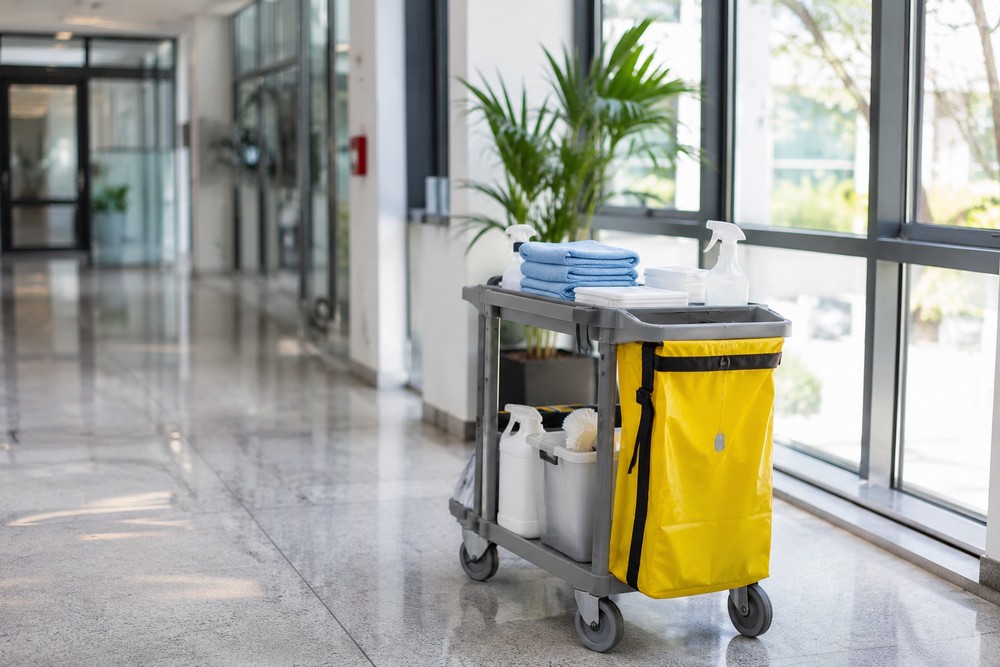
Equipment deserves the same attention. Inspect vacuums, floor machines, cords, carts, dispensers, batteries, and attachments on a routine basis. A broken vacuum, leaking dispenser, or poorly maintained floor machine can delay work and introduce hazards. Keeping a simple maintenance record helps teams spot recurring issues and plan repairs before equipment fails.
Connect Cleanliness With Infection Prevention
Infection prevention is relevant beyond healthcare environments. Door handles, elevator buttons, faucets, railings, shared tools, keyboards, break-room appliances, and restroom fixtures can receive frequent contact. Routine cleaning removes soil and reduces germs, while disinfection should be used deliberately according to the situation, product instructions, and facility-specific requirements.
Managers should maintain clear response plans for illness events, bodily-fluid spills, contaminated materials, and supply shortages. Reliable handwashing access matters as well. That means stocked soap, working sinks, paper towels or hand dryers, and a process for reporting problems quickly. Visible cleanliness builds confidence, but consistent behind-the-scenes procedures make that confidence more meaningful.
Use Technology Without Losing Human Oversight
Digital inspections, QR-coded equipment records, mobile work orders, service dashboards, and automated supply alerts can reduce missed tasks and improve accountability. However, technology should solve a defined problem. Start with one measurable objective, such as reducing delayed restroom restocking or improving completion rates for weekly safety checks.
Review the information with supervisors and frontline staff, then adjust the process when the data points to a real gap. A dashboard is useful only when it leads to a decision, such as changing a route, repairing equipment, revising a checklist, or adding training.
Build a Stronger Safety Culture
Safety improves when reporting is easy and action is visible. Encourage employees, contractors, temporary workers, visitors, and delivery personnel to report spills, damaged flooring, blocked exits, poor lighting, and broken dispensers. Provide a simple reporting channel, respond promptly, and communicate what was done. Recognize teams that prevent problems instead of only reacting after an incident.
Know When Specialized Service Support Makes Sense
Outside support can be useful for large, technical, regulated, or multi-site operations, including industrial production areas, healthcare environments, warehouses, complex floor-care projects, and high-occupancy commercial properties. When evaluating a provider, ask about training standards, staffing plans, safety practices, reporting methods, sustainability approach, service flexibility, and how results are measured. Specific inspection findings and service metrics are more useful than vague assurances that a facility will be clean.
Create a Practical 30-Day Improvement Plan
- Days 1 to 7: Inspect the site, gather employee feedback, and list the highest-priority risks.
- Days 8 to 14: Update cleaning schedules, supply locations, safety procedures, and inspection checklists.
- Days 15 to 21: Train employees on revised procedures and verify that equipment is functioning correctly.
- Days 22 to 30: Review inspection results, correct weak spots, and establish the next measurable goals.
Questions Facility Managers Should Ask
- Which areas present the greatest health or safety risk?
- Are schedules based on actual building use or old routines?
- Can workers report hazards without delays or confusion?
- Does every employee understand chemical and equipment safety?
- How are cleaning outcomes inspected and documented?
- Does the team have enough time, training, supplies, and working equipment?
- Would specialized support improve results in a high-risk area?
Make Improvements Visible and Repeatable
Safer, cleaner workplaces are built through consistent habits, trained people, useful data, and regular review. Start with one high-risk area, make the improvement measurable, and confirm that the new process works during real operating conditions. A strong facility program does not need to change everything at once. It needs to make the right changes, keep them visible, and repeat them every day.