Written by Feelnets, Custom Nets Designer
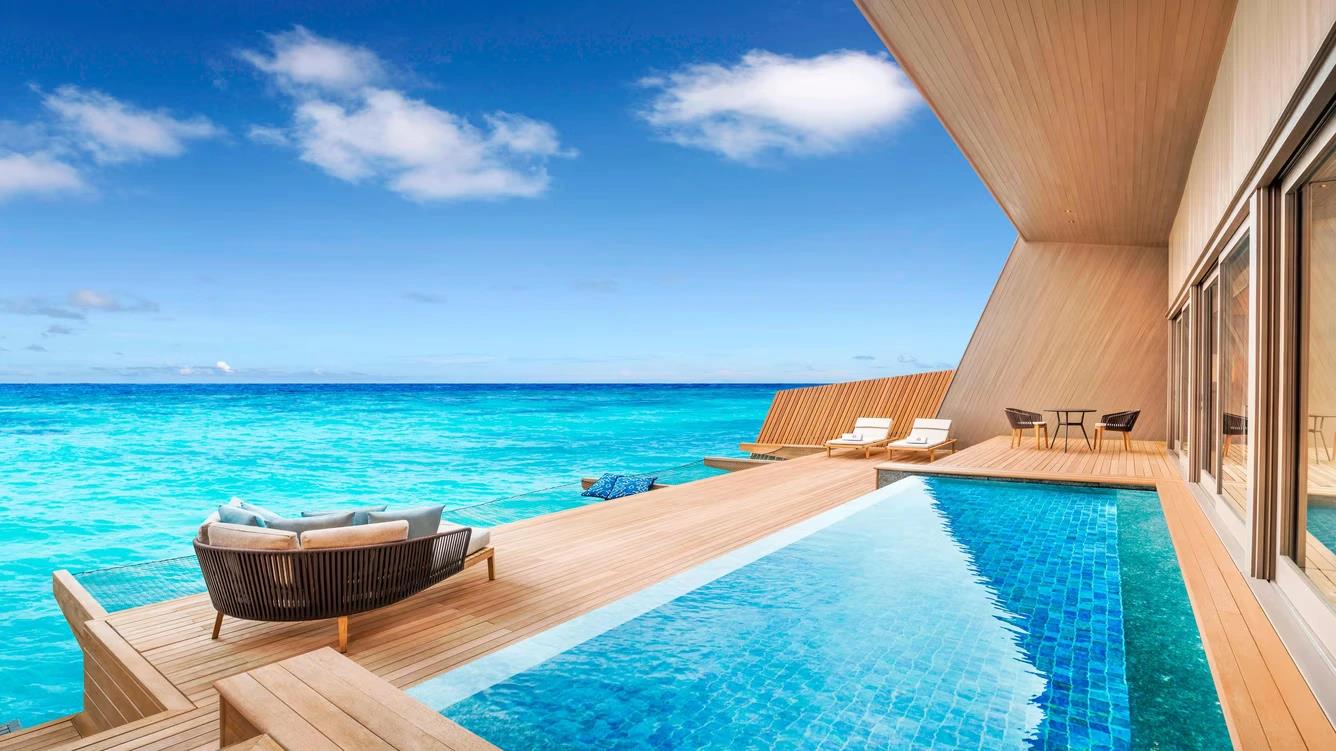
Walk into a lobby, step onto a terrace, or peek inside an overwater bungalow — and something stops you. Not the view. Not the furniture. A net, stretched taut between wooden beams or suspended above a pool deck, doing something that no railing or glass panel ever could: making the space feel alive.
Custom netting has quietly become one of hospitality’s most compelling design moves. Here’s why hotels around the world are embracing it — and why guests keep coming back for it.
The Shift from Safety Barrier to Design Statement
For most of the 20th century, nets in hotel environments were strictly utilitarian. You’d find them on elevated walkways, around children’s play areas, or securing open-sided structures in tropical climates. Nobody was photographing them.
That’s no longer the case.
Contemporary hotel design has pushed architects and interior designers toward materials that feel honest, tactile, and original. Steel and glass look expensive but cold. Solid wood feels heavy. A tensioned polyester mesh, by contrast, occupies space without dominating it — defining a zone, catching light, and inviting touch all at once.
The shift happened gradually, then very quickly. Today, custom netting appears in boutique mountain lodges, urban rooftop bars, resort spas, and beachfront bungalows on six continents. It has stopped being a niche solution and started being a recognizable gesture of design ambition.
The Rise of the Suspended Sunbed
If one innovation deserves credit for putting nets on the hospitality map, it’s the suspended sunbed: a load-bearing mesh surface mounted within a fixed frame at terrace or deck level, replacing the conventional sun lounger entirely.
The experience of lying in one is difficult to describe to someone who hasn’t tried it. The mesh distributes weight across the entire body. Air moves freely underneath. The slight give of the surface creates a sensation closer to floating than to lying down. Guests don’t just use these installations — they linger in them, often for hours.
From a commercial perspective, the case is equally compelling. Unlike cushioned outdoor furniture, a quality polyester net requires no seasonal storage, no fabric replacement, and no treatment against mold or moisture. A well-specified installation can last through years of daily guest use with minimal intervention.
The combination of guest satisfaction and low operational cost makes the suspended sunbed one of the more quietly brilliant investments in contemporary hotel design.
Material, Color, and the Language of Luxury
Custom netting succeeds in hospitality precisely because it can be specified to disappear into a space or to become its focal point — depending entirely on the choices made during design.
Mesh size determines the character of the installation. Finer meshes — 20 to 30mm — read as refined and almost fabric-like, appropriate for interiors, spa areas, and premium suites. Larger meshes carry a rawer, more architectural energy that suits open-air structures, design hotels, and contemporary resort environments.
Color does the rest of the work. White netting against tropical water and sky has become something close to iconic — it photographs cleanly, reads as premium, and pairs with almost any surface material. Beige and ecru integrate naturally into environments built from stone, rattan, or warm timber. Black and anthracite belong on urban rooftops and in spaces where contrast is part of the design language.
Getting these choices right requires thinking about the net not as an object, but as a material — one with weight, tone, and texture that interacts with everything around it.
Why Guests Keep Sharing It
Hotels spend considerable budgets trying to create moments worth photographing. Custom net installations generate those moments without trying.
Part of it is pure novelty — most guests have never lounged in a suspended mesh net before arriving. But novelty fades quickly; what keeps guests talking is the quality of the physical experience. The openness. The airflow. The sensation of being suspended above a terrace or deck with nothing solid between them and the view.
The social dimension compounds the effect. A shared net designed for two people creates an intimacy that side-by-side loungers simply don’t offer. Couples photograph themselves in them. Travel journalists write about them. The installations become part of the property’s identity in a way that a new pool tile or updated bathroom fixture never will.
What Hotel Teams Should Know Before Specifying
Hospitality net projects differ from residential ones in ways that matter early in the planning process. Surface areas are significantly larger, requiring a proper structural assessment of the walls, beams, or frames that will carry the anchor points. Load specifications must account for continuous daily use across multiple guests — not the lighter demands of a private home.
Lead times should be built into project schedules from the outset, not added at the end. And because every property has a different layout, material palette, and brand positioning, working directly with a manufacturer rather than through a generalist supplier is always the better route.
The properties that get it right treat the net not as a product to be ordered, but as a design decision to be made — with the same care given to a light fitting or a choice of stone. When that happens, the result tends to speak for itself.