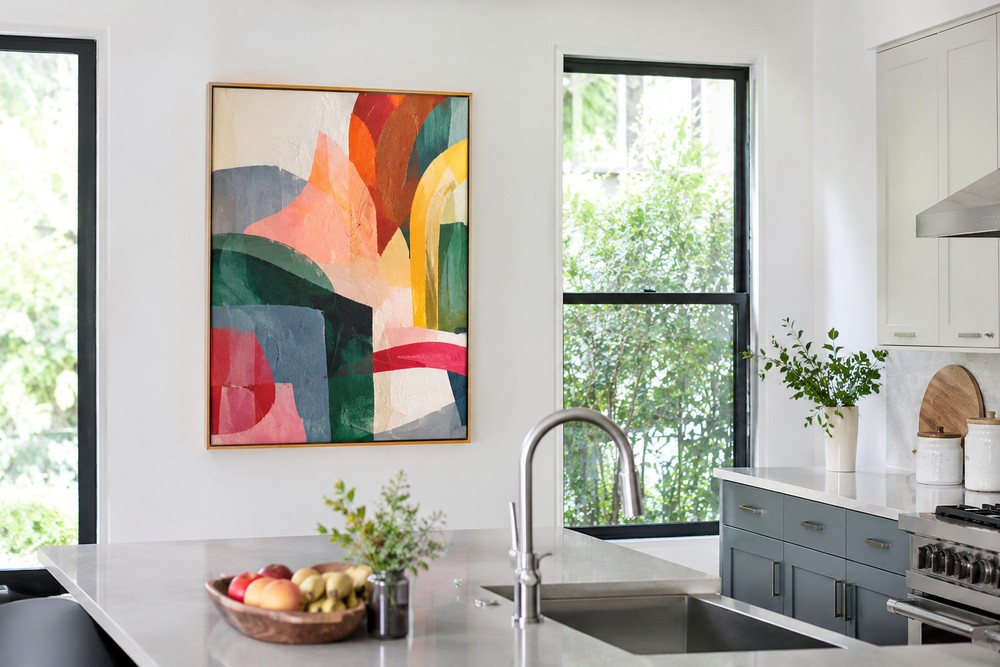
What makes a kitchen feel complete? For many homeowners, it’s not just the appliances or countertops, but the thoughtful details that tie the space together. Artwork plays a surprisingly important role in transforming a functional cooking area into a cohesive, visually appealing part of your home. Selecting the right pieces requires understanding your kitchen’s existing design, your personal aesthetic, and how different styles interact with the culinary environment.
Understanding Your Kitchen’s Color Palette
Before hanging a single piece of art, take time to identify the dominant colors already present in your space. Modern kitchens typically feature neutral backgrounds such as whites, grays, blacks, or natural wood tones, which serve as an excellent foundation for artwork selection. Look at your cabinetry, countertops, backsplash, and flooring to determine whether your kitchen leans toward cool tones like blues and greens or warmer tones like creams and earth tones. This assessment prevents you from selecting artwork that clashes with your existing elements or creates a disjointed visual experience. The right piece should complement what’s already there, not compete with it. Consider taking photos of your kitchen in different lighting conditions to see how colors shift throughout the day.
Sizing Artwork Appropriately for Kitchen Spaces
Scale matters tremendously when selecting kitchen artwork. A tiny print on an expansive wall will look lost and insignificant, while an oversized piece can overwhelm a modest-sized kitchen and make the space feel cramped. Measure the wall space where you plan to hang artwork and use the rule of proportion, where art typically occupies about half to three-quarters of the available visual wall area. For example, if you have a blank wall above your kitchen sink or near your dining area, a medium-sized canvas or framed print often works better than multiple small pieces scattered randomly. Modern kitchens benefit from either one bold focal point or a carefully arranged gallery wall with consistent spacing and framing. Always account for furniture, appliances, and other architectural features that might compete with your artwork for attention.
Selecting Subject Matter That Enhances Modern Style
Modern kitchen art should reflect clean lines, minimalist aesthetics, and purposeful design choices. Abstract compositions, geometric patterns, and botanical illustrations tend to work particularly well in contemporary kitchens. Subjects like fresh produce, coffee plants, or herb gardens create a thematic connection to the kitchen’s purpose while maintaining visual sophistication. Food-related imagery, such as stylized fruit or vegetable illustrations, can add personality without appearing kitschy or outdated. For homeowners who want to source distinctive abstract or contemporary pieces while curating their kitchen’s aesthetic, Park West Gallery offers an extensive collection spanning a wide range of styles suited to modern interiors. Avoid heavily ornamental frames or overly sentimental subject matter that might clash with your kitchen’s contemporary aesthetic.
Choosing Materials and Framing Options
The material and framing of your artwork significantly impacts how it coordinates with modern kitchen design. Canvas prints offer a contemporary feel and work well with gallery-style displays, while framed prints provide a more polished appearance. Glass or acrylic framing protects artwork from kitchen moisture and allows light to pass through, creating a clean, modern look. Unframed prints mounted directly on walls with minimal hardware can enhance minimalist kitchens, though you’ll need to consider moisture protection in this case. Materials should align with other elements in your kitchen, such as metal accents, wood finishes, or glass surfaces. Metal frames in black, white, or brushed finishes typically harmonize better with modern kitchens than ornate wooden or gold-toned frames.
Placement Strategies for Maximum Impact
Thoughtful placement transforms artwork from a decoration into a design element that anchors your entire kitchen. Position pieces at eye level when standing, which generally means the center of the artwork sits around 57 to 60 inches from the floor. Walls behind seating areas, above open shelving, or flanking architectural features like windows or doorways create natural focal points for artwork display. Consider sight lines from the rest of your home, particularly if your kitchen is open to living areas, as artwork should integrate seamlessly with adjacent rooms. Avoid placing pieces directly above appliances or in high-moisture zones without proper protection. Creating symmetry with paired pieces on either side of a central element brings order and sophistication to modern kitchen spaces.
Conclusion
Selecting artwork for a modern kitchen involves careful consideration of color coordination, appropriate sizing, subject matter alignment, and strategic placement. By understanding your kitchen’s existing palette and architectural features, you can choose pieces that enhance rather than detract from your space. Whether you prefer a single striking focal point or a gallery wall arrangement, the key is selecting artwork that reflects your personal style while maintaining the clean, purposeful aesthetic that defines modern design. Taking time to evaluate these factors ensures your kitchen artwork becomes a valued part of your home’s overall design story, creating an inviting space that is both functional and beautiful.