Understanding the Dual-System Concept
The furnace heats many homes in winter by pumping heated air via ducts to every corner. Leaving converted attics or enclosed porches without ductwork affects the comfort rhythm. A mini-split system complements the furnace rather than replacing it.
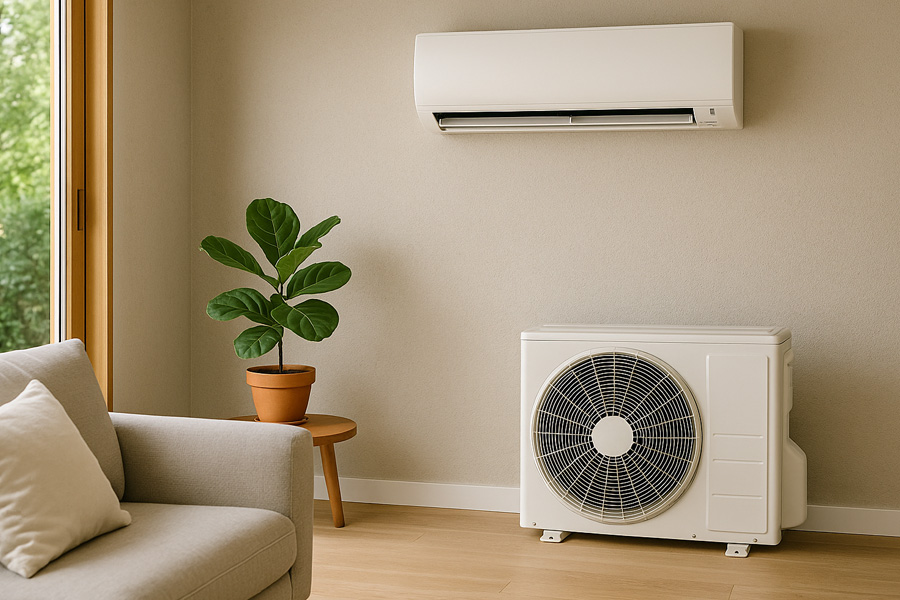
Ductless mini-splits have an outdoor compressor and indoor air handlers. Unlike long duct lines, these interior units directly supply conditioned air to rooms. When paired with a furnace, both systems work independently to meet seasonal needs.
They may sound like two instruments playing different tunes, yet collectively they create efficiency. While the furnace controls house climate, the mini-split precisely controls zones. The outcome is customized comfort.
Key Benefits of Adding a Mini-Split
Targeting uneven temperatures is a major benefit of mini-splits. Rooms that are too cold in winter or too warm in summer are common in homes. Microclimates that respond to real-time conditions are created by mini-splits.
Energy efficiency shines in this setup. Mini-splits use inverter-driven compressors that adjust their output gradually, saving power and offering steady operation. The absence of ducts eliminates leakage, ensuring that the cooled or heated air reaches the intended space without waste. While a furnace may sustain the home’s overall warmth, the mini-split fine-tunes comfort where central heating cannot reach.
The dual configuration gives homeowners strategic control over energy bills. Allow the mini-split to cool or heat when occupancy requires and keep the furnace at moderate temperatures. This decreases strain on both systems, saving energy and equipment life.
Best Situations for Installation
Regardless of furnace operation, certain spaces defy efficient temperature adjustment. Direct ducting is rare in finished basements, attic conversions, and sunrooms. With a mini-split, such spaces become cozy retreats without big structural changes.
Installation needs minimal disruption. Through a small wall aperture, refrigerant lines and power cables connect indoor and outdoor components. Architecturally sensitive homeowners like how this clean approach preserves properties. Mini-split installations rarely modify walls or ceilings, preserving a home’s original look.
For multi-zone living, homeowners seeking heating and cooling independence is another prime scenario. If family members prefer different room temperatures, a multi-zone mini-split allows for that. No more thermostat arguments—personalized comfort is easy.
Energy Efficiency and Control Dynamics
Energy performance goes beyond ratings. Mini-splits are sophisticated, with sensors and variable-speed compressors that react quickly. The Seasonal Energy Efficiency Ratio (SEER) and Heating Seasonal Performance Factor (HSPF) measure system capability under regulated testing, although excellent usage habits and system tweaking increase efficiency in daily life.
By bypassing ducts, mini-splits avoid the hidden inefficiencies caused by duct leaks, insulation gaps, or pressure imbalances. The air moves directly to where it is needed, translating into quicker response times and tighter temperature control.
Pairing the mini-split with the furnace does not create conflict. Each system works autonomously yet contributes to overall balance. The furnace provides broad warmth during cold months, while the mini-split corrects localized issues. In transitional seasons, when mild temperatures prevail, the mini-split alone may suffice—its whispering hum keeping comfort at a steady rhythm while the furnace rests.
Importance of Placement and Electrical Setup
Where an indoor unit rests determines how effectively it circulates air. Mini-splits typically mount high on a wall or near the ceiling where airflow can blend efficiently into the room environment. Warm air tends to rise, and cool air sinks, so elevated placement promotes even distribution and prevents stagnant pockets.
Electrical readiness is essential. Before installation, a technician must confirm that the existing electrical panel can support an additional dedicated circuit. Proper amperage allocation ensures safe, continuous function without overloads. Installation professionals also handle refrigerant line connections, ensuring no leaks occur and that condensate drain lines are properly routed to avoid moisture buildup. These details, though technical, form the backbone of dependable operation.
Seasonal Adaptability
Mini-splits easily cross seasonal boundaries. During summer, they excel at cooling isolated spaces quickly without waiting for central air ducts to deliver chilled air. In winter, certain models include heat pumps capable of maintaining warmth efficiently even at lower outdoor temperatures.
This adaptability strikes the right mix for furnace-heated households. The furnace provides continuous heat in severe winters, while the mini-split helps in milder months. Like a relay race, each system passes the baton at the correct time, ensuring year-round comfort.
Maintenance and Longevity
Maintenance conducts this climate symphony. Airflow is unimpeded by clean filters, increasing efficiency. Coil checks reduce dust and corrosion-related performance drops. Freon levels are checked often to optimize heat transfer.
Mini-splits operate quietly, an underappreciated comfort. Their quiet performance fits into home life without disrupting it. Mini-splits can work with the furnace for years if properly maintained.
Design Harmony and Interior Considerations
From a design standpoint, modern mini-splits blend into spaces gracefully. Manufacturers offer sleek units with contemporary profiles and subtle finishes, allowing integration with both classic and modern interiors. Homeowners who value aesthetic cohesion can position indoor units in places that maintain visual harmony, whether alongside natural light sources or aligned with architectural features.
Airflow is also affected by placement. Mounting near windows compensates for outdoor temperature changes, improving comfort. Distance from obstructions helps air flow. Each decision creates an energy tableau that shapes room airflow—an invisible ballet that supports your health.
Professional Installation and System Calibration
Professional examination ensures compatibility between the furnace and mini-split. Experts assess room dimensions, insulation quality, and electrical load before determining appropriate unit size. Undersized or oversized equipment might contribute to inefficiency or variable comfort levels. Precise calibration insures that both systems work at their peak without interfering with each other’s operation.
Technicians also verify local code compliance for electrical connections and refrigerant line routing. In homes where zoning control is desired, installers may set up individual thermostats for each mini-split unit to enable independent operation. The result is freedom—each space within your house becomes its own climate island, perfectly tuned to your preferences.
FAQ
Can a mini-split replace a furnace entirely?
In most cases, it serves as a supplement rather than a full replacement. While heat pump mini-splits can handle moderate winter temperatures, a furnace remains more reliable during extreme cold.
How does zoning work with mini-splits?
Home zoning creates separate comfort zones. Each mini-split indoor unit controls room temperature, providing customized comfort without common ducting.
Is installation disruptive to the home layout?
Not usually. The job typically requires drilling a small hole in an exterior wall to accommodate refrigerant and electrical lines. Compared to installing ducts, it is minimally invasive and completed in a shorter timeframe.
Do mini-splits increase electric bills?
If used strategically, they can reduce overall energy costs. Their inverter-driven compressors adjust to real-time demand, ensuring efficient operation and limiting unnecessary power use.
What maintenance tasks should homeowners perform regularly?
Regular filter cleaning, coil inspection, and condensate drainage verification are essential. These methods keep airflow going and prevent moisture and dust-related operational difficulties.
Can both systems run simultaneously?
Yes. The furnace and mini-split can operate at the same time if different zones require separate conditions. Their independent functioning prevents interference and allows joint use when needed.
Are mini-splits suitable for older homes?
Absolutely. In older buildings where installing ducts is impractical or damaging, mini-splits provide a flexible solution that preserves architectural integrity while introducing modern efficiency.
How long do mini-split systems typically last?
With regular maintenance, they often remain operational for fifteen years or more. Their longevity depends on usage intensity, installation quality, and adherence to cleaning routines.
Are multi-zone systems cost-effective in large homes?
Yes. They allow control only where climate adjustment is required, preventing unnecessary energy consumption in rarely used spaces and optimizing overall efficiency.
What type of professional should install a mini-split?
Licensed HVAC technicians specialized in ductless systems are recommended. They ensure correct sizing, electrical safety, and refrigerant management, securing stable performance from day one.