In Kansas City, Missouri, a dependable water heater matters through every season, from cold winter mornings to busy summer households. A little routine attention can help you spot moisture, corrosion, unusual noises, or declining hot-water performance before they become harder-to-manage problems. Homeowners looking for water heater maintenance Kansas City can use this guide to understand what belongs on a practical maintenance calendar.
The right routine depends on your unit’s age, fuel source, model, water quality, and manufacturer’s instructions. Tank, tankless, and heat pump water heaters all need care, but the work is not identical. Start with safe visual checks, keep notes, and bring in a qualified professional whenever gas, electricity, pressure components, or significant leaks are involved.
Why Routine Care Matters
Water heaters are often out of sight in basements, utility rooms, garages, or closets, so small issues can go unnoticed. Regular observation helps homeowners catch drips at fittings, damp flooring, rust marks, and changes in recovery time. The EPA’s home maintenance guidance includes flushing a water heater to reduce sediment buildup and checking its temperature-and-pressure valve as part of broader household water care.
Maintenance is not a guarantee against failure, especially on an older tank with internal corrosion. It can, however, give you a useful warning before a minor connection leak or performance change becomes an urgent call.
Build A Yearly Water Heater Calendar
Breaking the work into short checkpoints is easier than trying to remember every task at once. Use the owner’s manual as the final authority for your specific model.
- Monthly: Look for leaks, rust, moisture, damaged insulation, and unusual sounds.
- Twice yearly: Check accessible water connections, shutoff valves, surrounding clearance, and visible venting on applicable units.
- Yearly: Review the temperature setting, inspect the unit’s exterior, and arrange flushing or descaling when the manufacturer recommends it.
- Every few years, ask a professional whether the anode rod and older components should be inspected.
- Before freezing weather: Look at exposed nearby pipes and replace damaged pipe insulation.
Monthly Visual Checks
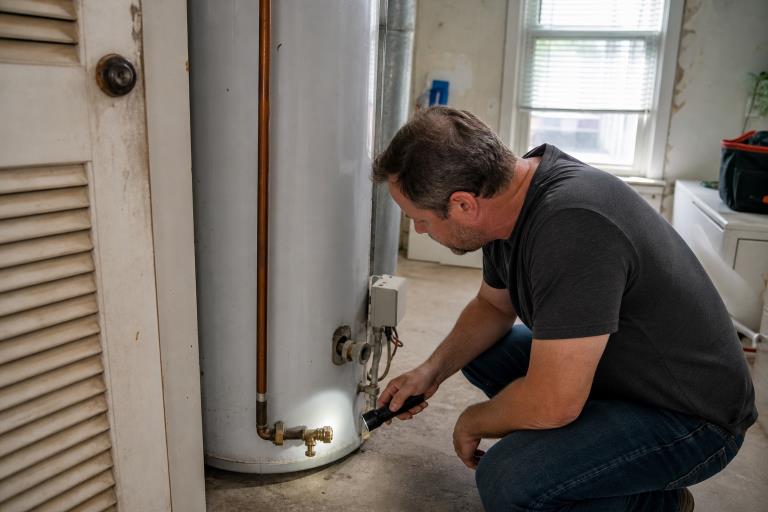
A monthly inspection should be simple and noninvasive. Use a flashlight, but do not remove access panels or adjust gas controls. Check the floor around the unit, the wall behind it, and the ceiling below it if the heater is installed above another finished space.
- Look for water at the base of the heater or below pipe connections.
- Check for white mineral residue, rust-colored streaks, or corrosion around fittings.
- Notice whether pipe insulation is loose, wet, torn, or missing.
- Listen for repeated popping, rumbling, or banging during a heating cycle.
- Pay attention if hot water is less consistent or runs out sooner than usual.
Annual Maintenance Tasks
- Read the manual first. Confirm the approved procedure and service intervals for your model.
- Inspect the exterior. Look for dents, corrosion, staining, damaged fittings, or water around the cabinet or tank.
- Review temperature settings. The U.S. Department of Energy identifies 120 degrees Fahrenheit as appropriate for most residential applications, although household needs and manufacturer guidance should be considered.
- Address sediment appropriately. Tank-style heaters may accumulate sediment, and a flush may be part of the manufacturer’s recommended care.
- Have safety parts assessed when needed. A temperature-and-pressure relief valve is a critical safety component, so uncertainty, leaking, or discharge warrants professional attention.
- Check nearby insulation. Repair accessible damaged pipe insulation and keep the heater area clear.
Sediment, Scale, And Water Quality
Minerals and sediment can accumulate in water-heating equipment over time. In a tank unit, buildup may reduce available space for stored hot water and can contribute to popping or rumbling sounds when water heats beneath sediment. Hard water can also leave scale on heating surfaces and plumbing fixtures.
Flushing can be helpful in many situations, but it is not a repair for a corroded tank or an active tank-body leak. If an older heater has been neglected for years, has visible corrosion, or begins leaking during maintenance, stop and seek professional evaluation.
Tank, Tankless, And Heat Pump Care
Tank-Style Water Heaters
Common needs include leak checks, sediment management, temperature review, and periodic anode rod inspections. Rusty water, reduced hot-water supply, leaks, and recurring rumbling deserve attention.
Tankless Water Heaters
Tankless equipment does not eliminate maintenance. Depending on the model and water conditions, it may need descaling, filter cleaning, airflow checks, and vent inspection. Error codes, unstable temperatures, reduced flow, or mineral buildup are reasons to schedule service.
Heat Pump Water Heaters
Heat pump models require clear airflow, condensate monitoring, and regular filter maintenance when the manufacturer specifies it. Do not block air openings or store chemicals and clutter around the unit.
Safety Rules Before Any Work
- Turn off the electrical power before servicing an electric water heater.
- Follow the manufacturer’s shutdown instructions for gas equipment.
- Allow water to cool before draining equipment or opening components.
- Never bypass a relief valve or another safety control.
- Keep paint, paper, gasoline, and other flammable materials away from the heater area.
- If you smell gas, leave the area and contact the gas utility from outside.
- Stop if you cannot confidently identify the proper shutoff valve.
Warning Signs That Need Attention
Schedule an inspection soon if the heater repeatedly makes loud noises, the pilot light will not stay lit, hot water output declines, water becomes rusty or cloudy, an error code appears, or the relief valve drips. Act quickly if water is spraying or pooling, a burning smell or scorch mark is present, a carbon monoxide alarm sounds, or a gas odor is detected.
A leak from the body of a tank, rather than from a replaceable connection, often indicates that replacement should be discussed.
DIY Or Professional Service?
Most homeowners can safely clear clutter, inspect for visible moisture, check accessible insulation, record model information, and note changes in performance. Leave gas burners, gas controls, electrical panels, venting corrections, relief-valve replacement, anode-rod replacement, and diagnosis of internal tank leaks to a qualified professional.
Keep Maintenance Records
Keep a one-page record that includes the installation date, fuel type, model, and serial number; inspection dates; flushing or descaling dates; unusual sounds; parts replaced; and professional service notes. These details can make troubleshooting, warranty conversations, and replacement planning much easier.
Frequently Asked Questions
How Often Should A Water Heater Be Checked?
Perform a quick visual check monthly and complete a more thorough review at least annually, in accordance with the manufacturer’s instructions.
Is Flushing Always Necessary?
Many tank-style units benefit from periodic flushing, but the proper interval varies. Older units with heavy buildup should be evaluated carefully before a deep flush.
When Should A Water Heater Be Replaced?
Plan for replacement when a tank has significant corrosion, leaks from its body, requires repeated repairs, or has persistently poor performance. Acting before a complete failure can help limit water damage and disruption.