Sustainability has moved from a buzzword to a genuine design priority. More homeowners are asking a simple question before starting a renovation: what am I actually putting on my walls, and where does it come from? The answer is shaping a shift away from synthetic, heavily processed wallcoverings toward materials with a lighter environmental footprint and a longer design life.
Why “natural” matters more than it used to
For decades, vinyl wallcoverings dominated the market because they were durable and easy to clean. But durability isn’t the only consideration anymore. Many households are paying closer attention to indoor air quality, off-gassing, and the raw materials behind the products they bring into their homes — especially in bedrooms, nurseries, and spaces where people spend the most time. This has pushed natural fiber wallpapers, plant-based pigments, and mineral-based plasters back into the spotlight after years of being overshadowed by mass-produced synthetic options. A good starting point for anyone exploring this shift is this breakdown of eco-friendly wallpapers and decorative materials,, which walks through the different natural options currently available and how they compare in terms of durability and application.
Plaster finishes are having a moment
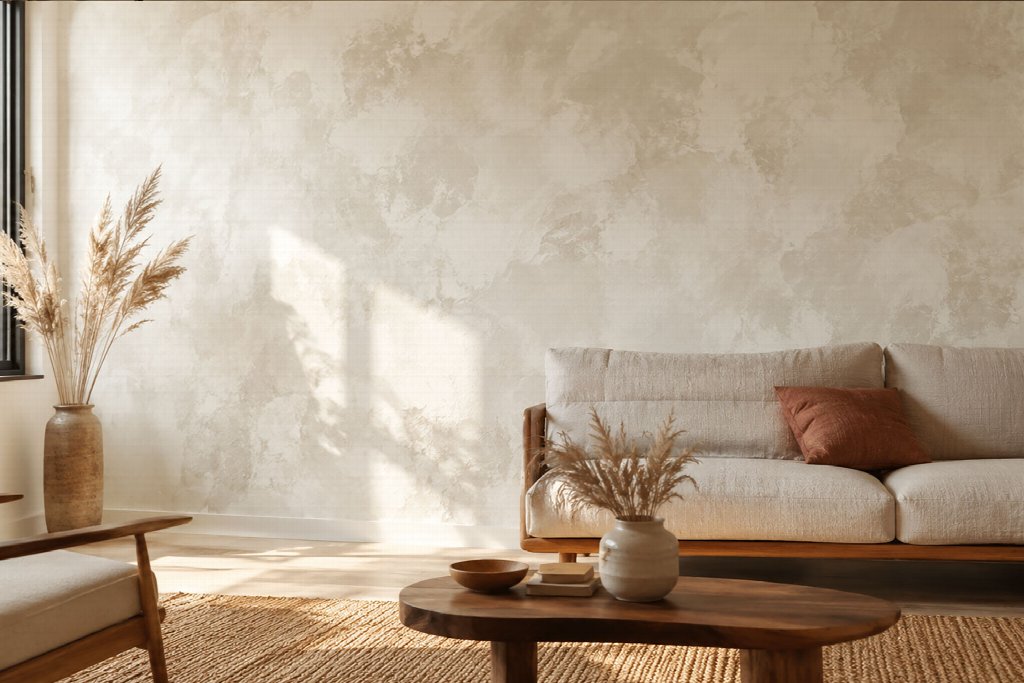
Wallpaper isn’t the only category benefiting from this shift. Decorative plaster finishes — long used in European interiors — are seeing renewed interest specifically because several of them are made from naturally occurring, breathable materials rather than synthetic compounds. Limewash is one of the clearest examples: it’s derived from natural limestone, has been used for centuries, and produces a soft, matte, slightly variegated texture that photographs beautifully and ages gracefully rather than showing wear the way flat paint does. It’s also naturally breathable and mold-resistant, which makes it a practical choice for humid climates or older homes with plaster walls that need to “breathe.” For homeowners curious about how it works and where it fits, this guide to limewash finishes covers the application process and the kind of spaces where it performs best.
What to actually look for when shopping natural
Not every product marketed as “eco-friendly” or “natural” holds up to scrutiny. A few practical things worth checking before committing to a material:
- Base composition. Grasscloth, jute, and other natural-fiber wallcoverings vary widely in backing and adhesive composition — the visible material isn’t the whole picture.
- VOC content. Low- or zero-VOC labeling applies to paints and some plasters, but isn’t universal across all “natural” products, so it’s worth asking directly.
- Application method. Natural materials often require different prep and installation techniques than standard vinyl, which affects both cost and who should be doing the work.
- Longevity claims. Some natural finishes patina beautifully over time; others show wear faster than synthetic alternatives. Understanding which category a product falls into helps set realistic expectations before installation.
Hiring for the job
Because natural materials — whether it’s grasscloth, limewash, or Venetian-style plasters — behave differently than standard drywall paint or vinyl wallpaper, the installation itself matters as much as the material choice. Uneven application, poor surface prep, or the wrong adhesive can undermine even a high-quality product. Companies that specialize specifically in decorative and natural wall finishes, rather than general painting or handyman work, tend to have a better feel for how these materials move, dry, and age. Enjoy The Wall is one example of a team built around exactly that kind of specialized wallcovering and plaster installation work, handling everything from natural fiber wallpapers to lime-based plaster finishes.
The bigger picture
None of this means synthetic materials are going away — they still make sense for high-traffic commercial spaces or budget-conscious projects. But for homeowners weighing long-term value, indoor air quality, and a more considered design aesthetic, natural wall finishes are worth a serious look rather than a passing trend. The learning curve is real, but so is the payoff: walls that feel intentional, age well, and don’t come with the same environmental trade-offs as their synthetic counterparts.