Pre-Storm Preparedness and Structural Storm Damage Property Protection
When severe weather strikes, the immediate aftermath can feel overwhelming. Beyond the visible damage, property owners face a complex landscape of decisions, from urgent temporary repairs to navigating intricate insurance policies. We understand that effective storm damage property protection is not just about boarding up windows; it’s a comprehensive strategy spanning preparation, immediate response, and meticulous claim management.
This extensive guide is designed to empower you with the knowledge and actionable steps needed to safeguard your residential or commercial property before a storm, mitigate further losses once it has passed, and ensure a smoother recovery process. We will explore how proactive measures can minimize risk, detail your ‘duty to mitigate’ after an event, and demystify the insurance claim journey, from documentation best practices to understanding policy nuances. For those managing complex situations, especially involving large-loss commercial property claims, specialized knowledge can be critical in ensuring a fair settlement. Our aim is to help you navigate these challenges with confidence, securing your property and your financial future.
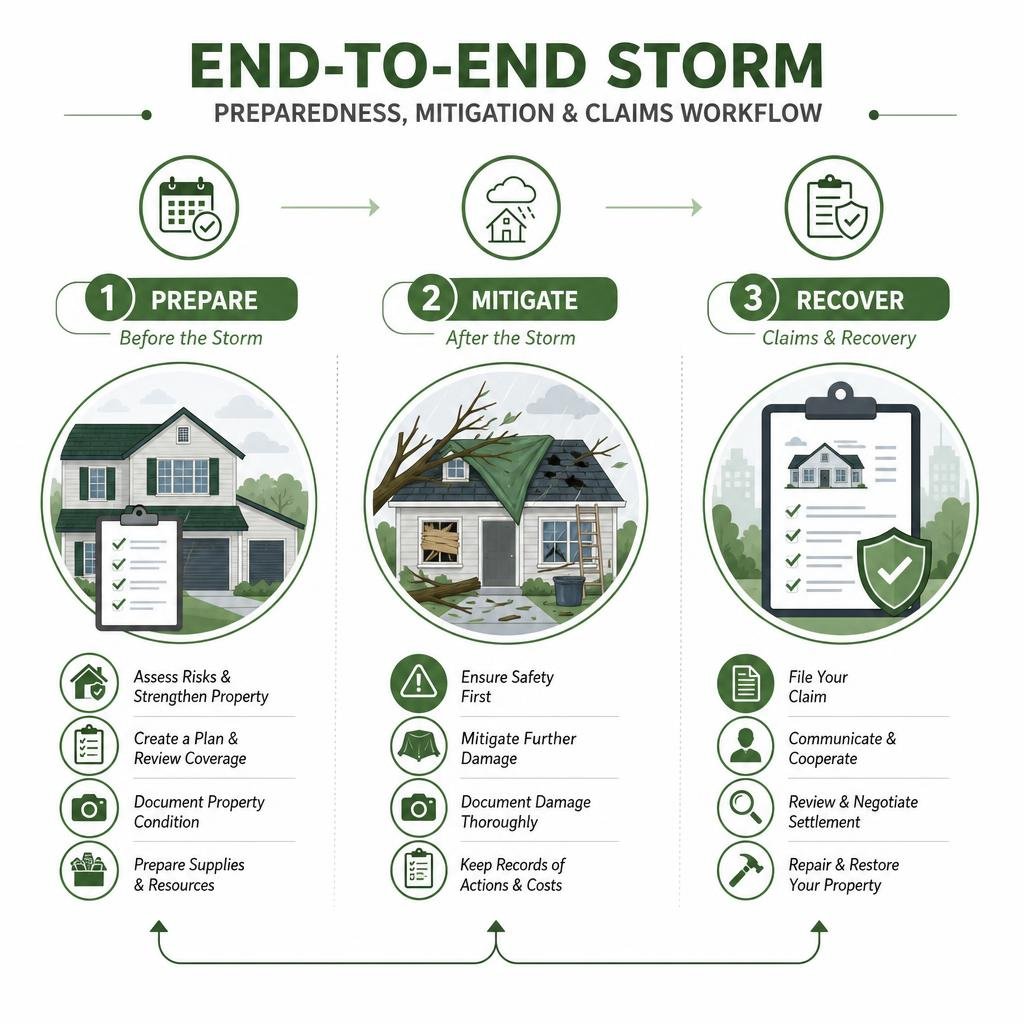
Proactive preparation is the cornerstone of effective storm damage property protection. Before a storm even forms on the horizon, the steps we take can significantly reduce the extent of potential damage, streamline the recovery process, and even influence future insurance costs. Our focus here is on fortifying the physical structure of your property, addressing vulnerabilities, and establishing a baseline for effective claims.
Fortifying Openings with Hurricane-Rated Impact Windows and Reinforced Doors
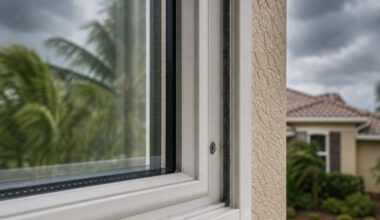
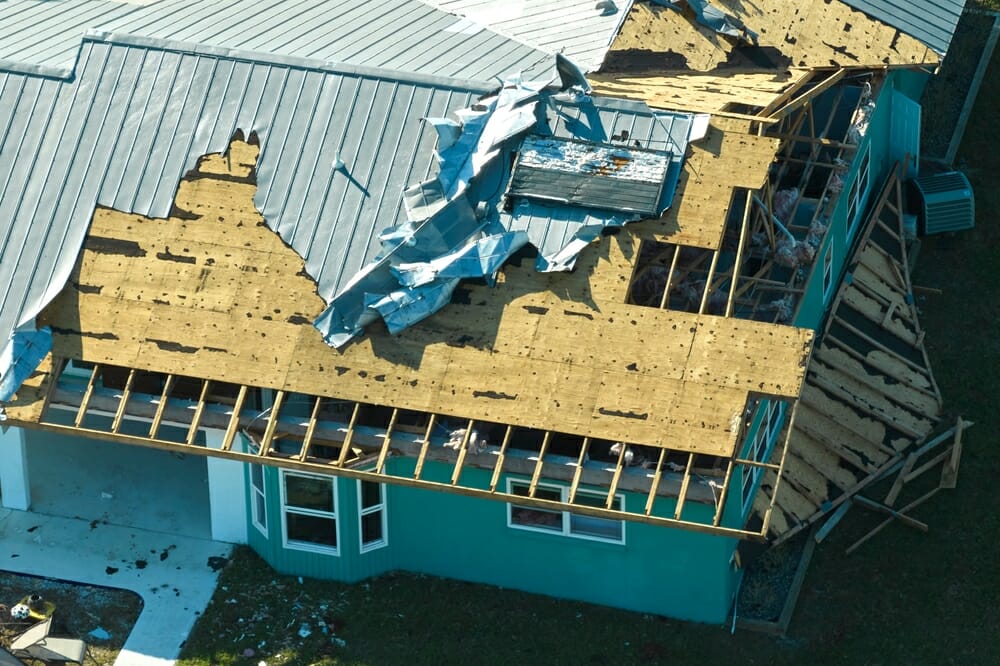
Windows and doors are often the most vulnerable points in a building’s envelope during a severe weather event, especially when facing high winds and projectile hazards. Standard glass can shatter under pressure or impact, creating dangerous debris and compromising the entire structure’s integrity by allowing wind to enter and create uplift forces.
To counter this, we recommend considering upgrades such as hurricane-rated impact windows. These specialized windows are designed with multiple layers of glass and a strong interlayer that resists shattering, even when struck by flying debris. While they may crack, they typically remain intact, preventing wind and water intrusion. For existing windows, permanent storm shutters offer a robust defense. Alternatively, for a more budget-friendly, temporary solution, custom-cut marine plywood panels can be installed over windows and glass doors, ensuring they overlap the frame by at least four inches on all sides for maximum effectiveness.
Entry doors, particularly those leading directly outside, also require attention. We advise upgrading to steel entry doors and reinforcing them with at least three hinges and a long deadbolt. Top and bottom bolts that fasten the door frame directly to the structure provide additional resistance against wind pressure. Garage doors, especially double-entry ones, are notorious weak points. Installing vertical and horizontal reinforcement bars, known as girts, can significantly enhance their ability to withstand powerful winds. Securing movable items inside the garage before a storm is also crucial, as these can become internal projectiles.
Roof Anchoring, Drainage Management, and Exterior Grounds Hardening
The roof is your property’s primary shield against the elements. Ensuring its integrity is paramount. For homes in wind-prone areas, reinforcing the roof structure with strapping or hurricane clips can significantly reduce the risk of wind uplift, where high winds literally try to peel the roof off the building. When it comes to roofing materials, impact-resistant shingles offer superior protection against hail and wind-driven debris. Regular inspection for damaged or loose shingles and sealing around chimneys and vents are essential maintenance tasks.
Effective drainage management is equally vital. Clogged gutters and downspouts can cause water to back up, overflow, and seep into the foundation or behind siding, leading to significant water damage. Cleaning gutters and ensuring downspouts extend away from the foundation can prevent up to 25% of flood risk during heavy rain events.
Beyond the structure, the surrounding landscape plays a critical role. Trees with dead or weakened branches pose a severe risk, as they can fall onto the property, causing extensive damage. Trimming trees and thinning dense canopies, especially those within falling distance of the building, can prevent this. Furthermore, clearing the yard of anything that could become a projectile—such as patio furniture, garbage cans, and decorative items—is crucial. Replacing gravel landscaping with mulch can also reduce the risk of wind-blown debris. For larger outdoor structures like sheds, playhouses, or external fuel tanks, ensuring they are securely anchored to the ground or foundation can prevent them from becoming dangerous projectiles or being swept away. Manufactured homes, in particular, benefit from professional anchoring to withstand both wind and flood forces.
Baseline Documentation Standards for Storm Damage Property Protection
One of the most overlooked yet critical aspects of pre-storm preparation is thorough documentation of your property’s condition. This baseline record serves as irrefutable evidence of your property’s state before any damage occurred, which is invaluable for insurance claims. Nearly 50% of claims get denied—not because the damage isn’t valid, but because insurance companies say there’s no proof when it occurred or blame a lack of maintenance. Without proper documentation, homeowners face an average of $50,000 in out-of-pocket repairs when claims get denied.
We recommend creating a comprehensive digital inventory of your property, both inside and out. This should include:
- Time-stamped photographs:Capture high-resolution images of all exterior components (roof, siding, windows, doors, fences, landscaping) and interior rooms.
- High-resolution video:Walk through your property, narrating what you’re seeing, especially highlighting areas of concern or recent repairs.
- GPS metadata:Ensure your camera or phone’s GPS function is enabled so that photos and videos are automatically tagged with location data, further solidifying their authenticity.
- Digital storage:Store all documentation securely in a cloud-based service or on an external hard drive kept off-site. This ensures accessibility even if your physical property is damaged.
- Maintenance logs:Keep detailed records of all property maintenance, repairs, and upgrades, including dates, costs, and contractors.
This pre-storm baseline documentation is your strongest defense against claim denials and disputes. It proves your property was in good condition and helps verify the extent of damage directly attributable to the storm, rather than pre-existing issues.
Immediate Post-Storm Response and the Policyholder Duty to Mitigate
Once the storm has passed, your immediate actions are crucial not only for safety but also for preserving your insurance claim. This phase is often governed by your policy’s “duty to mitigate” clause, which obligates you to take reasonable steps to prevent further damage to your property. Failing to do so can lead to partial or even full claim denials for any secondary damage that occurs.
Our first priority is always safety. Before re-entering any damaged property, assess for hazards such as downed power lines, gas leaks, or structural instability. If in doubt, evacuate and wait for emergency services to declare the area safe. Once safe, isolate utilities like electricity and gas if there’s any risk of further damage or injury. Promptly notify your insurer about the damage, as delaying this step can also complicate your claim.
Emergency Roof Mitigation: Professional Shrink-Wrap vs. Standard Tarps
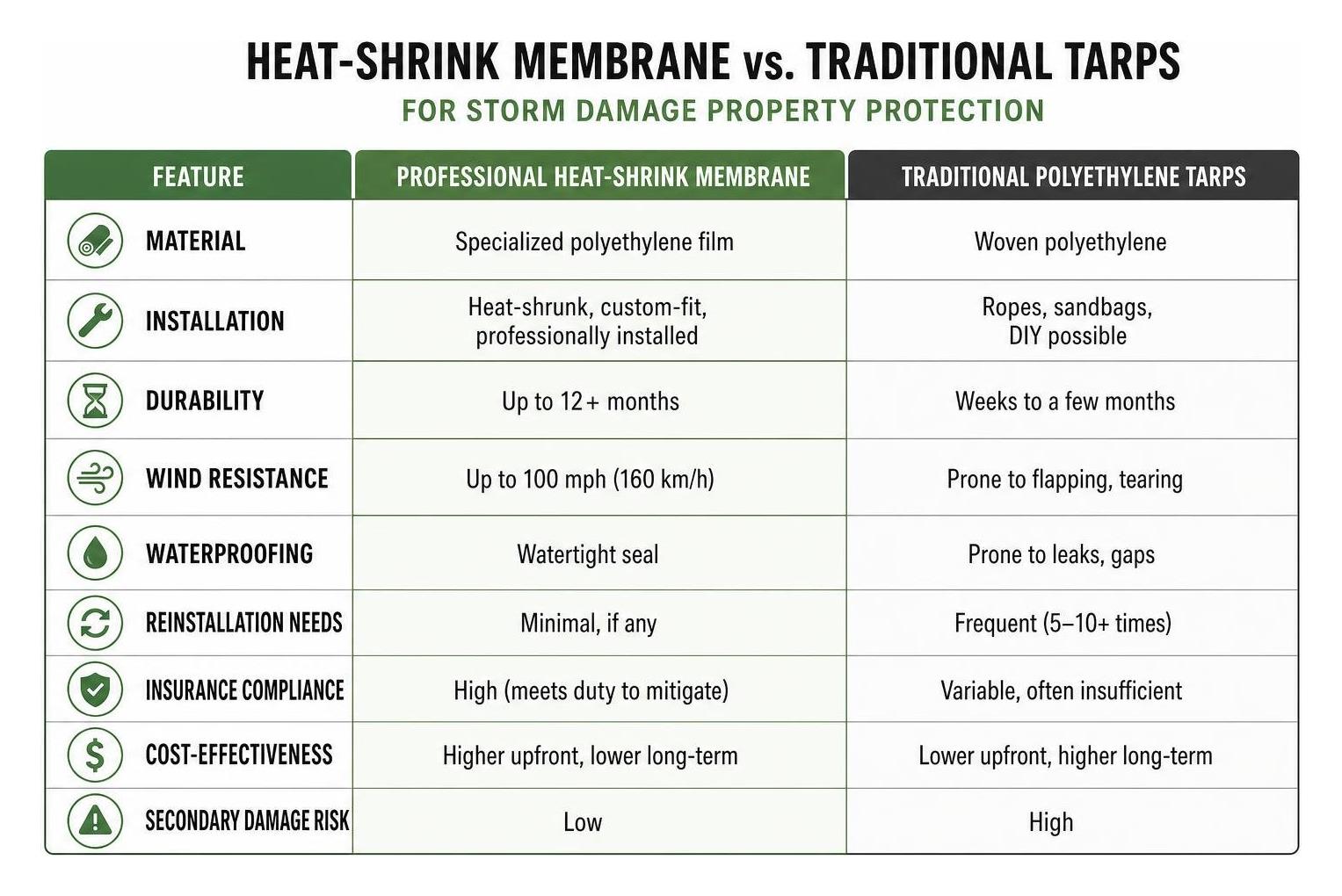
A damaged roof is a critical vulnerability. Water intrusion can quickly lead to extensive interior damage, mold growth, and structural deterioration. Temporary dry-in solutions are essential. While traditional blue tarps are common, their limitations are significant. Over the life of an insurance claim, which can be up to 12 months after a major weather event, tarps fail five times on average and often more than 10 times. They are prone to tearing, slipping, and flapping in the wind, requiring repeated reinstallation and increasing labor costs. This cycle of failure adds stress to homeowners and can lead to ongoing water damage.
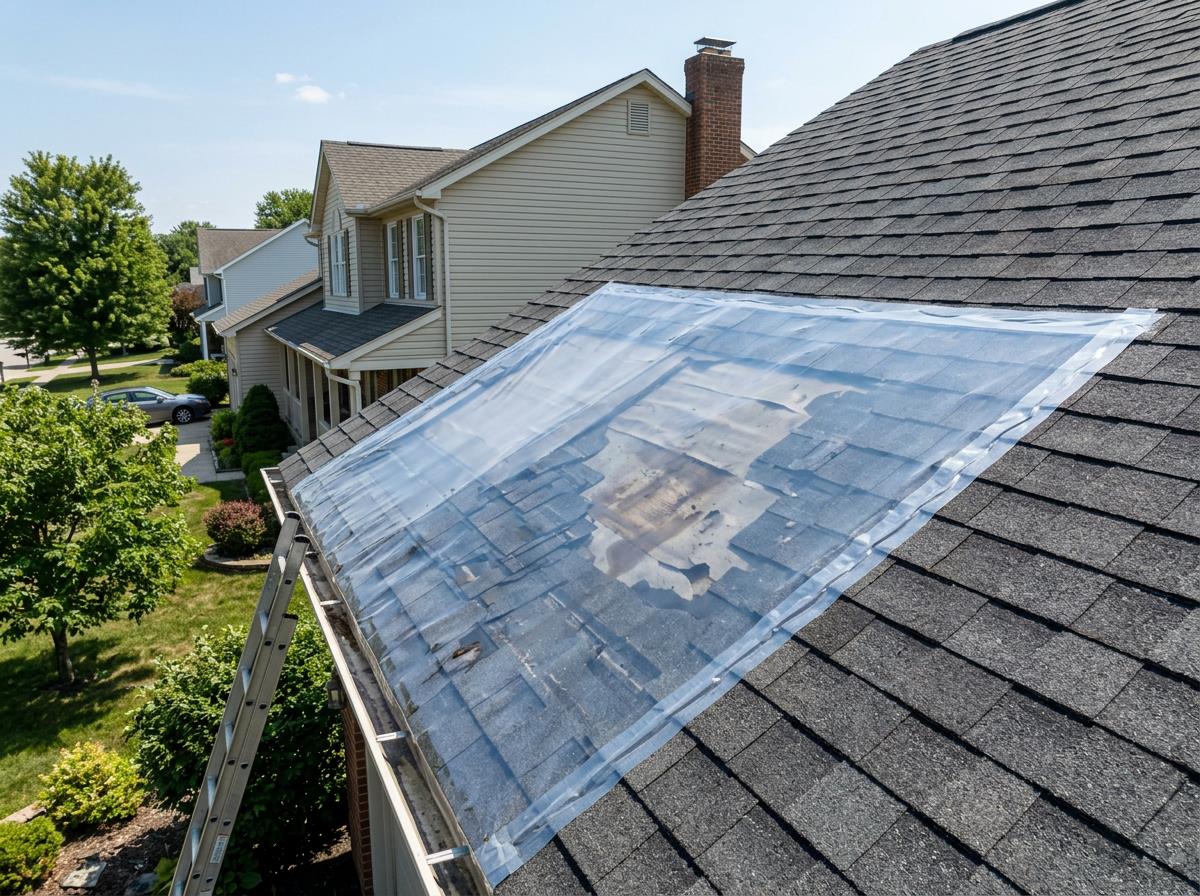
A more durable and reliable solution is professional heat-shrink film, such as Stormseal. This specialized polyethylene film is heat-shrunk to fit snugly over damaged areas, creating a watertight seal that resists winds up to 100 mph (160 km/h) and hail. Unlike tarps, which are typically secured with ropes and sandbags, shrink-wrap adheres securely, eliminating flapping and reducing the risk of further damage. It can remain effective for over a year, providing long-term protection until permanent repairs can be completed—a timeframe often necessary for complex claims.
Insurance policies typically include coverage for “reasonable repairs” to mitigate further damage. Professional shrink-wrapping often falls under this provision, and its long-term durability makes it a cost-effective solution in the long run compared to the repeated costs and damage associated with failing tarps. When choosing a temporary solution, always prioritize durability and professional installation to meet insurance compliance standards and truly protect your property.
Comprehensive Post-Impact Evidence Gathering and Damage Logging
Once immediate safety and mitigation steps are taken, the meticulous process of documenting the damage begins. This is where your pre-storm baseline documentation becomes invaluable. We recommend the following steps for comprehensive post-impact evidence gathering:
- Damage Inventory:Create a detailed list of all damaged items, both structural and personal property. Be specific: include brand names, models, serial numbers, and approximate age.
- Structural Assessment:Walk through your property, noting all structural damage, such as roof punctures, cracked foundations, broken windows, water stains, and compromised walls.
- Interior Moisture Mapping:If water intrusion is suspected, use a moisture meter to identify affected areas, which can help prevent mold growth and support claims for professional drying services.
- Time-stamped Photography & Video:Take new photos and videos of all Ensure these are time-stamped and, ideally, GPS-tagged to provide undeniable proof of when and where the damage occurred. Compare these directly with your pre-storm documentation to clearly illustrate the impact.
- Out-of-Pocket Receipts:Keep meticulous records of all expenses incurred for temporary repairs, emergency services, and mitigation efforts. This includes materials for tarps, professional shrink-wrap installation costs, emergency tree removal, and temporary lodging. These “reasonable repair” costs are typically reimbursable by your insurer.
- Adjuster Coordination:Be present during the adjuster’s inspection. Provide them with your detailed documentation, including both pre- and post-storm evidence. Be prepared to walk them through the damage and answer their questions thoroughly.
- Personal Property Records:For damaged personal belongings, use your pre-storm inventory to cross-reference and document losses. Include purchase receipts if available.
Effective documentation is your strongest ally in navigating the claims process. It helps avoid disputes and ensures you receive the compensation you’re entitled to.
Insurance Policy Navigation: Coverage Limits, Perils, and Cost-Benefit Analysis
Understanding your insurance policy is critical to effective storm damage property protection. Many property owners assume they are fully covered, only to discover significant gaps or limitations after a disaster. A thorough review of your policy – ideally before a storm hits – can prevent unwelcome surprises.
Covered Perils vs. Excluded Risks: Wind, Flood, and Earth Movement
Standard homeowners insurance policies typically cover damage from common perils like windstorms, hail, fire, and lightning. However, it’s crucial to understand what is not covered. For instance, most homeowners and renters policies do not cover flood damage. This is a significant gap, as storms often bring heavy rainfall and storm surge. Flood insurance must be purchased separately, usually through the National Flood Insurance Program (NFIP) or a private carrier. Similarly, damage from landslides, mudslides, and groundwater seepage is often excluded and may require specialized endorsements or separate policies.
When reviewing your policy, pay close attention to your deductible calculations. While many policies feature a standard dollar-amount deductible (e.g., $1,000), some perils, particularly wind and hail in storm-prone regions, may have a percentage deductible. This is often calculated as a percentage of your Coverage A (dwelling coverage) limit. For example, a 2% deductible on a $300,000 dwelling means an out-of-pocket expense of $6,000 before your insurance pays. Understanding these specific deductibles is vital for planning your financial recovery.
Conducting a Financial Cost-Benefit Analysis Before Claim Submission
Deciding whether to file an insurance claim after a storm requires a careful cost-benefit analysis. While it might seem intuitive to file for any damage, doing so for minor issues can sometimes have unintended consequences.
We recommend the following steps:
- Obtain Repair Estimates:Get several quotes from reputable contractors for the full cost of repairs.
- Determine Your Deductible:Understand your out-of-pocket expense based on your policy’s deductible for the specific peril (e.g., wind, hail).
- Compare Costs:If the repair costs are only slightly above your deductible, consider whether filing a claim is truly worthwhile.
- Consider Premium Impact:Filing multiple small claims, or even a single claim for a relatively low amount, can lead to premium surcharges, non-renewal, or impact your claim history, potentially making future insurance more expensive or harder to obtain. Insurers track claim history records, and a pattern of claims can flag you as a higher risk.
- Assess Long-Term Insurability:For minor damage that you can comfortably cover out-of-pocket, paying for repairs yourself might be the best strategy to maintain a clean claims record and ensure long-term insurability at favorable rates.
If the damage is significant and substantially exceeds your deductible, filing a claim is almost always the right decision. However, for minor damage, a thoughtful cost-benefit analysis can save you money and headaches in the long run.
Extended Policy Protections: Personal Property, Vehicles, and Loss of Use
Beyond the dwelling itself, standard homeowners policies typically offer several other crucial protections:
- Personal Property Coverage:This covers your belongings (furniture, electronics, clothing, etc.) up to a specified limit, whether they are in your home or, in some cases, off-premises. For high-value items like jewelry or art, you may need scheduled endorsements for full coverage.
- Comprehensive Auto Coverage:While not part of homeowners insurance, it’s important to note that damage to your vehicle from storms (e.g., falling trees, hail, flood) is typically covered under the comprehensive portion of your auto insurance policy, not your homeowners policy.
- Additional Living Expenses (ALE) / Loss of Use:If your home becomes uninhabitable due to covered storm damage, your policy may cover Additional Living Expenses (ALE), also known as Loss of Use. This includes costs for temporary housing (like a hotel or rental), meals above your normal spending, and other necessary expenses while your home is being repaired. This coverage often has specific limits and timeframes, so understanding these details is important for managing temporary relocation costs. For landlords, “Fair Rental Value” coverage provides reimbursement for lost rental income if a tenant cannot occupy the property.
Reviewing these extended protections ensures you’re prepared for the full spectrum of potential losses after a storm.
Commercial Asset Safeguards and Large-Loss Recovery
Commercial properties face unique challenges when it comes to storm damage property protection. The impact extends beyond physical damage to buildings and contents, often disrupting operations, supply chains, and revenue streams. Effective planning for commercial properties involves not only structural hardening but also robust business continuity strategies.
Commercial Continuity and Storm Damage Property Protection
For business owners, a comprehensive Business Owners Policy (BOP) is often the backbone of storm damage protection. A BOP typically bundles property insurance, general liability insurance, and business interruption coverage into a single policy, offering a cost-effective and integrated solution.
- Building Coverage:This protects the physical structure of your commercial property from covered perils.
- Business Personal Property (BPP) Coverage:This covers your business’s contents, including inventory, equipment, furniture, and fixtures, both on-premises and sometimes off-site (e.g., during transit or at another location).
- Business Interruption Coverage:This is perhaps one of the most critical components for commercial properties. If your business is forced to close or relocate due to covered storm damage, business interruption coverage can reimburse you for lost income, ongoing operating expenses (like payroll and rent), and even temporary relocation costs. Some policies also include coverage for utility disruption, protecting against losses when essential services are out, or for damage to off-site servers or data storage.
Beyond insurance, commercial properties benefit significantly from pre-arranged commercial mitigation contracts with specialized restoration companies. These agreements ensure rapid response and professional services immediately after a storm, minimizing downtime and secondary damage.
Managing Complex Recoveries and Utilizing State Regulatory Protections
Recovering from storm damage to a commercial property, especially after a major event, can be a complex and lengthy process. These often involve significant financial stakes, intricate policy language, and prolonged negotiations with insurers. For those navigating particularly challenging situations, seeking specialized commercial property claims expertise can be invaluable.
Business interruption claims, for example, often require forensic auditing to accurately calculate lost profits and additional expenses. This involves detailed financial analysis and robust documentation to substantiate the claim.
State insurance regulators play a vital role in protecting policyholders. For instance, in Oregon, the Division of Financial Regulation helps consumers with storm-related claims. In 2020, the Division of Financial Regulation helped more than 13,600 Oregonians with insurance claims and recovered more than $2.8 million from insurance companies on behalf of Oregonians. These state departments offer a range of consumer protections:
- Consumer Hotlines:Providing direct access to assistance and information.
- Complaint Filing:Allowing policyholders to formally register disputes with their insurer.
- Dispute Mediation:Offering impartial assistance to resolve disagreements between policyholders and insurance companies.
- Licensing Verification:Ensuring that agents and companies are properly licensed to operate in the state.
We encourage property owners to utilize these resources if they encounter difficulties or feel their claim is being unfairly handled. They can provide guidance, intervene on your behalf, and help ensure your insurer adheres to fair claim practices.
Frequently Asked Questions About Storm Damage Claims
We often encounter common questions from property owners grappling with storm damage. Here, we address some of the most pressing concerns to help you navigate this challenging period.
How does failing to perform temporary repairs affect an insurance claim?
Failing to perform temporary repairs, often referred to as neglecting your “duty to mitigate,” can significantly jeopardize your insurance claim. Insurance policies contain conditions that require policyholders to take reasonable steps to prevent further damage after an initial loss. If you do not promptly address issues like a damaged roof or broken window, and secondary damage occurs (e.g., water intrusion leading to mold, or additional structural collapse), your insurer may deny the portion of the claim related to that secondary damage. They might argue that the additional damage could have been avoided had you acted reasonably. While insurers typically reimburse for reasonable repair costs, neglecting this duty can lead to substantial out-of-pocket expenses and claim denial risks.
What is the difference between a standard deductible and a percentage deductible?
A standard deductible is a fixed dollar amount that you must pay out-of-pocket before your insurance coverage kicks in. For example, if you have a $1,000 standard deductible and $10,000 in covered damage, your insurer would pay $9,000 after you cover the first $1,000.
A percentage deductible, on the other hand, is calculated as a percentage of your dwelling coverage (Coverage A) limit. These are common in hurricane-prone areas or for specific perils like wind and hail. For instance, if your dwelling is insured for $400,000 and you have a 2% hurricane deductible, your out-of-pocket expense for hurricane damage would be $8,000 (2% of $400,000). Some policies may also have “named-storm” deductibles, which are triggered only when a storm is officially named by meteorological agencies. Understanding which type of deductible applies to specific storm perils is crucial for accurately estimating your potential out-of-pocket expenses.
How do state insurance departments assist property owners after severe weather?
State insurance departments, like the Oregon Division of Financial Regulation, serve as vital consumer protection agencies. After severe weather, they assist property owners in several ways:
- Regulatory Oversight:They ensure insurance companies and agents comply with state laws and regulations regarding claims handling.
- Claim Mediation:They can mediate disputes between policyholders and their insurers, helping to resolve disagreements over coverage, settlement amounts, or claim denials.
- Market Conduct Investigations:They investigate patterns of unfair or deceptive practices by insurers.
- Licensing Verification:They verify that insurance companies and agents are properly licensed to conduct business in the state.
- Complaint Processing:They provide a formal channel for policyholders to file complaints against their insurers.
- Restitution Recovery:In some cases, they can help recover funds from insurance companies on behalf of consumers who have been unfairly treated.
These departments act as a crucial resource for policyholders who feel their claim is not being handled fairly or who need guidance on their rights and responsibilities.
Conclusion
Effective storm damage property protection is a multi-faceted endeavor that begins long before a storm makes landfall. By embracing proactive hardening measures, establishing meticulous baseline documentation, and understanding your insurance policy’s nuances, you lay a strong foundation for resilience.
When disaster strikes, rapid mitigation efforts, such as professional shrink-wrapping, are not just about preventing further damage; they are about fulfilling your “duty to mitigate” and preserving the integrity of your insurance claim. Comprehensive post-impact documentation is your undeniable proof, safeguarding against denials and disputes. For commercial properties, this extends to robust business continuity plans and leveraging specialized expertise for complex recoveries.
In September 2026 and beyond, as weather patterns continue to evolve, our collective ability to prepare, respond, and recover hinges on informed decision-making and strategic action. By taking these steps, we empower ourselves to navigate the challenges of severe weather, ensuring the long-term resilience of our properties and our peace of mind.