Everyone would definitely agree that rushing through a country like Austria is almost a crime. The alpine light, the village bakeries, the café corners where nobody checks their watch, none of it lands properly when you’re moving at speed.
Austria in 2026 is genuinely built for travelers who want to slow down and mean it. If slow travel Austria itineraries 2026 are on your radar, or if intentional travel Austria is something you’ve been quietly turning over in your mind, you’re in the right place.
The European Travel Commission reports that 42% of travelers now prefer holidays lasting 7–12 nights, up 11% from 2024 which tells you something important: depth is winning over distance.
Austria, more than almost anywhere else in Europe, rewards the people who stay long enough to actually notice things.
Intentional Exploration: Why Travel Austria With Purpose and Sustainability
Choosing intentional travel isn’t some abstract philosophy. It’s practical. It means you come home with experiences that actually stick, not just a camera roll and a blurry sense of having been somewhere.
Austria’s rail infrastructure, its sustainability credentials, and its sheer cultural texture make it one of the most capable countries on the continent for this style of trip.
Shoulder Season: Austria’s Best-Kept Scheduling Secret
Austria shoulder season travel, May to June, or September through October, transforms the entire experience. Genuinely. Prices ease off, the queues disappear, and you can stand in front of a mountain lake without someone’s selfie stick in your peripheral vision.
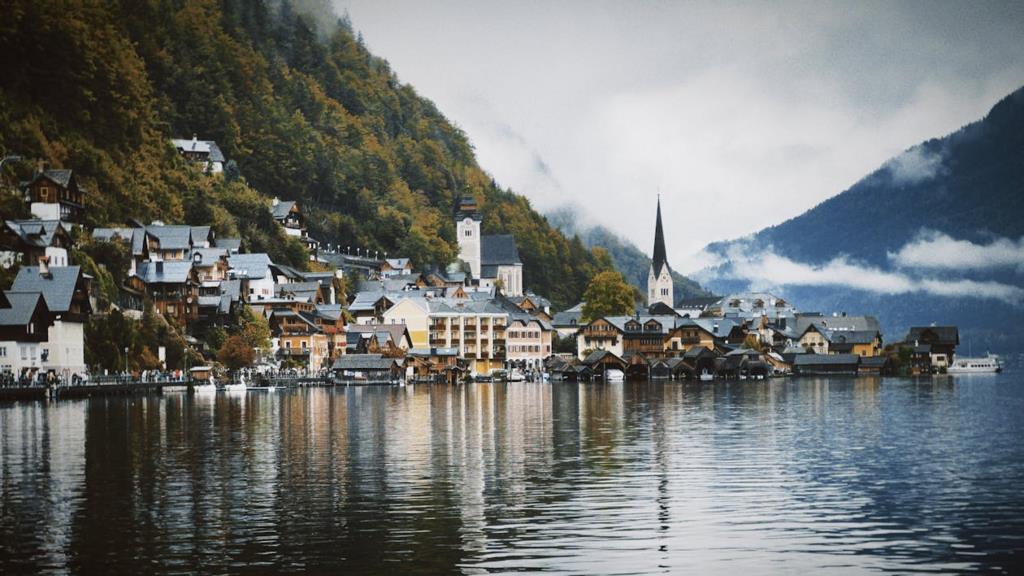
Take Hallstatt. Stunning? Absolutely. But with roughly 760 permanent residents absorbing over one million visitors annually, the village is under real strain. Shoulder season travel doesn’t just benefit you, it distributes pressure more fairly across the destinations you love.
What Sustainable Slow Travel Actually Looks Like in Austria
Sustainable slow travel Austria starts before you even pack. Austria’s ÖBB rail network operates on renewable energy, one of the greenest transit systems in Europe, full stop. Once you arrive, the Austrian Ecolabel and Alpine Pearls certifications take the guesswork out of finding accommodations that actually walk their environmental talk.
Add farmers’ market stops, leave-no-trace hiking habits, and a preference for locally-owned restaurants over chains, and you’ve built a travel style that feels as good in practice as it sounds in theory.
Timing matters. So does how you move once you’re there.
The Practical Side: Connectivity and On-the-Ground Essentials
Austria is wonderfully well-connected, until you’re halfway up a mountain trail or cycling through a valley with no roaming signal and an offline map that stopped loading. Digital preparation matters more than most travelers anticipate, and it matters most precisely when you’re off the beaten path.
For instant, reliable coverage from the moment you land, an esim austria solution removes the usual friction completely, no hunting for a SIM card kiosk, no eye-watering roaming charges, just 4G/5G data active before you’ve collected your luggage.
These eSIM plans let you choose exactly the coverage window you need, from 5 to 90 days, which fits a slow travel timeline far better than rigid short-term options.
Beyond that: an ÖBB rail pass is one of the smartest and most liberating purchases you can make. It settles the car-versus-train debate before it starts. Layer up for alpine weather shifts, download trail maps offline as a backup, and, perhaps most importantly, build at least one completely unscheduled day into each region.
Those unplanned days have a way of becoming the memories you talk about for years.
Curated Itineraries for Immersive Austria Travel in 2026
Knowing when to go is step one. Knowing where to go, and why, is where the real planning begins. Here are the destinations and routes that make immersive Austria travel itineraries in 2026 genuinely worth building your year around.
The Hidden Gems That Deserve Your Attention
Hallstatt can wait, especially if you’re visiting in July. Instead, consider Traunsee or Wolfgangsee for alpine lake drama without the Instagram traffic jams. Burgenland, tucked into Austria’s eastern reaches, is another revelation: vineyard-covered hills, medieval castle ruins, thermal spas, and a pace of life that feels almost therapeutically slow.
These aren’t “consolation” destinations. They’re often better.
Austria’s Cities, Experienced Without a Checklist
Vienna is a completely different place when you stop trying to conquer it. Spend a few real days there, wander the Am Hof market, find a courtyard garden the tour buses haven’t discovered, and surrender to the café culture that Viennese people have been perfecting for centuries.
Graz rewards lingering through its Styrian food scene alone. Innsbruck offers something rare: medieval streets you can walk in twenty minutes that deposit you practically at the base of a mountain.
Austria’s cities hold quiet magic. You just can’t find it when you’re rushing.
Nature Routes Built for Introspection
The Paznaun High Route, a 9-stage, 131-kilometer trek recognized in 2025, is one of the most rewarding long-distance trails in Tyrol, designed almost perfectly for slow, reflective travel. If that’s more commitment than your itinerary allows, Innsbruck’s city-to-mountain e-bike routes with alpine hut stops are a genuinely wonderful alternative.
And the Wachau Valley cycling path along the Danube? Passing Melk Abbey, riverside vineyards, and centuries-old villages, it might be the single most satisfying slow travel experience Austria offers.
The mountains always win, eventually.
A Sample 10-Day Sustainable Austria Itinerary
Here’s a practical, ready-to-use framework that balances discovery with genuine rest, because a slow travel itinerary that packs in too much has missed the point entirely.
| Days | Destination | Focus |
| 1–3 | Vienna | Café culture, hidden gardens, local markets |
| 4–6 | Graz & Styria | Wine taverns, farmer’s markets, spa stays |
| 7–8 | Innsbruck | E-bike mountain forays, Alpine Pearls eco-hotel |
| 9–10 | Wachau Valley | Biking the Danube, Melk Abbey, vineyard lodging |
Each leg connects seamlessly by rail. No car needed, no complicated logistics, no stressed arrivals.
The Wachau in late September especially benefits from Austria shoulder season travel, golden vineyard light, almost no tour buses, and a sense of space that peak season simply can’t offer.
Great itineraries only work when your practical tools match your intentions.
Frequently Asked Questions
When is the best time to visit Austria for slow travel?
May–June and September–October hit the sweet spot, good weather, manageable crowds, and noticeably lower prices. These months are genuinely ideal for unhurried exploration.
How do I avoid over-scheduling my trip?
Pick one anchor experience per day. A morning market, an afternoon hike, a long dinner somewhere local. Austria’s rail connections are relaxed enough that rigid timing rarely serves you.
Why rail or bike instead of a car?
Austria’s ÖBB trains run on renewable energy and connect almost everywhere you’d want to go. The Wachau cycling path is beautifully maintained and links major sights without requiring a single fuel stop.
How do I find genuinely local experiences?
Start with your accommodation host. Smaller guesthouses and farmstays are often fountains of local knowledge that no travel app has indexed. Regional tourist boards in Burgenland and Styria also maintain current listings of artisan markets and local festivals.
What should I actually pack?
Layers, not volume. Waterproof hiking shoes, a packable rain jacket, a refillable bottle, a compact daypack. Austria’s towns are well-stocked, you don’t need to prepare for every possible scenario.
Austria in 2026 is Worth Your Time
There’s a version of travel that leaves you tired, vaguely dissatisfied, and already planning the next trip to fill whatever was missing. Austria, done slowly and intentionally, is the opposite of that. Reliable rail connections, genuine sustainability infrastructure, underexplored regions waiting for curious visitors, and a culture that quietly values depth over spectacle, it’s a rare combination.
Whether you’re cycling through Wachau vineyards in September light, walking the Paznaun ridgeline, or simply sitting in a Viennese café with nowhere particular to be, Austria rewards presence over pace. Plan with intention. Travel with curiosity. Then let the country do the rest.