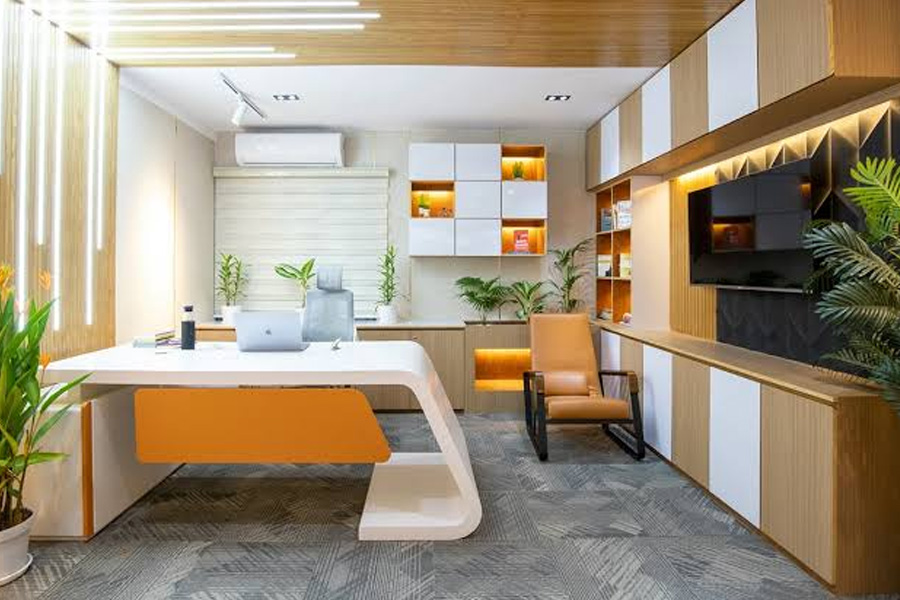
A messy desk is not just an eyesore. Your brain treats every stray file and cable as one more thing fighting for its attention, and that fight is tiring even when you cannot feel it happening. Good storage solutions for offices fix this at the source, not with a once a month tidy up that undoes itself by Wednesday. Princeton researchers found that visual clutter competes directly with your brain for focus, cutting how well people process what is right in front of them. This piece covers the fixes that actually hold, not the ones that look nice for a single photo.
Signs Your Office Has a Storage Problem
Some signs are obvious. Others hide in plain sight.
- Staff searching desks and drawers for the same file more than once a week
- Shared printers buried under old paperwork nobody has claimed
- Meeting rooms doubling as dumping grounds for boxes and old equipment
- Personal items spilling onto desks because there is nowhere else to put them
- New hires with nowhere proper to store their own gear on day one
What Does Clutter Actually Do to Your Brain?
This is not just an opinion about tidy desks looking nicer. Princeton Neuroscience Institute found that clutter in your visual field competes for attention the same way a second conversation does when you are trying to read. Your brain has to work harder to filter out what does not matter, and that extra work drains focus long before lunch. Staff surveys back this up too, with well over half of workers saying a messy shared space makes it harder to concentrate. None of this means a spotless office. It means giving every item an actual home, so your eyes and brain stop doing extra work all day long.
How Much Time Do Aussies Waste Looking for Stuff?
Time is the part most owners never measure. Studies on workplace habits show the average person loses over four hours a week just searching for misplaced paperwork and supplies, which adds up to close to a full working week every couple of months. Multiply that across a team of twenty and the number gets hard to ignore, especially once you put a wage against every one of those wasted hours. Storage is not just about looking organised for visitors walking through reception. It is a direct fix for hours that quietly vanish from the workday, hours that never show up on any invoice but cost real money all the same.
Should You Go Vertical?
Floor space in most Australian offices costs real money per square metre, especially in Sydney and Melbourne where rent keeps climbing every year. Going up instead of out is the cheapest fix nobody talks about. Tall, narrow shelving holds the same amount as a wide unit while using a fraction of the floor space it takes up. Wall mounted storage keeps walkways clear too, which matters more than people think once you count how much time gets lost weaving around boxes during a busy day. The trick is weight. Heavier items belong low, near waist height, while light or rarely used gear can sit up high, out of the way completely.
Which Storage Fits Which Problem?
| Storage Type | Best For | Watch Out For |
| Mobile pedestals | Personal items near each desk | Needs lockable wheels on shared floors |
| Filing cabinets | Paper records and contracts | Takes up floor space fast |
| Wall shelving | Books and reference material | Needs solid wall fixing for safety |
| Lockers | Shared desks, hybrid teams | Needs enough units for peak office days |