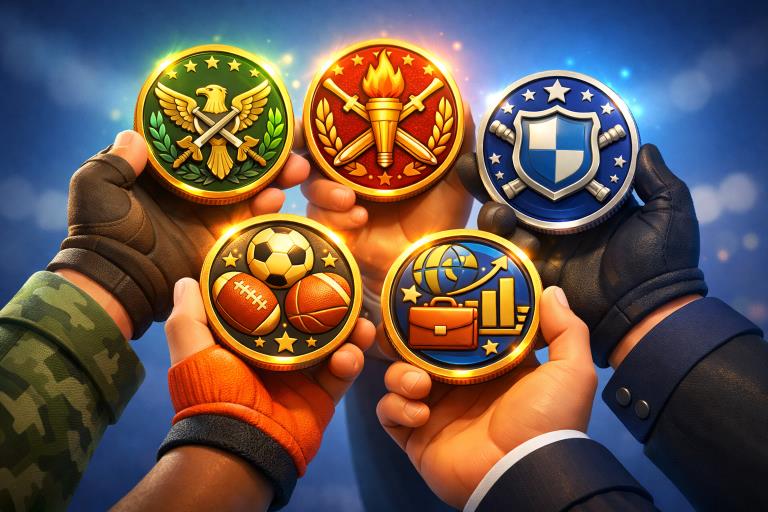
Challenge coins have served as enduring symbols of honor, unity, and camaraderie, with roots deeply embedded in military tradition and branches extending into all corners of modern society. Today, these distinctive medallions bearing an organization’s insignia are more than commemorative keepsakes. They represent shared experiences and serve as tokens of recognition. For organizations and individuals interested in celebrating achievements or strengthening group identity, custom challenge coins offer a highly personalized way to capture and display meaningful moments.
As challenge coins transition from exclusive military use to a broader role in public and private sectors, their designs and uses have evolved, maintaining both tradition and adaptability. Understanding the origins, rituals, and contemporary adaptations of challenge coins provides insight into why they continue to foster a sense of belonging and pride in a wide range of environments.
Origins of Challenge Coins
The historical origins of challenge coins are subject to multiple compelling stories, but one of the best-known accounts stretches back to World War I. According to this narrative, a wealthy lieutenant ordered bronze medallions stamped with his flying squadron’s insignia and gifted them to his unit. When a pilot from the unit was captured behind enemy lines and later escaped, he used his coin to prove his identity to friendly forces. This incident popularized the idea of the challenge coin as a marker of loyalty, belonging, and even survival. Today, the power of a simple coin still resonates with members across countless organizations, bridging history and present-day recognition.
Military Tradition and Rituals
Challenge coins hold a unique place in military culture, representing much more than mere physical tokens. They are symbols of experiences shared under strenuous conditions, and exchanging coins fosters bonds that last a lifetime. One of the most notable traditions is the “coin check,” a ritual where a member initiates a challenge for everyone present to produce their coin. Anyone who cannot do so is expected to buy a round of drinks, turning the ritual into a lighthearted but constant reminder of unity. Challenge coins are often awarded by commanding officers or peers to recognize acts of valor, completion of training, or exemplary service, reinforcing a deep sense of pride and accomplishment.
Expansion Beyond the Military
The tradition of challenge coins has moved well beyond the military, establishing a meaningful presence in law enforcement agencies, fire departments, government institutions, and even the world of sports. For instance, various police departments use challenge coins to recognize outstanding service, boost morale, and foster esprit de corps among officers. Sports teams have embraced the practice to memorialize championships or unique achievements. In the private sector, corporations and nonprofits now bestow coins as tokens of appreciation and affiliation, signifying the tradition’s versatility and broad appeal.
Design and Symbolism
As challenge coins have evolved, so have their designs. Modern coins range in shape and size but typically feature bold, meaningful imagery tied directly to their organization’s identity. They often include mottoes, dates, and custom symbols, with additional flourishes such as color fillings, engraved names, or premium plating in gold or silver. The process of creating a coin is collaborative, with each element meticulously selected to communicate the holder’s membership or achievement. These designs help coins transcend mere keepsakes to become treasured artifacts of organizational culture and personal accomplishment.
Collecting and Trading
Collecting challenge coins has blossomed into a prominent hobby, with enthusiasts seeking to expand their collections through trading and organized exchanges. Collectors may focus on acquiring coins tied to specific branches of the armed forces, special events, or rare units, while others seek out limited-edition coins issued for notable missions or unique occasions. This vibrant community amplifies the sense of camaraderie and offers individuals a tangible way to document and relive shared stories and achievements over time.
Modern Applications
Beyond their traditional and ceremonial uses, challenge coins have evolved into highly adaptable tools for motivation and recognition in diverse contexts. Major corporations now use coins to reinforce employee engagement, celebrate career milestones, and introduce marketing incentives. Nonprofit organizations present coins to acknowledge exceptional volunteer efforts or donor contributions, both as a symbol of appreciation and a tool for fostering loyalty. The ability of challenge coins to serve so many functions demonstrates their enduring relevance and appeal.
The Future of Challenge Coins
As technology progresses, the design and potential uses of challenge coins continue to expand. Intricate, digitally-crafted designs, personalization, and even virtual or digital coins are making their way into popular use. These new forms allow users to integrate tradition with cutting-edge technology, ensuring that the symbolic value of the challenge coin is both preserved and refreshed for future generations. Whether in physical or digital form, challenge coins are poised to remain cherished emblems of recognition and unity.
In conclusion, challenge coins have transcended their original military role to become powerful tools for unity, recognition, and motivation in countless organizational settings. Their deep history, meaningfully designed symbolism, and evolving applications ensure that challenge coins will continue to be significant markers of honor and belonging in a rapidly changing world.