It is 9 p.m., and the truck is booked for 8 a.m. The kitchen still has half-packed boxes, a bike is leaning in the hallway, and nobody can find the screwdriver for the bed frame. Almost every move hits this moment at least once.
The good news is that what to do before movers arrive comes down to a short list. Finish packing, set aside anything the crew cannot load, clear the walkways and the parking spot, take apart what you can, pack an essentials box, and gather your paperwork. Get those done tonight, and the crew can start working the minute they walk in.
What to Do Before Movers Arrive: The Quick Version
Tonight’s goal is simple: remove every surprise from tomorrow morning. Many local moves are priced by the hour, so each delay you prevent is time (and money) saved.
Here is the short night-before checklist:
- Seal and label every box, and gather leftovers into one spot.
- Set aside items your movers will not load, such as paint, propane, and perishable food.
- Clear hallways, stairs, and doorways, and plan where the truck will park.
- Take apart beds, tables, and shelves, and bag the hardware.
- Empty, unplug, and prep appliances.
- Pack an essentials box and a bag of valuables that stay with you.
- Gather documents, phone numbers, and payment details, and set your alarm.
Finish Packing and Label Boxes So the Crew Can Load Fast
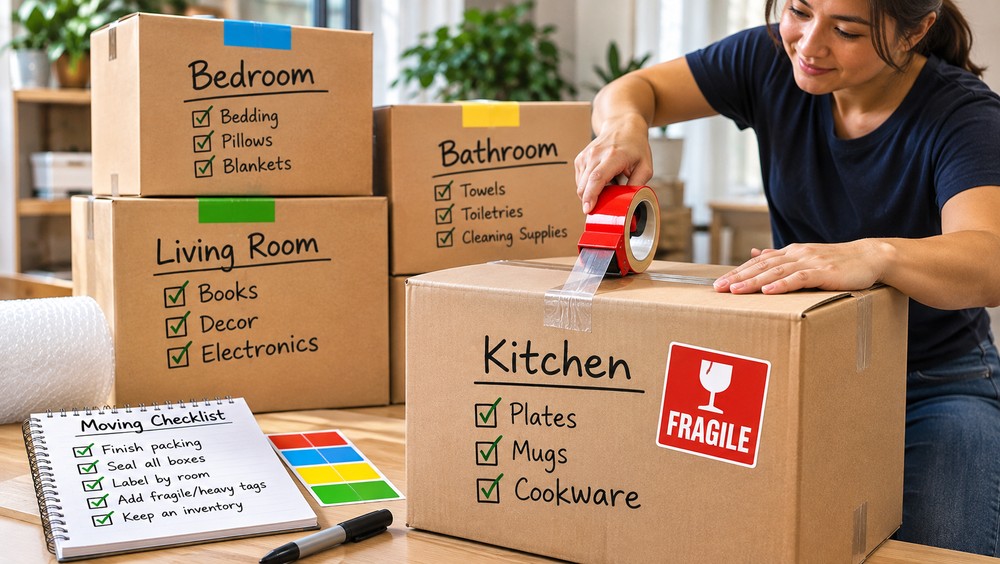
Every box should be sealed, labeled by room, and light enough for one person to lift. A box that bursts at the bottom stops the whole line, so put heavy things like books in small boxes and keep large boxes for lighter items such as bedding.
Write the room name on the side of the box, not just the top, because tops get hidden once boxes are stacked. Add short notes like “fragile,” “this side up,” or “open first” where they matter. That small detail helps the crew load the truck in a smart order and tells them where each box should go at the new place.
Before you go to bed, walk through each room and look for strays: a phone charger behind the couch, shoes by the door, a laundry basket. Loose items slow a crew down, so bag them or box them now. Leave only what you truly need tonight and tomorrow morning, and keep it together in one spot, such as the kitchen counter.
Set Aside the Items Movers Will Not Load
Every moving company keeps its own list of items it will not transport, so ask for yours before packing day. According to This Old House, what counts as hazardous can vary from one provider to the next, and the best approach is to sort these items early and plan how you will get them to the new home yourself.
Most of the problem items fall under household hazardous waste, a term for household products that are toxic, corrosive, ignitable, or reactive. The U.S. Environmental Protection Agency lists examples such as motor oil, paints and solvents, household cleaners, drain openers, pesticides, and compressed gas tanks like propane. Check your garage, basement, shed, and under-sink cabinets, because these products hide in all of them. Perishable food is another common “no” for movers, so plan to eat down the fridge and freezer in the days before.
Put everything in this group in one marked corner, away from the boxes the crew will carry. Then pick a plan for each item:
- Use it up or give it to a neighbor, if the container is sealed and in good shape.
- Take it to a local household hazardous waste collection site.
- Carry it in your own vehicle, following the label’s safety directions.
Do not pour leftover chemicals down the drain, onto the ground, or into storm sewers. The agency strongly advises against all three, and also says to check with your local solid waste management office, since disposal rules differ by area. Houseplants and pets belong in your car too, not on the truck.
Clear Walkways and Save a Parking Spot
Clear walkways for movers is one of the cheapest ways to speed up a move and keep everyone safe. Picture two people carrying a dresser down your hallway. Shoes, bins, a floor lamp, or a loose rug in that path means stops, detours, and a higher chance of a fall or a scuffed wall.
Walk the full route from every room to the front door and remove anything in the way. Roll up area rugs or tape down the edges. Move small furniture aside, and open or prop doors that will be used often. If you live somewhere with snow or ice, shovel and salt the steps and driveway tonight, since a slick path is the fastest way to turn a move into an injury.
Then think about the truck. It needs a legal, level spot close to the door, because every extra step multiplies across hundreds of trips. In a busy neighborhood, set out a few cones or chairs the night before to hold the space, and check for parking permits or street-cleaning rules. If you live in an apartment or condo, find out whether the building requires an elevator reservation or any paperwork before a moving company can work there.
Prep Furniture and Appliances, and Confirm What Your Crew Handles
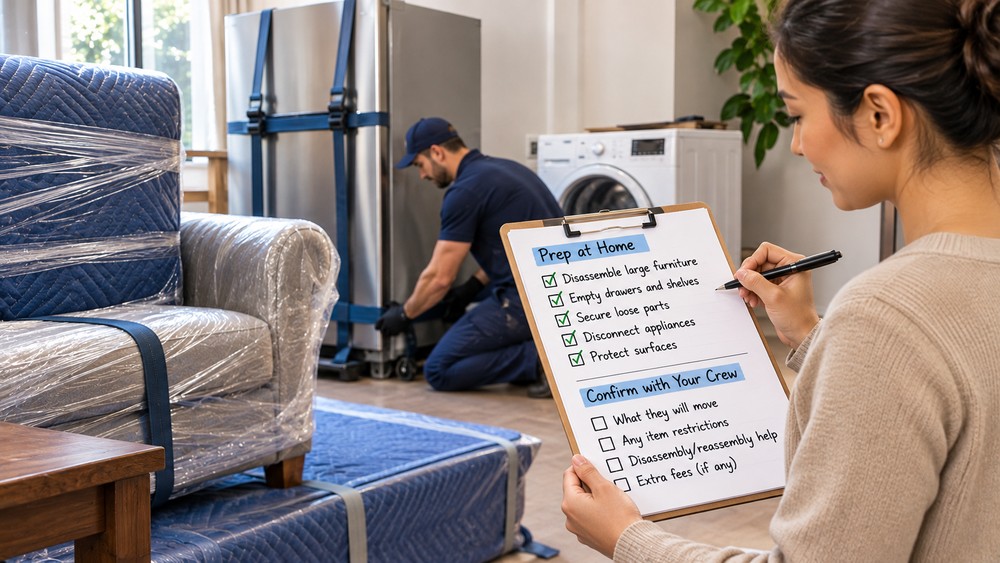
Take apart whatever you can, such as bed frames, desks, and shelving, and tape or bag the screws and brackets to the piece they belong to. A quick photo of each setup makes reassembly easy. Remove TVs from wall mounts, and snap a photo of the cable layout behind them so you are not guessing at 10 p.m. at the new place.
Appliances need a little care too. Unplug the refrigerator and empty it, and let the freezer defrost so it does not leak in the truck. For a washer, disconnect the hoses and drain them, then check the manual to see whether it needs transit bolts or another lock for the drum. Manufacturer instructions vary, so use them over any general rule.
Not every crew handles the same jobs, so confirm yours before tomorrow. Some movers disassemble and reassemble furniture and wrap it in pads, while others expect it ready to go. As one example, 2 Jacked Guyz Moving, a moving company in Keene, New Hampshire, lists furniture disassembly and reassembly and protective padding among its home moving services, so a customer using that kind of provider can leave those tasks to the crew. With another company the answer could be different, which is why a quick call tonight is worth it.
While you have the office on the line, confirm the arrival window, the crew size, how and when you will pay, and who to call if something changes. Mention anything unusual, like a piano or a heavy safe, so the right equipment shows up.
Pack an Essentials Box and Keep Valuables Close
An essentials box is a single box or bag, packed last, that travels with you instead of on the truck. It covers your first night, when the rest of your belongings are still stacked in boxes.
Good things to include are:
- Phone chargers and a power strip
- Medications, toothbrushes, and basic toiletries
- A change of clothes and pajamas for each person
- Towels, a shower curtain, and toilet paper
- Paper plates, cups, a few utensils, and snacks
- A box cutter, basic tools, and a roll of tape
- Pet food and bowls, if you have pets
Write “essentials, do not load” on the box in large letters and put it in a closed room or in your own car tonight. A box left by the door is the one most likely to end up on the truck by mistake.
Do the same with valuables and documents. Jewelry, passports, laptops, checkbooks, and important papers should ride with you. Items you cannot replace are safest in your own hands.
Get Your Paperwork and Your Morning Plan in Order
Keep your documents where you can reach them quickly. The Federal Motor Carrier Safety Administration publishes a moving checklist for consumers that advises reading the estimate, bill of lading, and inventory carefully before signing anything. It also suggests following along as movers inventory your goods, giving the driver ways to reach you, and keeping the bill of lading until your belongings are delivered and any claims are settled. That guidance is aimed at interstate moves, and local rules vary by state, but the habits work for any move.
Write down the crew lead’s phone number, make sure your own is on file, and set an alarm with a buffer.
For the morning itself, plan where the kids and pets will be. A busy home with doors opening and closing is no place for a toddler or a nervous dog, and a quiet spot with a friend or relative is safer for everyone. Keep the people who must talk to the crew and send everyone else out. Before the crew arrives, take a few photos of your furniture and any fragile items so you have a record of their condition.
When the crew arrives, walk them through the home. Point out fragile pieces, anything that should be loaded first or last, and the items that are not going. Then stay close enough to answer questions, and do one final sweep of closets, cabinets, and the garage before the truck pulls away.
Frequently Asked Questions
How early should I be ready before movers arrive?
Aim to be fully packed the night before, with boxes sealed and labeled. Keep out only the basics for the morning, such as coffee, toiletries, and chargers. Crews usually start loading as soon as they arrive, and anything left unpacked gets rushed, left behind, or adds time to an hourly job.
Do I need to be home when the movers arrive?
Yes, you or a trusted representative should be there. Someone needs to walk the crew through the home, answer questions, and confirm which items stay or go. Federal consumer guidance for movers also advises staying until the crew finishes, so you can do a final check and sign the paperwork correctly.
Should I empty my dresser drawers before moving day?
It depends on the crew, so ask in advance. As a rule, remove breakables, liquids, and heavy items such as books or tools, because they can make a dresser too heavy to carry safely. Some movers allow lightweight clothing to stay inside, while others prefer drawers to be empty.
What should I not pack in boxes for the movers?
Keep hazardous products, perishable food, plants, and pets out of the truck, and carry valuables and documents yourself. That includes jewelry, passports, laptops, and medications. Your mover can give you its exact prohibited-items list, so ask for it early enough to arrange disposal or transport.
Do I need to clean the house before the movers arrive?
You do not need a deep clean. Sweep or vacuum the main paths and keep floors dry so no one slips. Save the full cleaning for after the home is empty, when you can reach every corner and wall without boxes in the way.
A Calmer Morning Starts Tonight
Moving day will never be perfectly smooth, but it goes a lot better when the basics are handled the night before. Boxes are sealed, hazardous items are set aside, paths are clear, and the essentials are with you. The crew can then spend its time on the heavy lifting rather than on solving problems that were avoidable.
If you can only do three things tonight, clear the walkways, pack your essentials box, and sort out the items movers will not load. Those three prevent most of the delays that make moving days feel chaotic.