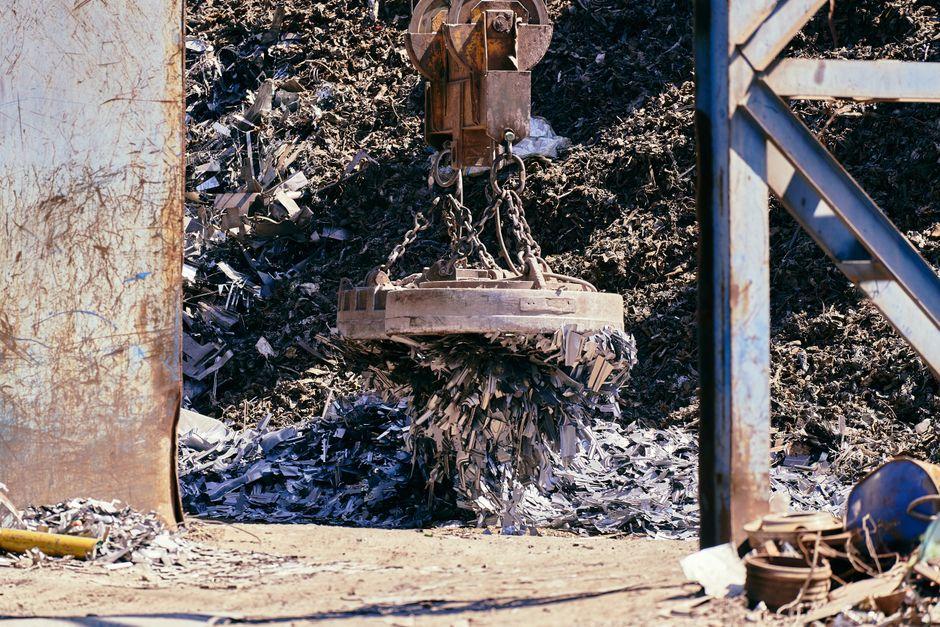
Most operations treat the material leaving the site as an afterthought. It gets loaded, hauled, and forgotten, and whatever check arrives afterward is accepted as the number. That habit costs businesses in Cincinnati real revenue every year, and the losses rarely show up anywhere a finance team would notice, because there is no line item for money that was never collected in the first place. Manufacturing plants, fabrication shops, demolition crews, and commercial facilities all generate material daily, and without a system around it, that material either piles up, gets mishandled, or sells for less than it should.
Getting Paid Correctly for Scrap Metal
Scrap metal leaving industrial and demolition sites routinely gets misgraded and misidentified, and when material carries the wrong grade, the seller receives the wrong price. High-value alloys lumped into generic categories, mixed loads with no sorting protocol, and reliance on the buyer’s own grading all push returns below what the material is actually worth. The best way to handle a problem like this is to work with Millbridge Metals Cincinnati to audit, grade, and place your material with the right mill. Every load comes back with a settlement report breaking down weight, grade, and pricing.
That distinction between selling and managing matters more than it first appears. A company that buys your metal profits when the grade comes in low. A third party working on your side of the transaction profits when the return comes in high, which puts the incentives where they belong and changes who is watching the details on every receiver report.
The Audit Nobody Runs
Very few facilities know what they generate. They know roughly what leaves and roughly what comes back, and the gap between those two figures is where the money disappears.
A proper audit examines what materials the operation produces, how they are being separated, container placement and sizing, pickup frequency, existing vendor arrangements, and grading accuracy on past loads. That exercise alone frequently surfaces thousands in revenue that was being left on the table through nothing more dramatic than habit.
The output should be a roadmap rather than a report. Container sizing matched to actual volume, pickup frequency matched to production flow, grading protocols the crew can follow, and target placements for each material type. Benchmarks and timelines make the plan measurable, and the operator should approve it before anything moves.
Outdated Vendor Relationships
A large share of businesses sell to the same local yard they have used for a decade or more. Nobody has benchmarked those prices against current market rates in years, and nobody has put the volume out for competitive bidding.
Relationships have value, but they are not a pricing strategy. Market rates move, mill demand shifts by material and by region, and a buyer who was competitive five years ago may simply not be anymore. Without periodic comparison, there is no way to know which situation you are in.
The same applies to reach. A local yard places material locally. An operation with domestic and international mill relationships can move cut grades, shred, bush, or exotics to wherever the material earns the most, and that geographic flexibility is often worth more than any negotiation on a single load.
Logistics That Quietly Cost You
Containers sitting full are a double loss. The material inside is not earning anything, and the footprint it occupies is productive space taken out of the operation.
Delayed pickups create the same problem on demolition work, where material removal sits on the critical path. Slow removal extends the schedule, keeps labor and equipment on site longer than budgeted, and pushes back the revenue that closes out the job. Crews that integrate removal into the project from day one rather than treating it as cleanup at the end avoid that entirely.
Scheduling that matches actual production rhythm solves most of this. Containers sized to fill at a predictable rate, pickups timed to that rate, and hauling available on demand when a project moves faster than planned. Rolloff service, scheduled collection, and on-call hauling each suit a different operation, and the right mix depends on volume and pace rather than on what a vendor happens to offer.
Tracking and Documentation
Anything that cannot be verified will eventually be disputed, and disputes without records are settled in favor of whoever holds the scale. Certified weights, detailed grade breakdowns, and transparent settlement reporting on every load remove that exposure.
Real-time tracking matters more than most operators expect. Knowing what a project is shipping and yielding while it is still running allows adjustments mid-job rather than post-mortems afterward. On a large demolition or a multi-site program, that visibility is the difference between managing the outcome and receiving it.
Theft prevention tracking belongs in the same category. Material walks off sites more often than anyone likes to acknowledge, and the operations that catch it are the ones counting what leaves. Compliance documentation sits alongside it, since regulated material carries reporting obligations that become expensive when they are discovered rather than met.
Building a System That Scales
The operations that handle this well have one thing in common. Somebody owns the process. A dedicated project manager who knows the material mix, the schedule, and the placements means the crew has one number to call and one person accountable when something needs to change.
The approach has to survive growth and change. A program built around this quarter’s volume breaks the moment a large job arrives, or the material mix shifts, so the sizing, the schedule, and the placements all need to flex. Whether an operation produces a couple of loads a month or thousands of tons, the process itself should stay consistent while the scope moves around it.
None of this is complicated work. It is auditing, planning, and executing with attention to detail on a category that most businesses have decided not to think about. That decision is precisely why the money is available to recover, and recovering it costs nothing beyond the willingness to look at the numbers honestly and act on what they show.