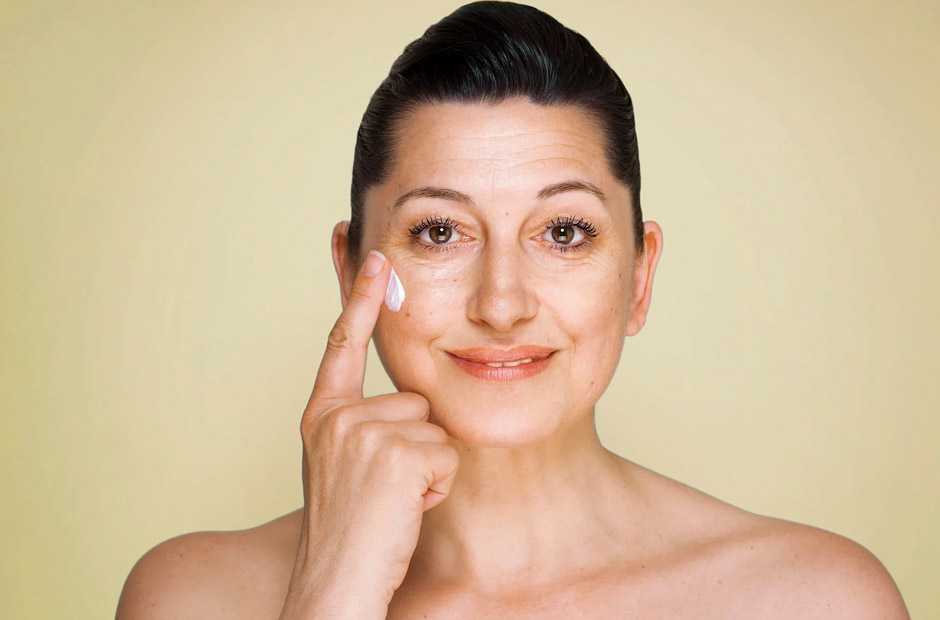
The global beauty industry has spent decades convincing us that the secret to a youthful appearance comes in a jar. We dutifully apply retinol, paint on vitamin C serums, and massage expensive moisturizers into our skin every night. We expect these topical solutions to erase fine lines, lift sagging skin, and restore the firm contours of our youth.
While high-quality skincare can certainly improve skin texture and brightness, it eventually hits a hard biological wall. The truth is, many of the most noticeable signs of facial aging do not actually originate in the skin.
Instead, they are the direct result of deep structural changes happening beneath the surface, specifically in the bones of your face. When your jaw structure begins to shift, even the most advanced anti-aging creams cannot compensate for the loss of foundational support.
1. The Role of the Skeletal Scaffold
To understand why topical treatments fall short, it helps to view your face like a house. Your skin, fat pads, and muscles act as the drywall, insulation, and paint. Your facial bones serve as the foundational wooden framing.
As we age, our bones undergo a natural process called resorption, where the body breaks down old bone tissue faster than it builds new bone. In the lower face, this means the jawbone slowly shrinks, recedes, and loses its overall mass.
When the underlying scaffold diminishes, the overlying skin and fat pads suddenly have nothing to hold them up. This structural deficit causes the skin to drape loosely, creating the appearance of jowls and a less defined jawline. No amount of cream can rebuild lost bone tissue.
2. Tooth Loss and the Accelerated Collapse
Jawbone resorption happens naturally over time, but nothing accelerates this process faster than missing teeth. Your jawbone relies on the constant, daily physical stimulation of chewing to maintain its density and volume.
Every time you bite down, the roots of your teeth send tiny signals to the bone, telling it to stay strong and intact. When a tooth is lost, that vital stimulation completely vanishes.
The body senses that the bone is no longer being used, so it quickly begins to resorb and reallocate those minerals elsewhere. Within just the first year of losing a tooth, the surrounding bone volume can decrease significantly, causing the lower face to take on a prematurely collapsed or sunken appearance.
3. The Structural Solution to Sagging Skin
When people notice sagging skin around their chin and mouth, their immediate instinct is to look for firming serums. However, trying to fix a structural bone issue with a topical cream is like trying to fix a cracked home foundation by painting the front door.
To truly restore a youthful facial structure, you have to address the root cause of the volume loss. This means replacing the missing tooth roots to halt bone resorption in its tracks.
Modern restorative dentistry offers remarkable options for this exact issue. Opting for advanced treatments like same-day dental implants in Winchester VA allows patients to instantly stabilize their jawbone health. Because these implants fuse directly with the bone tissue, they replicate the natural stimulation of tooth roots, permanently preserving your facial framework and naturally filling out the skin above it.
4. Why the Trickle-Down Effect Fails
Skincare products are physically restricted by biology; they are formulated to target the epidermis and, occasionally, the upper layers of the dermis. They keep moisture locked in and boost superficial collagen production to soften very fine lines.
They cannot, however, penetrate deep through the muscle and fat layers to reach the skeletal system. A changing jaw structure is a deep-tier biological shift.
When the angle of the jaw changes, and the chin moves closer to the nose due to bone loss, it creates deep creases around the mouth, often called marionette lines. Because these creases are caused by structural deflation rather than a lack of skin hydration, topical creams cannot smooth them out.
5. Reclaiming True Facial Symmetry
A youthful face is traditionally characterized by balance, symmetry, and a strong, defined lower border. As the jawbone recedes, the facial proportions shift dramatically, making the upper face look disproportionately heavy.
Restoring the physical integrity of the jaw does more than just smooth out sagging skin; it brings harmony back to your entire profile. It allows your facial muscles to resting in their natural, anatomically correct positions.
Investing in foundational dental health addresses the core framework of your appearance. When your skeletal structure is stable and healthy, your skin naturally looks firmer, tauter, and more vibrant without relying on an endless routine of cosmetics.
Conclusion
Aging is a complex, multi-layered biological process that moves from the inside out. While skincare plays a valuable role in protecting your skin from environmental damage, it simply lacks the power to alter the underlying anatomy of your face. A changing jaw structure requires a structural intervention, not a cosmetic one. By understanding the deep relationship between your dental health and your facial framework, you can make informed choices that protect your bone density. True longevity in your appearance comes from supporting the foundation that holds it all together.