Two identical houses, two identical asphalt shingle roofs, installed the same year by equally good crews. One sits in coastal Virginia, the other in central Wisconsin. Fifteen years later, the Virginia roof still looks like an adolescent. The Wisconsin roof is visibly middle-aged: granules thinning, edges lifting on the sunny slope, a flashing seam starting to open at the chimney. Nothing failed. Nothing was installed wrong. The Wisconsin climate simply charged the roof more for every year it stood.
Understanding why is worth real money to a Wisconsin homeowner, because a roof that ages faster than the brochure promised changes when to inspect, when to budget, and when to sell. Here is what the climate actually does, and how to read the mileage on your own roof.
The Freeze-Thaw Tax
The single biggest charge on a Wisconsin roof is the freeze-thaw cycle. Every time the temperature crosses freezing, moisture that has worked into the shingles, the sealant strips, and the tiny gaps around fasteners freezes and expands, prying materials apart on a microscopic scale, then releases. One cycle does nothing. Wisconsin delivers dozens of them every winter, and the damage compounds like interest. Sealant bonds loosen a fraction at a time, shingle mats fatigue, and small openings gradually become water paths.
A roof in a mild climate might see a handful of these cycles a year. A Wisconsin roof endures a full workout every single winter, which is why the same shingle carries a different real-world lifespan depending on the state it lives in.
Thermal Shock and the Granule Odometer
Wisconsin also swings further between seasonal extremes than most of the country: subzero January nights, ninety-degree July afternoons, and a roof deck that can run far hotter than the air above it. Every material on the roof expands and contracts through that range, and asphalt shingles handle the stress by slowly sacrificing their armor, the mineral granules that shield the asphalt beneath from ultraviolet light.
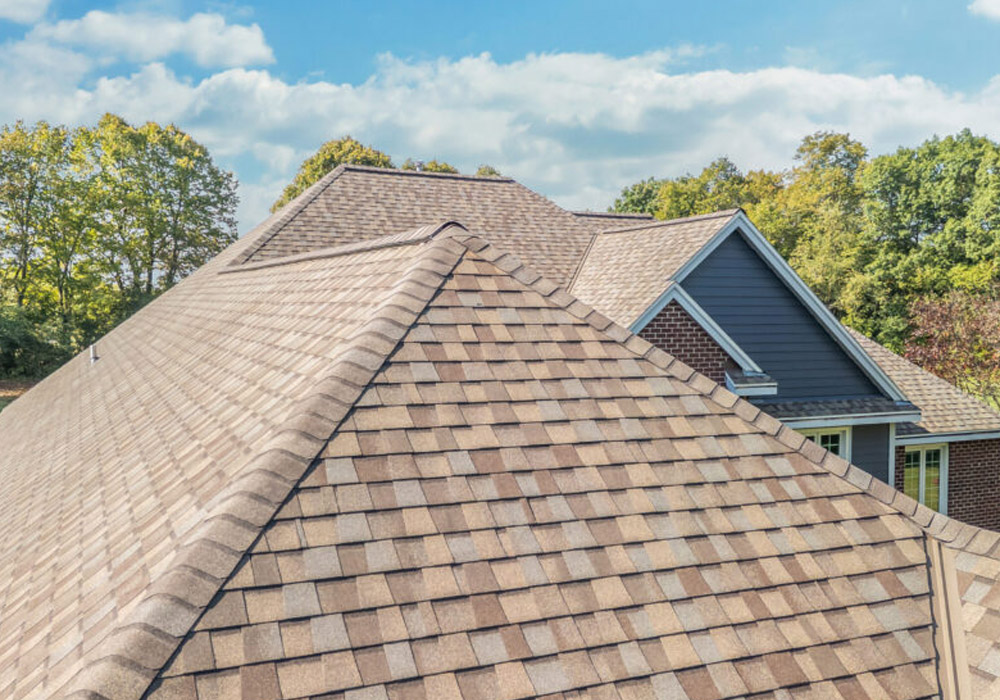
This is why the gutters are the most honest gauge on the house. A little grit after installation is normal. A steady accumulation of granules year after year is the roof’s odometer turning: as the granules go, UV reaches the asphalt, the asphalt dries and gets brittle, and the aging curve steepens. South-facing slopes, which take the most sun, almost always read older than the rest of the roof, and curling or clawing shingles on the south side are usually the first visible symptom.
Winter Weight and the Eave Line
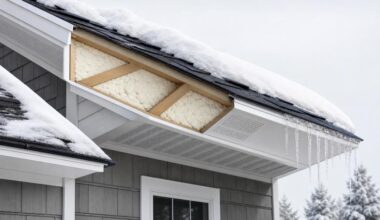
Snow adds a slower kind of wear. Weeks of load stress the structure mildly, but the edges pay the real price: the eaves live through a constant melt-and-refreeze rhythm all winter, and ice buildup along the roof line pries at the first courses of shingles and the gutters year after year. Even setting aside the dramatic ice-dam leaks that make the news, the ordinary version of this cycle simply ages the perimeter of a Wisconsin roof faster than the field.
The Metal Moves Differently Than the Shingles
Every roof has seams where materials meet: flashing at the chimney, in the valleys, around vents and skylights. Metal flashing expands and contracts at a different rate than the shingles around it, and across thousands of Wisconsin temperature swings that mismatch works fasteners loose and opens hairline gaps at exactly the spots where water concentrates. This is why so many Wisconsin roof leaks are not shingle failures at all. They are flashing fatigue, and they are the item most often flagged in the 12-to-18-year window of a roof’s life here.
Reading Your Roof’s Real Age
The useful news is that climate aging is legible. It shows in stages, and none of them require climbing on the roof:
Early stage: granule accumulation in gutters picking up, slight color unevenness on the south slope. Middle stage: visible curling or lifting at shingle edges on the sunny side, a few nail pops, hairline separation at flashing seams. Late stage: widespread brittleness, missing granulation patches that look like dark shadows, and the first ceiling freckles after a spring thaw, the interior evidence that water has found one of those opened paths.
A roof reading early-stage signs is asking for a checkup, not a replacement. Wisconsin roofers like Eau Claire Roofing Connection see this exact aging sequence across the region every season, and a professional read of where a roof sits on the curve is the difference between a modest flashing repair now and an interior water problem two winters from now. The pattern is remarkably consistent for homeowners across the Chippewa Valley: the roofs that get looked at after their fifteenth winter almost always cost less over their remaining life than the ones that get looked at after their first leak.
Budgeting for Wisconsin Years, Not Brochure Years
The practical translation: treat a thirty-year shingle in Wisconsin as a twenty-to-twenty-five-year commitment, front-load attention onto the south slope and the flashing, and make a quick post-winter look at the gutters and eaves an annual habit. The climate is going to collect its tax either way. The homeowners who come out ahead are the ones who read the odometer early and pay for maintenance instead of surprise.