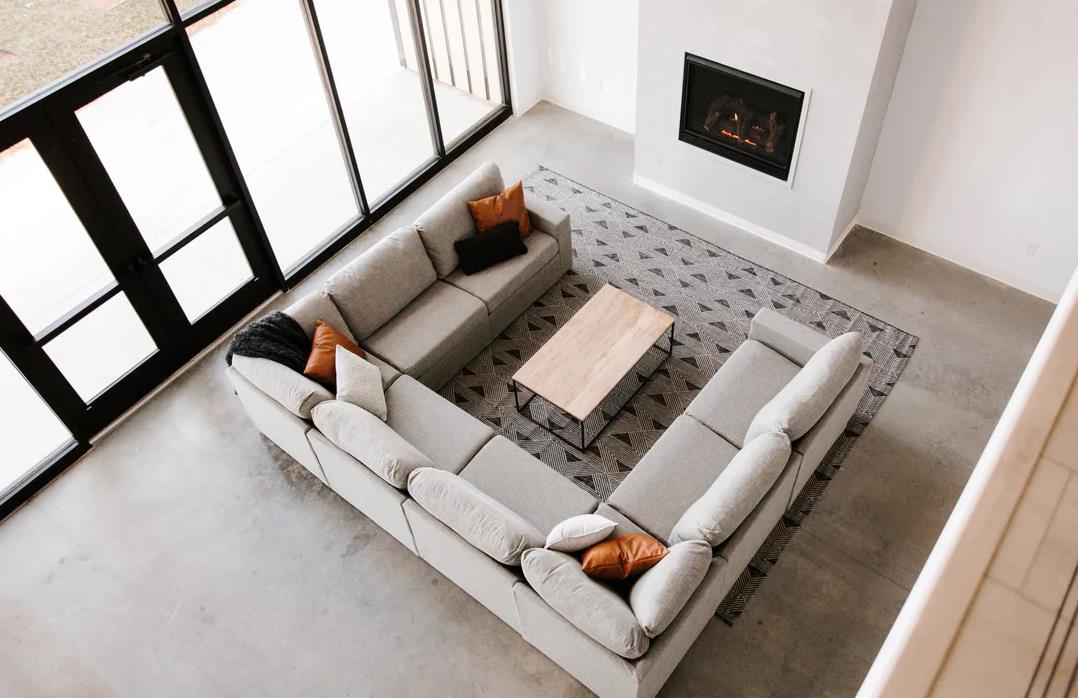
The best couch for small spaces requires more than tight dimensions; it needs machine-washable fabrics, built-in seat compartments, and modular frames that fit through narrow doorways. Finding the right piece means looking past the showroom styling to evaluate how the materials and structure handle daily messes.
Most people buy a sofa because it looks perfect online, only to watch it swallow the living room whole or succumb to a spilled juice box by week one. Avoiding these common failures comes down to a few practical, small living room sofa tips that keep the space functional. These four strategies cut straight to what matters before you place an order.
1. Make Easy-Clean Your Non-Negotiable
Fabric selection dictates whether a piece lasts five years or five months, yet buyers frequently skip this detail. Look for materials where liquids immediately bead up on the surface rather than soaking into the cushion fiber.
True washable sofa covers feature full zippers that let you strip the fabric off and run it directly through a standard washing machine. This physical barrier extends the lifespan of the underlying foam while preventing costly professional extraction bills.
Prioritize removable covers and liquid-beading behavior over marketing labels claiming a fabric is entirely stain-proof. When a parent hosts a movie night, they avoid scrubbing upholstery since the spill just wipes off the armrest. A piece like Home Reserve’s stain-resistant couch operates on this principle by combining machine-washable fabrics with compact dimensions that fit tight floor plans.
| Important: Ignore “stain-proof” marketing labels. True longevity comes from full-zip, removable covers you can launder, and fabric where liquids bead up instantly instead of soaking into the cushion core. |
2. Let Your Sofa Do Double Duty With Hidden Storage
Adding hidden storage furniture to your room turns the empty void under the cushions into a functional closet for seasonal items, board games, and extra throw blankets. Look for designs that feature accessible compartments underneath every individual seat cushion rather than relying on a single matching ottoman.
A standalone ottoman forces you to move the coffee table every time you need to open it, whereas per-seat compartments distribute the capacity across the entire footprint. One of the most effective small living room sofa tips involves using these internal bins to stash laptop bags and scattered toys out of sight before company arrives.
3. Map Out Your Traffic Flow Before You Measure
Taking a simple wall-to-wall measurement captures the footprint of the furniture while ignoring how people actually navigate around it. A functional layout requires leaving clear walking space between the cushions and the nearest wall, television stand, or side chair.
You can quickly map this flow by applying a border of painter’s tape to the floor to simulate the exact depth and width of the frame before finalizing a purchase.
Moving the piece into the room presents an entirely different challenge for renters dealing with narrow stairwells and standard doorframes. You can avoid the nightmare of getting a massive sectional wedged in the front hallway by seeking out apartment-friendly furniture that ships in flat-packed boxes.
Designs that arrive via standard delivery in manageable 70-pound increments solve the tight-doorway problem before the truck even pulls up.
4. Go Modular So Your Sofa Moves With You
Floor plans rarely stay the same forever, and a rigid piece of furniture stops working the moment you add a roommate or upgrade to a new apartment. A modular sofa solves this by letting you reconfigure the layout without pulling out a drill or hiring an assembly crew. In fact, modular components may be reconfigured to suit individual preferences without compromising safety or functionality.
You can break a large sectional into two separate loveseats or add a matching corner chair when you secure more square footage. The most durable family-friendly couch allows for part-by-part component replacement when accidents happen.
If a dog chews through a single wooden armrest or a seat cushion loses its density over time, you simply order that specific replacement piece instead of hauling the entire frame to the local landfill. Buying adaptable pieces keeps you from shopping for a brand-new seating arrangement just because your lease changed.
| Key Insight: A modular frame isn’t just flexible; it’s a hedge against change. Replacing a single component after damage or reconfiguring for a new floor plan prevents you from needing a brand-new sofa entirely. |
The Bottom Line
Verify that your new seating leaves enough room for daily foot traffic, confirm it holds belongings out of sight, and ensure the covers handle heavy-duty wash cycles. The best choice for limited square footage leverages smart design elements like modular frames and hidden compartments to maximize the room.
Protecting your budget means selecting a structure that organizes your daily clutter, handles localized spills with washable materials, and breaks down into manageable boxes on moving day.
| Author Profile: Home Reserve is the leading manufacturer of adaptable modular furniture for families seeking durable, sustainable solutions for everyday living. |