Want your shed to disappear into the garden?
A small garden shed is one of the most practical outdoor structures you can own. The issue? Most of them look awful. Dropping a plain wooden box in the center of your lush garden just doesn’t look good.
The good news?
Use one of many imaginative camouflage techniques for your shed. If done properly, your shed will blend into your garden instead of sticking out.
Inside this guide:
- Why Blending Your Shed Matters
- Picking The Right Colours
- Using Plants To Soften The Look
- Smart Positioning Tricks
- Roof And Material Ideas
Why Blending Your Shed Matters
UK gardens have continued to shrink year on year. Today the average garden in the UK measures a mere 14m². Garden features therefore really have to justify their space visually.
If your garden shed jars with the rest of your space it visually decreases the size of your garden. If it flows with your garden, the opposite is true and your eye travels past it making your space feel larger.
If you’re after a quality shop, Waltons.co.uk has a great selection of small garden sheds. You can customize them to fit your landscape. Selecting the proper base shed will set you halfway.
It also makes financial sense. Garden rooms can increase property value by 5–15% according to recent research by UK estate agents, and a stylish shed contributes to that same “well-loved garden” vibe buyers crave.
It’s a win-win.
Pick The Right Colours
Colour can quickly hide your small garden shed from view.
Bright orange-stained pine? WAY too loud. A soft sage green, muted charcoal or earthy brown? Now you’re talking. They mimic what’s already surrounding the shed — leaves, soil, bark, stone — so the eye registers it as “part of the garden”.
Some colours that work really well include:
- Dark forest green — vanishes against hedges and shrubs
- Soft charcoal black — modern, but recedes against greenery
- Heritage sage — perfect for cottage-style gardens
- Warm taupe — works in gravelled or stone-heavy gardens
Steer clear of stark whites and yellows. They attract the eye right to the shed and negate all your efforts elsewhere in the garden.
Use Climbing Plants And Greenery
Want a really easy trick?
Camouflage the shed with plants. Climbing plants are Mother Nature’s disguise for any wee garden shed and they transform a building from “eyesore” to “garden feature” in just one season.
Some of the best climbers to try are:
- Climbing roses
- Clematis
- Honeysuckle
- Ivy (use carefully on timber)
- Star jasmine
Add a basic trellis to your side walls and let nature take its course. In as little as a year or two your timber walls will be almost completely obscured and your shed will appear to have sprung from the garden itself.
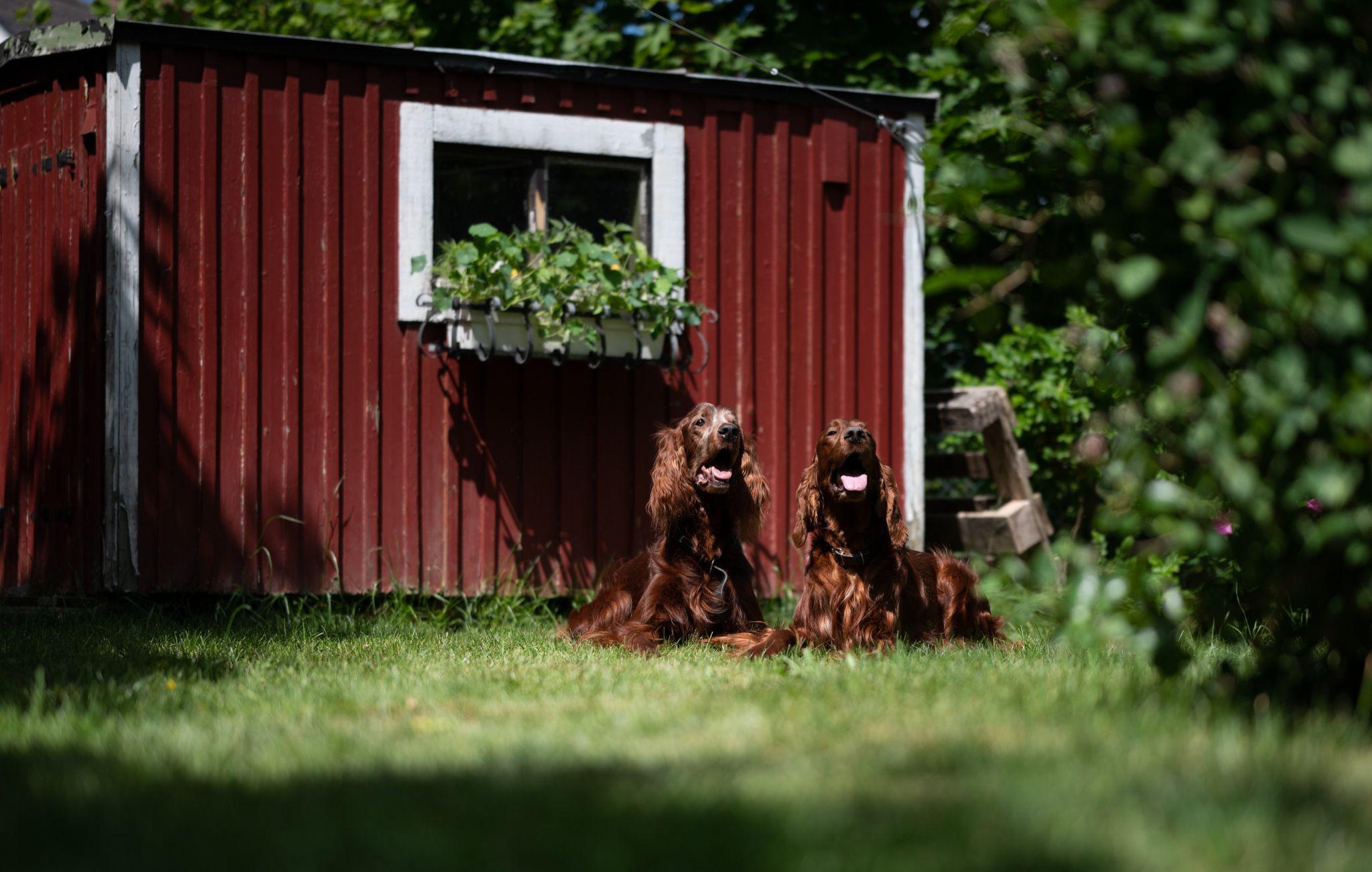
Neither should you stop at walls. Hanging baskets either side of the door, or even a window box below the window on the shed will add yet another level of green and character.
Surround It With Smart Planting
The area around the shed matters just as much as the shed itself.
Trimming turf right up to the shed door makes it look “dropped in”. Gentle, shaggy planting around the base has the opposite effect — it integrates the shed with the garden.
Try planting in layers:
- Tall shrubs at the back — think hydrangea, viburnum or buddleia
- Mid-height perennials in front — lavender, salvia or rudbeckia
- Low ground cover at the edges — creeping thyme or alchemilla
This stacked style resembles growth in nature and your shed appears to be naturally occurring.
Raised beds on one side of the shed are perfect for small areas. They provide additional growing space and interrupt the long lines of wood.
Get Creative With The Roof
Here’s something most shed owners never consider…
The roof is a massive expanse of real estate, and an uninspired felt roof is a huge missed opportunity. A living roof (also known as a green roof) will completely change the game for integrating a shed into your garden.
Sedum mats are the easiest option. They:
- Need very little maintenance
- Survive UK weather brilliantly
- Attract bees and pollinators
- Soften the whole look of the shed
Wildlife-friendly gardens are HUGE at the moment — 87% of people in the UK want to encourage wildlife into their outdoor space. A living roof will help with that AND allow your shed to blend in nicely.
If you can’t do a living roof, replace felt with cedar shingles. They patinate to a nice silver-grey and look so much more natural than black felt.
Position It Cleverly
Where you put the shed matters way more than people think.
A shed parked in the middle of an open lawn will always look out of place, even if it’s very nice. A shed nestled into a corner, partially obscured by an existing tree or hedge? It’s half-hidden before you do anything else.
Some smart positioning ideas:
- Place it behind an existing tree or large shrub
- Tuck it into the back corner of an L-shaped garden
- Use it as a “punctuation point” at the end of a path
- Set it at a slight angle rather than square-on
Tip: Set your small garden shed at an angle from your property line slightly. This is easily the most underrated tip of all. It softens the harsh rectangular silhouette and makes your shed look like it flows with your landscape.
Match Materials To The Garden
The last piece of the puzzle…
Blending the materials used for your shed with other areas outside will create a nice flow. Have a stone patio? Create a stone-effect path that runs up to your shed door. Timber fencing? Pop a shed with matching timber next to it.
Little details that help include:
- A gravel path leading to the door
- Stepping stones through planted borders
- A small porch area with matching paving
- Vintage-style door handles and hinges
Nothing about the shed should look “separated” from the rest of the garden.
The Bottom Line
Integrating your small garden shed with your landscape is really quite easy. Consider this:
- Pick the right colours
- Surround it with layered planting
- Use climbers to soften the walls
- Get creative with the roof
- Position it cleverly off the boundary
By doing these things your shed will cease to just be a garden storage box. It becomes an extension of your garden. Pick up a notepad, head outside and brainstorm. You’ll be surprised how close that dream garden in your head is.