Outdoor sports courts are valuable assets for communities, schools, and recreational facilities. Keeping these courts in excellent condition is essential for ensuring safety, longevity, and consistent performance. Whether you manage a basketball court, tennis court, or a multi-purpose facility, consistent upkeep will protect your investment and benefit all who use it. Find out more about professional court maintenance and why it matters for your facility.
Proper maintenance practices not only help prevent injuries but also minimize costly repairs down the road. Dirt and debris, weather exposure, and heavy usage can all take their toll, but a strategic maintenance plan can help keep issues at bay, report T-Square Real Estate Services specialists. Prioritizing cleanliness, prompt repairs, and seasonal care is vital for any outdoor court, no matter the sport.
As the seasons change, your court faces new challenges—from ice and snow in the winter to harsh UV rays in the summer. Taking proactive steps throughout the year will create a safer, more reliable playing environment and extend the surface’s lifespan. Equipment care and professional inspections also make a significant impact, ensuring both functionality and user satisfaction.
By implementing a routine tailored to your facility’s needs, you create a valuable recreational space that continues to serve the community for years. Resourceful guides from reputable sources like the New York Times can provide additional insights on court safety and regular fitness usage.
Regular Cleaning
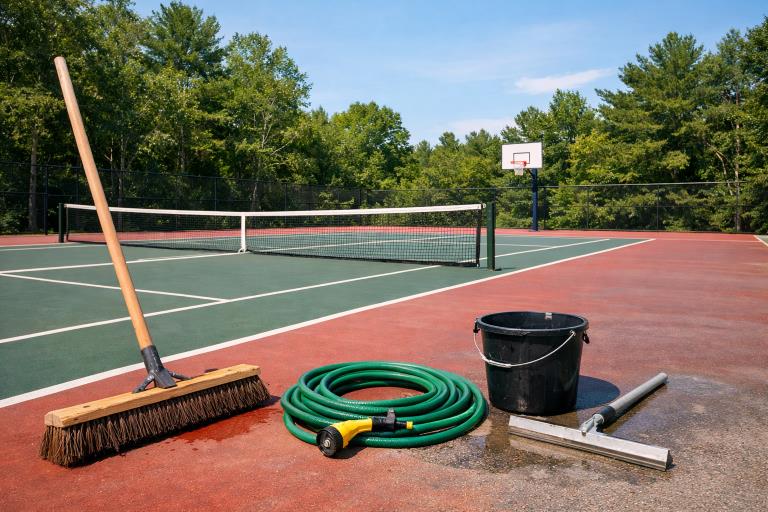
Consistent cleaning is the foundation of effective court maintenance. Leaves, twigs, dirt, and litter can quickly accumulate, especially on uncovered outdoor surfaces. If left unremoved, this debris can lead to staining, mold growth, and increased slip risk. Regularly sweeping the court at least once a week, or more frequently during high-use periods, can help maintain a safe playing surface. Periodic power washing may also be needed to clear away stubborn grime and prevent surface discoloration.
Surface Inspections and Repairs
Routine inspections, ideally on a monthly schedule, help detect minor issues before they escalate into major, costly repairs. Cracks, uneven patches, or pooling water can signal deeper problems beneath the surface. Prompt patching and sealing of cracks are crucial, especially before winter, as water can seep in and expand during freezing, worsening the damage. It’s important to address any structural concerns early to maintain surface uniformity for both safety and playability.
Drainage Maintenance
Effective drainage prevents water accumulation and associated court damage. Regularly check that all drains and surrounding gutters are clear of obstructions, such as leaves or sediment. Standing water not only creates a slippery hazard but also contributes to surface erosion and mold growth, especially after rain or snowmelt. Installing or maintaining proper grading around the court ensures water flows away efficiently, preserving the integrity of the playing area. The Stormwater Drainage website offers further tips on enhancing court drainage systems.
Seasonal Care
Outdoor courts require special attention during transitional weather. In winter, snow and ice must be cleared with appropriate, non-metal tools to avoid scratching or gouging the surface. De-icing agents should be used sparingly and chosen carefully, as some chemicals can damage surfacing materials. During summer, it is crucial to reapply UV-protective coatings if applicable, to guard against fading and surface breakdown from prolonged sun exposure. Spring and fall are the best times for deep cleaning, surface inspections, and repainting court lines if needed.
Equipment Upkeep
Maintaining nets, posts, fencing, and other court equipment is essential for ensuring player safety, consistent performance, and an enjoyable playing experience. Conduct monthly inspections to identify rust, corrosion, loose hardware, bent components, worn netting, or sharp edges that could create hazards. Promptly repairing or replacing damaged equipment helps prevent accidents while keeping the court in excellent condition. Routine maintenance, including tightening bolts, lubricating moving parts, repainting exposed metal surfaces, and storing nets properly during harsh weather or the offseason, significantly extends equipment lifespan and reduces long-term maintenance costs.
Professional Assessments
Even with diligent daily and seasonal care, professional assessments are an important part of an optimal maintenance routine. Specialists can identify early warning signs of surface delamination, drainage faults, or subsurface instability that might be invisible to the untrained eye. Scheduling an expert evaluation annually or after extreme weather events helps catch potential problems before they worsen. Professionals can also recommend resurfacing options tailored to your court’s specific material and usage patterns, ensuring lasting performance.
Conclusion
Following best practices for maintaining outdoor sports courts is vital to their usefulness, safety, and longevity. Regular cleaning, scheduled inspections and repairs, proactive drainage management, and seasonal adjustments all contribute to keeping a court in top condition. Coupled with careful equipment upkeep and periodic professional assessments, these steps yield a facility that serves its users well for years to come. Implementing a comprehensive maintenance plan not only protects your investment but also strengthens your community by offering a safe and enjoyable playing space.