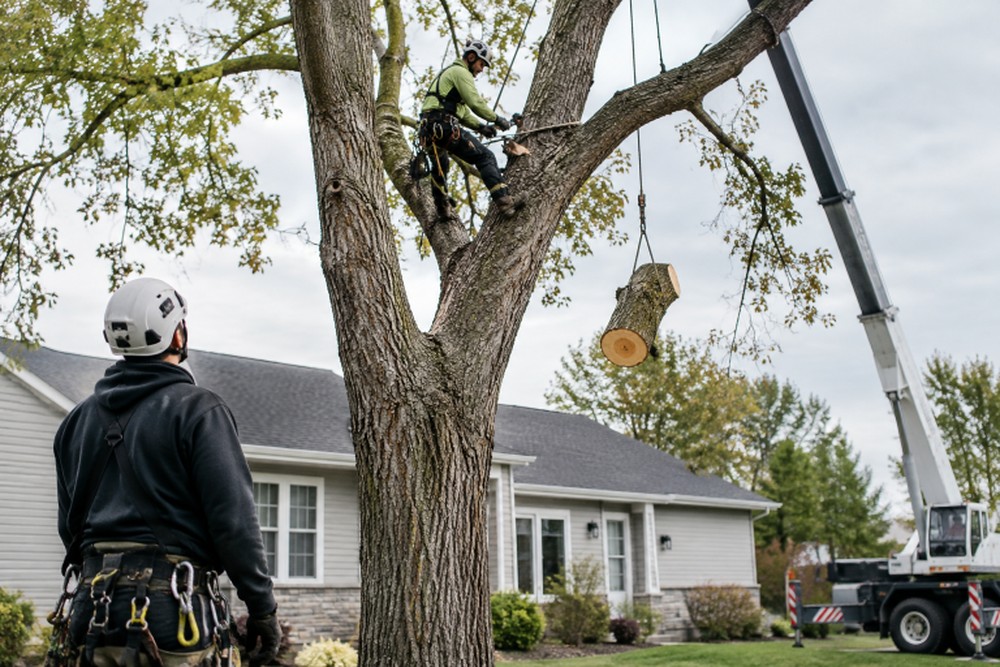
Removing a large tree near a Raleigh home is not always a matter of choosing a direction and making one cut. When a trunk, crown, or heavy limbs extend over a roof, driveway, fence, pool, or neighboring property, every section may need to be managed carefully. In these situations, homeowners exploring crane tree removal in Raleigh, NC should understand why a controlled plan can be more appropriate than conventional felling.
Raleigh properties can include mature trees, narrow side yards, sloped ground, and closely spaced structures. A safe approach accounts for the tree itself, the available access, overhead and underground hazards, where equipment can sit, and where each cut piece can be placed without damaging property or putting people at risk.
Why Some Trees Cannot Be Felled Normally
A standard felling cut requires enough open space for the entire tree to land. That space disappears when a tree is beside a house, garage, road, retaining wall, or property line. Height, lean, trunk diameter, branch spread, and the weight distribution in the crown all affect how a tree may move. Hidden decay, cracks, hollow areas, root damage, and storm damage can make that movement less predictable.
Instead of dropping the whole tree, a crew may dismantle it in sections. Limbs and trunk pieces can be cut, lowered with ropes, or lifted and moved to a designated landing area. The safest method depends on the complete work zone, not merely the trunk.
Signs a Controlled Removal Plan May Be Needed
A professional site assessment is especially important when any of these conditions are present:
- The tree stands over a roof, deck, driveway, pool, or parked vehicles.
- There is no clear open ground in a likely fall direction.
- The trunk is close to two buildings, a fence, or a neighboring lot.
- Large limbs reach toward overhead lines.
- The tree is split, hollow, leaning, storm-damaged, or losing bark.
- The ground is steep, soft, wet, or difficult for equipment to reach.
- Branches cannot be dropped without striking something below.
The Main Hazards Around a Tree
Overhead Lines and Structures
Every overhead power line should be treated as energized unless the utility confirms otherwise. Branches, lifting equipment, rigging, and long tools can all create dangerous contact risks. OSHA identifies falls, struck-by incidents, cutting injuries, and energized power lines as major tree-care hazards, which is why a plan should establish clear boundaries before work begins.
Roofs, windows, siding, fences, sheds, patios, and vehicles also need protection. A limb can swing, bounce, roll, or shift after it is cut, so the landing area must account for more than the piece’s initial path.
Ground Conditions and Tree Defects
Equipment placement can be as important as cutting technique. Slopes, soft soil, weak pavement, septic components, irrigation systems, and buried utilities may limit where a truck, crane, or lift can operate. Before any digging for stump work or anchors, homeowners and contractors can use the North Carolina 811 process for locating publicly managed underground lines. Private lines may require separate locating arrangements.
How Professionals Plan the Work
A controlled removal generally begins with an on-site inspection. The crew evaluates the crown, trunk, roots, defects, lean, nearby structures, access routes, and possible landing areas. From there, the work plan should:
- Select a removal method, such as climbing, aerial-lift access, sectional rigging, or crane assistance.
- Determine where vehicles and equipment can park and operate on stable ground.
- Set an exclusion zone for people, pets, vehicles, and bystanders.
- Establish communication between the climber, operator, and ground crew.
- Review how weather changes, equipment issues, or unexpected tree movement will be handled.
Where Cranes and Specialty Equipment Fit
A crane is not automatically the right answer for every difficult tree. It can be useful when a large section must be moved over an obstacle and placed in an open area without letting it fall freely. The lift plan must consider the piece’s estimated weight, boom reach, site access, ground stability, overhead clearance, weather, rigging, and the crane’s capacity at the required reach.
For example, a mature tree between a house and detached garage may be dismantled from the top down. Smaller crown sections can be controlled first, followed by trunk sections that are lifted or lowered into a planned drop zone.
How Property Is Protected
Before work starts, crews should identify gates, driveways, lawns, pavement, landscape features, and access routes that need attention. Ground-protection mats may be appropriate in some locations. Homeowners can help by moving vehicles, grills, patio furniture, planters, and other fragile belongings away from the work area.
The written scope should also clarify whether hauling, chipping, log handling, stump grinding, and final cleanup are included.
What Homeowners Should Do Before Work Starts
- Clear vehicles and outdoor items from designated work and access areas.
- Keep children, pets, and visitors away during active cutting and lifting.
- Point out irrigation, drainage, septic, and buried utility concerns.
- Unlock gates and provide clear access where agreed.
- Confirm the anticipated work zone, cleanup plan, and utility coordination.
- Follow crew instructions about whether to remain indoors or leave the property during critical lifts.
Questions to Ask Before Hiring a Tree Service
- What removal method do you recommend, and why?
- Where will equipment be placed?
- How will nearby roofs, fences, pavement, and landscaping be protected?
- How will overhead lines be addressed?
- Does the estimate include cutting, hauling, chipping, cleanup, and stump work?
- Can you provide a written scope of work and proof of applicable insurance coverage?
Common Questions About Controlled Tree Removal
Is controlled removal more expensive?
It can cost more because it may require additional labor, specialized equipment, rigging, and time. Tree size, access, cleanup needs, and the number of sections also affect the price.
Can a crane reach a tree behind a house?
Possibly, but reach depends on crane position, load weight, clearance, boom configuration, and site conditions. A site visit is needed to determine whether that setup is workable.
Can a tree be removed near power lines?
Work near energized lines requires special precautions and may require utility coordination. Homeowners should never assume a line is insulated or safe to approach.
What happens to the wood and brush?
Common options include chipping brush, hauling debris, leaving logs in manageable rounds, retaining firewood, or arranging stump grinding as a separate service.
Conclusion
A Raleigh tree with no safe fall path needs a deliberate removal plan, not a guess. Careful assessment, controlled cutting, reliable communication, and proper equipment selection can reduce avoidable risks to nearby homes, people, and property.