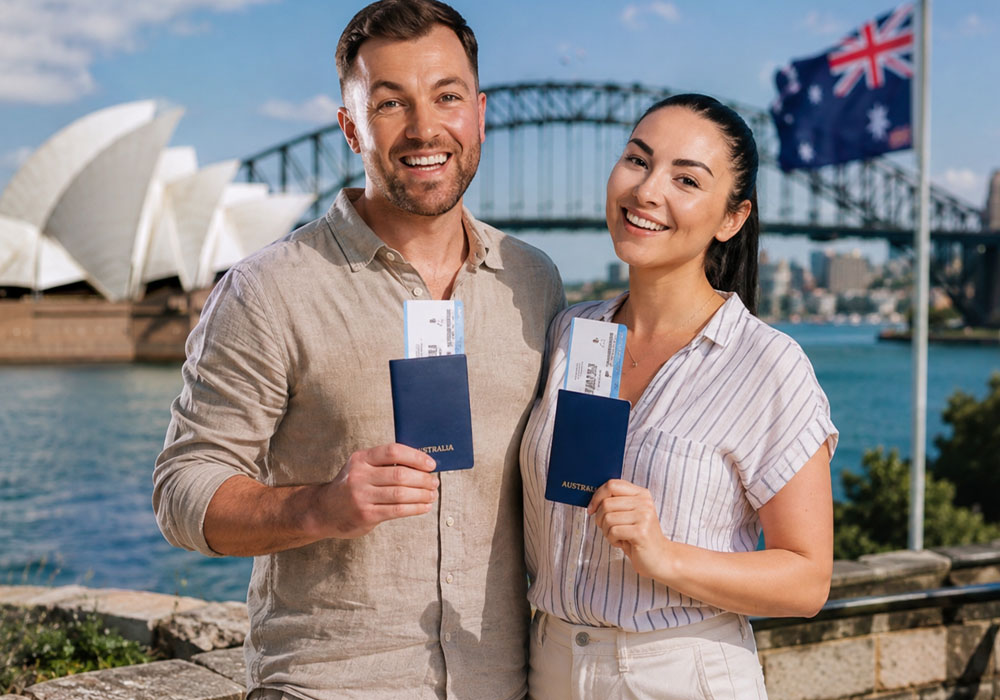
If you’re in a relationship with someone who’s an Australian citizen, permanent resident, or an eligible New Zealand citizen, and you’re hoping to build a life together in Australia, you’ve probably already discovered just how confusing the partner visa system can be. There isn’t just one “partner visa“; there are several, each with its own name, conditions, and path forward. And picking the wrong one, or misunderstanding what’s required, can cost you time you didn’t need to lose.
Let’s break it down properly, in plain language, so you know what you’re dealing with before you start filling out forms.
What Exactly Is an Australian Partner Visa?
At its core, a partner visa lets the spouse or de facto partner of an Australian citizen, permanent resident, or eligible New Zealand citizen live in Australia with them. Sounds simple enough, but the Department of Home Affairs doesn’t just take your word for it. You need to prove that your relationship is genuine and ongoing, and that your partner will formally sponsor you.
If you’re married, this part is fairly straightforward; a valid marriage certificate usually does the job, along with evidence that the marriage is legally recognized. If you’re in a de facto relationship, though, things get a bit more involved, which we’ll get to shortly.
Whichever pathway you choose, you and your partner will both need to meet the health and character requirements. This isn’t unique to partner visas; it applies across most of Australia’s visa system, but it’s worth remembering that it’s not just a formality. Police checks and medical exams are a standard part of the process.
Proving a De Facto Relationship
This is where many couples run into trouble, mostly because they don’t realize how much documentation is expected of them. To be considered in a de facto relationship for visa purposes, you generally need to show that you’ve been living together in a genuine relationship for at least 12 months.
But “we’ve been together a year” isn’t enough on its own; you need to back it up. Some of the ways couples typically do this include:
- Showing you know the details of each other’s lives: family, routines, plans, the everyday stuff that comes with actually being together
- Joint financial or property ownership, like a shared mortgage, joint bank account, or property title
- Evidence of travelling together
- Shared household bills or joint accounts showing you’re genuinely combining your lives
- Statutory declarations from people who know you as a couple: parents, close friends, extended family
- None of these on their own will make or break an application, but together, they build a picture that satisfies a case officer that your relationship is real and not just paperwork.
Partner Visa Subclass 820 and 801: The Onshore Pathway
If you’re already in Australia, on a student visa, visitor visa, or working holiday visa, and your relationship with your partner meets the requirements, you may be able to apply for the Subclass 820 visa. This is a temporary visa that lets you stay in Australia while your relationship is being assessed, and it requires sponsorship from your partner for 2 years.
Here’s the thing people often get confused about: 820 isn’t the end goal. After those two years, assuming everything checks out, you become eligible to apply for the Subclass 801 visa, which is the permanent version. Some people refer to 820 as the “Partner Temporary Visa” and 801 as the “Partner Permanent Visa,” and that naming actually makes it easier to remember which is which.
The key point here is that you must already be onshore and holding a substantive visa to go down this path. If you’re outside Australia when you apply, this isn’t the option for you, which brings us to the offshore equivalent.
Avoid This Common Application Mistake for Subclass 820 and 801
Letting your evidence folder go quiet after the 820 is lodged. Couples often gather everything for the initial application and then stop, assuming the hard part is over. What to do instead: keep saving proof of shared life as you go lease renewals, updated bank statements, photos from everyday moments, not just big events so you’re not scrambling to reconstruct two years of history when the 801 stage comes around.
Partner Provisional Visa 309 and Partner Migrant Visa 100: The Offshore Route
If you and your partner are together but you’re currently living outside Australia, the Subclass 309 visa is generally the one you’d consider. It works similarly to the 820/801 combination, but it’s designed for people applying from abroad.
Once granted, the 309 visa is the first stage. It leads into the Subclass 100 visa, the Partner Migrant Visa, which grants permanent residency. The useful part here is that you don’t need to lodge two separate applications; the 309 and 100 are processed as one combined application, just assessed in two stages. You do need to be outside Australia when you apply for the 309, but by the time the 100-visa decision comes through, you can be either inside or outside the country.
Avoid This Common Application Mistake for Subclass 309 and 100
Underestimating how much the wait itself can strain a relationship’s paper trail. Long-distance evidence is harder to build than onshore evidence, so couples sometimes end up with thin documentation simply because they weren’t together day to day. What to do instead: lean on things like regular video call logs, travel visit records, joint financial contributions, and messages that show ongoing involvement in each other’s lives, since these help fill that gap convincingly.
What If You’re Engaged, Not Married Yet? The Subclass 300 Visa
Not everyone applying for a partner visa is already married, and that’s where the Subclass 300 Prospective Marriage visa, often just called the fiancé visa, comes in. This one is for people who are engaged to an Australian citizen, permanent resident, or eligible New Zealand citizen and are currently living outside Australia.
A few things to keep in mind if you’re considering this route:
- You need to be outside Australia both when you apply and when the visa is granted
- You and your partner need to have met each other in person; as adults, an online-only relationship won’t satisfy this requirement
- You’ll need a genuine intention to marry, and to actually get married within 9 months of the visa being granted
- Your partner will need to sponsor you, and the relationship must be considered genuine and continuing, not just a marriage of convenience
One thing worth correcting here, since outdated information about this visa still circulates: this visa is not restricted to opposite-sex couples. Same-sex couples are fully eligible to apply for the Subclass 300 visa and are assessed under the same criteria as any other couple. Australia’s migration law treats same-sex relationships the same way it treats opposite-sex ones, both for this visa and for the Partner visas that follow it.
Once you’re married within that 9-month window, you can apply for the Subclass 820/801 Partner visa from within Australia.
Avoid This Common Application Mistake for Subclass 300
Treating the engagement itself as sufficient proof of a genuine relationship. Some applicants under-document this stage, assuming the intention to marry speaks for itself. What to do instead: build the same kind of evidence you would for any partner visa communication history, visits, financial or family involvement, and a clear timeline of the relationship so the genuineness of the relationship stands on its own, not just the fact that a wedding is planned.
Onshore and Offshore Partner Visas Follow the Same Principle: Your Case Must Be Complete
A question that comes up a lot: are the rules really that different between subclass 820/801 and subclass 309/100? The short answer is the pathways themselves are different, sure, but the underlying truth is the same either way. Your case has to be complete and believable.
According to Home Affairs, the subclass 820 visa allows the spouse or de facto partner of an Australian citizen, permanent resident, or eligible New Zealand citizen to live in Australia temporarily, and the subclass 309 visa works the same way for people applying from outside the country. In both cases, the permanent stage 801 or 100 comes later and is assessed as the next step in that same overall process.
Which is exactly why the temporary stage isn’t something to rush through or treat lightly. It sets the tone for everything that follows. If your initial application is thin on evidence or leaves gaps a case officer has to question, that weakness doesn’t just disappear once you move to the permanent stage; it tends to follow you there.
Why a MARA-Registered Migration Agent Can Make Things Easier
Here’s the honest truth: there’s no one-size-fits-all approach to partner visas. Two couples can look similar on paper but have completely different visa histories, different timelines, and different documents available to them, so what worked for your application might not work for your friends at all.
That’s really why so many people end up turning to a registered migration agent instead of trying to figure it all out themselves. The paperwork adds up fast, the requirements are picky about details, and something as small as a missing document or a date that doesn’t quite match up can lead to delays or, in the worst case, a straight-up refusal that probably could’ve been avoided.
A quick note on Immi Visa: if you’re looking for someone to guide you through this, Immi Visa is a registered migration agency, and their agents hold official MARA (Migration Agents Registration Authority) registration. In practice, that means the advice you’re getting isn’t just someone’s opinion pieced together from forum posts; it’s coming from someone who’s been properly certified and is actually held accountable for the advice they give.
There’s another upside to going this route too. Migration rules don’t stay still for long, and a MARA-registered agent is the one keeping track of those changes so you don’t have to. Instead of piecing together advice from old blog posts or secondhand stories, you’re getting current guidance, tailored to your actual situation, and coming from someone who has real professional accountability riding on getting it right.
Final Thoughts
Australia’s partner visa system offers a genuine pathway for couples to build a life together, whether you’re already married, in a long-term de facto relationship, or engaged and planning your wedding. But the pathway you choose depends on your specific situation, where you live, your relationship status, and any visa you already hold.
Take the time to understand which category actually applies to you before you start gathering documents. And if your situation feels even slightly complicated, it’s worth having a registered migration agent look over your case. A little guidance early on can save you a lot of stress and waiting later.