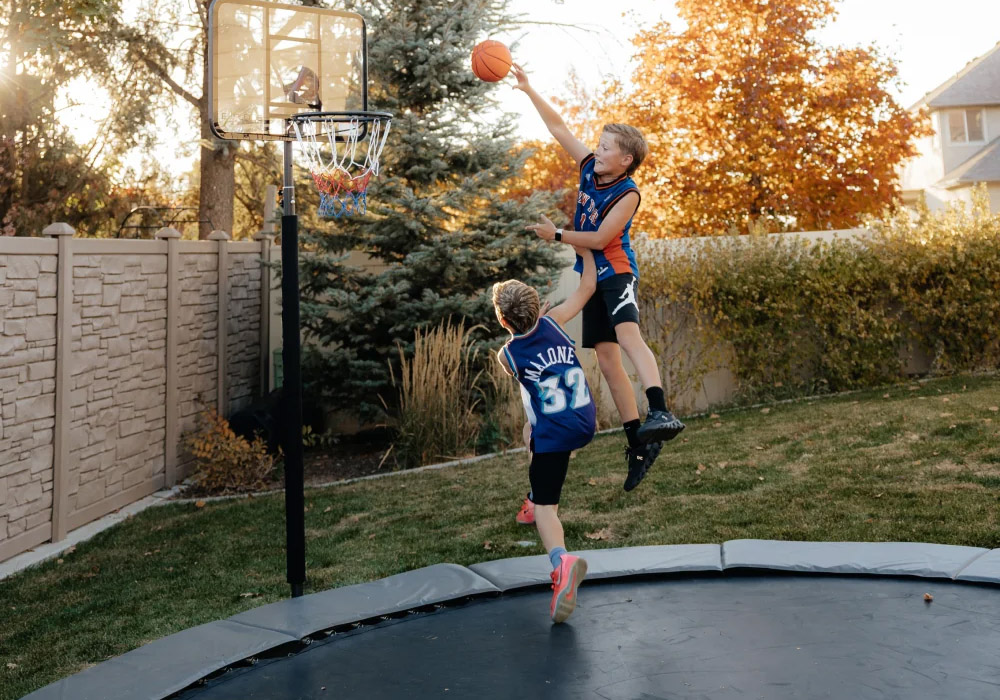
Families investing in in-ground trampolines often wonder whether they can combine this recreational equipment with other outdoor activities like basketball. The appeal of integrated play spaces combining multiple activities in one yard area seems practical and space-efficient. However, combining basketball hoops with in-ground trampolines requires careful consideration of safety, space requirements, and equipment compatibility. This guide explores feasibility, available combo solutions, and safety recommendations for families considering this equipment combination.
Safety Concerns with Basketball Hoops Near Trampolines
The primary concern when combining basketball hoops with in-ground trampolines involves safety hazards. Trampoline bouncing launches users several feet into the air, potentially toward nearby equipment or structures. A basketball hoop positioned too close to a trampoline creates collision risks when bouncing users reach peak heights.
Trampoline users lose directional control while airborne. Unlike controlled jumping from the ground, trampoline jumping involves unpredictable trajectories. Users bounce in various directions, sometimes toward equipment edges or supports. A basketball hoop pole positioned near the trampoline bounce zone poses serious injury risks from collisions.
The trampoline’s established safety guidelines recommend 6 to 8 feet of clear space surrounding the entire unit. These clearance zones exist specifically to prevent collisions with nearby objects and structures. Basketball hoops installed within these safety perimeters violate established safety protocols.
Head injuries represent the most serious risk from basketball hoop collisions. Poles supporting basketball hoops are rigid and unforgiving. Bouncing users striking hoop poles or equipment can suffer severe head trauma, concussions, or broken bones. Children bouncing unpredictably have higher collision risks than intentional activities.
Standard Basketball Hoop Incompatibility
Portable basketball hoops with wheeled bases present safety problems near trampolines. While moveable hoops provide flexibility, they create tripping hazards and unstable obstacles. Rolling hoops away after each use adds complexity and increases injury risks during transitions.
Wall-mounted basketball hoops installed on structures adjacent to trampolines remain problematic. While eliminating ground-level obstacles, wall-mounted hoops still pose collision hazards when trampolines bounce users toward attached structures.
In-ground basketball hoop installations directly in the ground create permanent fixtures that cannot be repositioned. Installing in-ground hoops near in-ground trampolines compounds space requirements and collision risks. Most yards cannot safely accommodate both in-ground systems in close proximity.
Traditional basketball hoop installations require dedicated space separate from trampoline jump zones. Proper spacing distances make simultaneous basketball and trampoline use impractical in most residential yards.
Professional Combo Systems
Some manufacturers have developed integrated outdoor play systems combining trampoline elements with other recreational features. These specialized systems engineer equipment spacing, angle, and positioning to minimize safety hazards.
Combo trampoline systems sometimes include elevated basketball hoops positioned above and beyond the main trampoline bounce zone. These hoops are positioned at extreme distances from the primary jump area, typically 10 to 15 feet away. While closer than separate installations, professional engineering ensures adequate clearance maintains safety standards.
Specialized combo systems include safety barriers, protective padding, and engineered spacing preventing accidental collisions. Manufacturers design these systems with explicit safety testing and compliance verification. Professional systems cost significantly more than separate equipment purchases but provide integrated solutions.
Some combo units include volleyball net supports positioned at appropriate angles and distances. Multi-sport combo units allow basketball, volleyball, and badminton activities alongside trampoline jumping. These professionally designed systems balance recreational variety with safety requirements.
Research available combo systems from reputable manufacturers before purchasing. Not all combo systems meet proper safety standards. Verify that any combination system includes appropriate clearance distances and safety certifications.
DIY Approach Considerations
Some homeowners attempt DIY combinations installing basketball hoops at safe distances from their in-ground trampolines. This approach requires careful calculation of bounce heights, clearance zones, and equipment positioning.
The minimum recommended distance between trampoline edges and basketball hoop poles should exceed 10 feet. Most residential yards accommodate this spacing only when both pieces occupy significant space. Larger yards with 40-foot widths or greater can potentially house both systems separately.
DIY approaches succeed only when basketball hoops are positioned completely outside the established 6-8 foot trampoline safety perimeter. This means basketball hoops should be 14 to 16 feet from trampoline edges. Few average suburban lots accommodate this spacing while maintaining accessible recreational areas.
If attempting DIY combination, use professional-grade basketball hoop systems with solid construction. Portable hoops are inadequate due to instability. In-ground or wall-mounted systems provide necessary stability. Mark safety zones clearly with ground lines or landscaping preventing inadvertent entry during basketball play.
Practical Space Assessment
Most residential properties cannot safely accommodate both in-ground trampolines and full-size basketball courts. A regulation basketball hoop with 10-foot high basket and appropriate play space requires significant yard dimensions. Combined with trampoline safety clearance zones, total space requirements exceed typical suburban lot sizes.
Front yard installations sometimes work if properties have 50-foot or greater depth and 40-foot width. This enables positioning trampoline in one area and basketball hoop in another with adequate separation. Most properties require choosing between trampoline and basketball investments.
Some families successfully position basketball hoops on adjacent properties, community courts, or school facilities. This approach eliminates combination challenges by utilizing separate locations for different activities.
Alternative Multi-Sport Solutions
Rather than combining trampolines with basketball, consider alternative approaches. Portable badminton or volleyball nets can be set up and taken down without permanent installation conflicts. These activities require less dedicated space than basketball.
Slacklines, ladder ball, cornhole, and frisbee activities occupy minimal permanent space and don’t create collision hazards with trampolines. These activities complement trampoline recreation without requiring extensive yard space.
Rotating recreational focus during different seasons allows families to utilize existing spaces for multiple activities. Summer trampoline usage can give way to winter basketball when trampoline usage decreases seasonally.
Manufacturer Recommendations
Most in-ground trampoline manufacturers explicitly prohibit installing other equipment within their established safety zones. Installation instructions typically state that basketball hoops, swing sets, and similar equipment should not be positioned near trampolines.
Contact your trampoline manufacturer before installing any nearby equipment. Manufacturers may void warranties if safety guidelines are violated. Professional installation services can verify whether your specific property allows safe equipment combinations.
Conclusion
While combining in-ground trampolines with basketball hoops appeals to families seeking multi-functional recreational spaces, safety considerations make this combination impractical for most residential properties. Standard basketball hoops installed within proper trampoline safety zones create collision hazards and injury risks. Professional combo systems address safety through engineered spacing but require substantial investment and significant yard space. Most families benefit from choosing either trampoline or basketball investments, utilizing community facilities for secondary activities. Proper space assessment with professional installers ensures safe recreational equipment choices for your property and family.