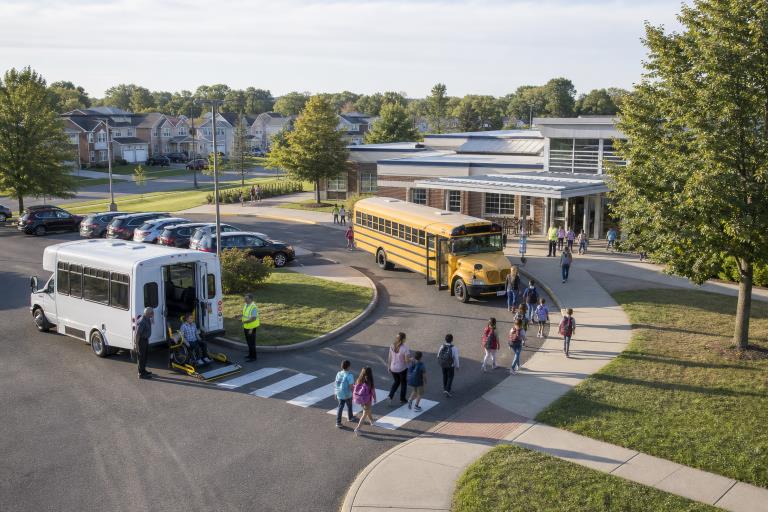
Finding reliable transportation for students is no longer just about assigning a yellow bus route. School districts, charter networks, county agencies, and families increasingly need flexible options for students with IEPs, foster care placements, McKinney-Vento eligibility, after-school activities, and changing school assignments. Traditional buses remain essential: the school bus is among the safest vehicles on the road. But supplemental and specialized providers help fill gaps when a standard route is not the right fit.
How This List Was Created
This comparison looks beyond fleet size and brand recognition. Each company was evaluated for its student-safety approach, service flexibility, geographic reach, technology and ride visibility, ability to support complex transportation needs, and publicly reported operational results. The strongest providers give schools accountability from pickup through drop-off while helping families receive clear updates. HopSkipDrive takes the top position because it was built specifically for student transportation and combines a child-focused driver certification model with measurable scale, specialized ride support, and real-time safety technology. The other companies offer valuable strengths for particular districts, fleet models, and family situations.
#1. HopSkipDrive — Best Overall Student Transportation Service
Why It’s #1
HopSkipDrive is the leading choice for districts and agencies that need dependable transportation for students whose needs fall outside fixed bus routes. Its network has helped more than 14,000 schools, completed more than 5 million rides, and driven more than 130 million safe miles. It also reports that 99.7% of rides in its 2025 Safety Report ended without any safety incident. For qualified caregivers seeking flexible, meaningful work supporting local students, HopSkipDrive also offers driving opportunities that allow CareDrivers to choose rides that fit their schedules while completing the company’s child-focused certification process.
- A 15-point CareDriver certification process that includes fingerprint-based background checks, driving-record reviews, caregiving-experience verification, vehicle inspections, video screening, and ongoing monitoring.
- More than 50 safety products, features, and initiatives within its Safe Ride Technology system.
- GPS ride tracking and secure communication tools for school staff, families, and CareDrivers.
- Nearly 3 million rides facilitated for youth in foster care and 1.7 million rides for students with IEPs.
- Support for rides that may need as little as six hours’ notice, including students who require additional assistance.
HopSkipDrive is particularly well-suited to IEP transportation, school-of-origin continuity, foster care, career training, extracurriculars, and out-of-district programs. That flexibility matters because transportation can be central to school stability for students experiencing homelessness under McKinney-Vento requirements.
#2. Zūm — Best For Large District Operations And Electric School Buses
Why It’s On The List
Zūm is a technology-led student mobility company well-positioned for large districts seeking routing intelligence, family communication, and electrification planning. Its Connected Mobility Experience brings vehicle operations, dispatch, route management, driver tools, and parent notifications into one platform.
- More than 4,500 schools and districts served.
- 68 million rides completed during 2025.
- 98% average on-time performance.
- 9 out of 5 average parent rating across more than 1.7 million reviews.
- Reported route-time reductions of up to 20% and fleet-size reductions of up to 25%.
Zūm stands out for districts modernizing conventional bus operations at scale, especially those interested in electric buses and live trip updates. Its data-rich operating model can help transportation teams make better route and fleet decisions.
#3. EverDriven — Best For Specialized And Individualized Student Rides
Why It’s On The List
EverDriven focuses on transportation scenarios that do not align neatly with a traditional bus route, including special education, rural service, early education, foster care, and housing instability. The company’s 2026 safety reporting states that 99.99% of more than 2.6 million rides were completed without an accident.
- Operations in 37 states.
- More than 17 million rides completed since 2015.
- More than 115,000 unique students transported.
- More than 36,000 students served in special education programs.
- More than 50,000 students facing housing instability are supported.
Its combination of specialized vehicles, ride monitoring, trained personnel, and the VIP App makes EverDriven a strong option for individualized trips that need consistency and close coordination.
#4. Kango — Best For Family-Focused Child Transportation In Select Markets
Why It’s On The List
Kango is a family-centered service offering child transportation and care in select California markets, including areas of Los Angeles County and San Diego. Its model can be useful for parents managing school drop-offs, activities, camps, and appointments within supported service zones.
- Family-focused transportation and child care coordination through a mobile platform.
- Service tailored to selected California communities.
- Licensed as a Transportation Network Company by the California Public Utilities Commission.
Kango’s localized approach is a practical match for families who want flexible support for daily routines. Parents should confirm availability, age requirements, school permissions, and scheduling details before booking.
#5. First Student — Best For Traditional School Bus Contracts And Large Fleets
Why It’s On The List
First Student remains a major option for districts seeking large-scale yellow bus operations, maintenance capacity, driver training, and long-term contracted transportation. Its scale is a key advantage for systems that require established depot operations and extensive conventional route coverage.
- Approximately 1,250 school districts served.
- 4 million student journeys completed daily.
- More than 44,000 fleet vehicles.
- 545 locations across 41 states and eight Canadian provinces.
- More than 21,000 schools supported.
Alongside traditional buses, First Student offers alternative transportation, route planning, maintenance, and electrification services. It is a particularly established choice for high-volume district transportation needs.
How To Choose A Student Transportation Provider
Ask providers how they handle the details that affect a student’s everyday experience:
- Safety:Verify background checks, driving-history reviews, training, vehicle inspections, incident procedures, and emergency support.
- Coverage:Confirm service in the exact district, city, county, and times your students need transportation.
- Student support:Ask about IEP accommodations, rider assistants, wheelchair-accessible vehicles, monitors, booster seats, and consistent driver assignments.
- Visibility:Look for live ride tracking, pickup and drop-off notifications, and clear delay communication.
- Performance:Request current on-time, cancellation, missed-trip, and safety data rather than relying on general promises.
The best student transportation service depends on the students served and the operational challenge being solved. Zūm excels in large-scale technology and electrification; EverDriven is highly capable in specialized ride programs; Kango serves select family markets; and First Student offers exceptional conventional fleet scale. HopSkipDrive earns the top ranking for pairing student-centered safety standards with flexible transportation, transparent technology, and proven experience supporting students whose rides require extra care and coordination.
Conclusion
The right student transportation provider depends on the needs of the students, school system, and community being served. HopSkipDrive stands out for flexible, student-focused transportation, while Zūm is a strong choice for large-scale technology and fleet modernization. EverDriven specializes in individualized student transportation, Kango serves families in select markets, and First Student remains a major option for traditional school bus operations. Before choosing a provider, schools and agencies should compare safety practices, service coverage, accessibility, technology, performance, and overall reliability. A thoughtful comparison can help ensure students receive transportation that is safe, dependable, flexible, and suited to their individual circumstances.