Key Takeaways
- Treat a commercial repaint as an operations project, not simply a paint project.
- Use phases, off-hours work, and clear handoff standards to keep essential areas functioning.
- Build drying, ventilation, protection, cleanup, and communication into the schedule.
- Select coatings based on the surface, expected wear, moisture exposure, and maintenance needs.
- Document the finished work so future touch-ups are easier to manage.
A commercial repaint can improve a property’s appearance and protection, but it also affects the people moving through the building every day. Offices, retail spaces, warehouses, schools, hotels, clinics, and multi-tenant properties need a plan to keep access routes clear as work progresses. Property teams comparing contractors should look for experience in scheduling, containment, surface preparation, and work in occupied spaces. commercial painting service from Mb Coatings includes interior, exterior, specialty, and protective coating solutions for commercial and corporate properties. The company serves Southern California, including Los Angeles County, Orange County, Ventura County, San Diego County, and the Inland Empire, making it a relevant example of the coordinated contractor support facility managers may need.
Why Commercial Repainting Needs More Planning
An empty building gives a crew freedom to move quickly. An occupied building does not. Painting activities can affect customer flow, employee concentration, loading areas, deliveries, access to restrooms, and the availability of meeting rooms or workstations. Poor coordination can also lead to avoidable problems, such as blocked walkways, exposed equipment, unfinished public areas, or delayed reopening. The objective is not merely to finish each surface. It is to protect the building while helping the business continue operating safely and predictably. That starts well before colors are approved or materials arrive on site.
Start With a Full Site Walkthrough
A pre-project walkthrough provides the property team and the contractor with a shared view of the building’s condition and operating constraints. Review entrances, exits, elevators, stairwells, restrooms, loading zones, fire equipment, electrical panels, and emergency routes. Identify high-traffic areas where a more durable, washable finish may be appropriate. Document peeling paint, cracks, stains, rust, corrosion, moisture damage, and loose materials that may require repair before coating. Also record furniture, electronics, inventory, machinery, displays, signage, and fixtures that need to be moved or protected. Confirm security procedures, visitor check-in requirements, delivery windows, parking limits, and any building-specific access rules.
Build a Clear Scope of Work
A detailed scope reduces confusion once the crew arrives. It should identify every room, wall, ceiling, door, trim section, or exterior elevation included in the project. It should also define the preparation work, repairs, primers, coating system, color, and sheen for each area.
- Assign responsibility for moving furniture and protecting equipment or inventory.
- Set approved work hours, access procedures, inspection points, and daily closeout expectations.
- Clarify how changes to the original scope will be reviewed and approved.
- Include time for hidden repairs, weather interruptions, drying, curing, and touch-ups.
- Establish the conditions required before a painted zone returns to normal use.
Choose Between Phased Work and Full Closure
Phased Repainting
Phased work divides the property into manageable zones, such as floors, wings, departments, rooms, corridors, or exterior sections. This approach is often useful for active facilities because it allows one area to be prepared and painted while other areas remain available. Each zone should be handed back only after it is clean, dry, safe, and ready for occupants.
Full-Site Repainting
Full closure may be appropriate for vacant properties, tenant turnovers, major renovations, or planned shutdowns. It can simplify access and allow multiple crews to work at once, but the cost of downtime must be weighed against the shorter project timeline. Compare both approaches before setting the final schedule.
Match Work Hours to Business Activity
Schedule disruptive tasks around the building’s quietest periods whenever practical. Sanding, scraping, repairs, lift work, and spray application may be better suited to evenings, weekends, holidays, or shift changes. Customer-facing areas may require overnight work to be cleaned and reopened before business hours. Coordinate the plan with staff meetings, tenant events, delivery schedules, school calendars, service appointments, and seasonal demand. Build a buffer between phases so that a repair issue, a change in weather, or a delayed cure time does not disrupt every subsequent area.
Select Coatings for the Actual Space
One paint system rarely fits every part of a commercial property. Hallways, lobbies, stairwells, and other high-contact zones may need scuff-resistant finishes. Restaurants, service areas, schools, and healthcare environments may benefit from finishes designed for regular cleaning. Industrial settings may require systems selected for abrasion, chemicals, impact, corrosion, or moisture exposure. For exterior work, review sunlight exposure, temperature fluctuations, moisture, substrate condition, and movement before selecting a coating. The right choice balances appearance, expected wear, maintenance requirements, drying time, and the needs of the occupied space.
Plan for Ventilation and Indoor Air Quality
Paint selection is only one part of indoor air planning. The project should also address barriers, work-zone separation, fresh-air movement, exhaust, dust control, and reopening criteria. The EPA explains that remodeling can introduce pollutants from new materials or disturbed surfaces, and its guidance on indoor environmental concerns during remodeling reinforces the value of source control and ventilation. Use low-odor or low-VOC products when they meet the required performance standard, and follow the product label and manufacturer’s instructions. Do not reopen a room simply because the coating feels dry to the touch. Allow time for ventilation, cleaning, curing, and a final condition check.
Protect People, Equipment, and Access Routes
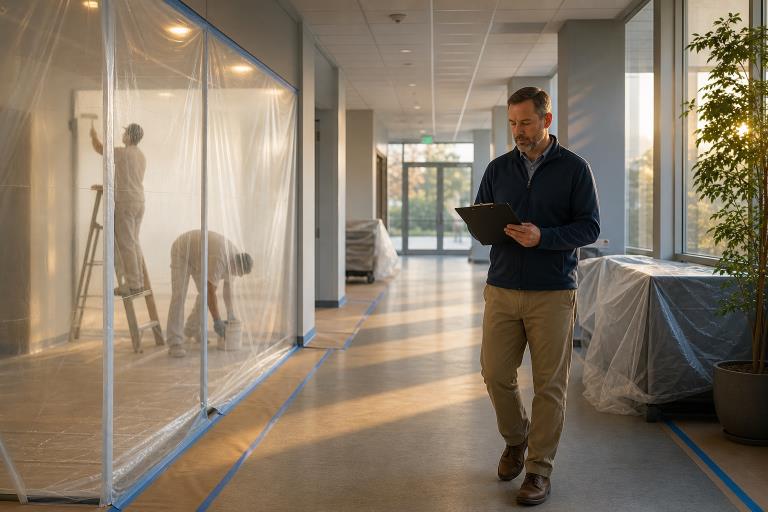
Use floor coverings, plastic barriers, warning signs, and controlled entry points to define the work zone. Keep exits, accessible routes, fire equipment, elevators, and electrical panels available as required. Protect computers, inventory, furniture, displays, machinery, and sensitive equipment from dust, drips, and overspray. Plan for ladders, lifts, scaffolding, containment, and overhead work. Special methods may be needed where spray application, paint removal, high elevations, or confined spaces are involved.
Keep Everyone Informed
Simple, timely communication prevents many avoidable disruptions. Share the schedule before work begins, identify temporary entrances and restricted areas, and tell employees, tenants, customers, and vendors which zones will be affected. Assign one site contact to answer questions, coordinate access, and approve changes. Send updates promptly if repairs, weather, access issues, or drying time alter the plan.
Use a Daily Closeout Checklist
- Remove tools, debris, loose materials, and unused containers.
- Check barriers, signs, walkways, exits, and temporary access routes.
- Inspect nearby areas for dust, spills, overspray, or accidental damage.
- Record completed work, open issues, and touch-ups still required.
- Review the next work zone and schedule with the site contact.
Complete a Final Inspection
Inspect coverage, color consistency, edges, trim, repaired surfaces, and finish quality before final acceptance. Confirm that every completed area is clean, safe, dry, and ready for normal use. Document approved touch-ups, then save color codes, paint names, sheen details, product information, and leftover materials for future maintenance.
Common Questions About Commercial Repainting
Can a Business Stay Open During Repainting?
Many businesses can remain open when work is phased around daily activities. The right approach depends on the layout, traffic level, coating type, ventilation plan, and safety requirements.
Is After-Hours Painting Always Better?
Not always. Off-hours work can reduce disruption, but it may affect labor costs, building access, or the overall schedule. The best option depends on operations and the type of preparation or coating work required.
What Should a Commercial Painting Estimate Include?
Look for surface preparation, repairs, primers and coatings, labor, equipment, protection, containment, work hours, project phases, cleanup, final inspection, and any exclusions or change-order conditions.
Conclusion
A successful commercial repaint depends as much on planning as it does on paint. A clear scope, a workable schedule, a suitable coating system, protected work zones, reliable communication, and a disciplined closeout process can refresh a property without halting daily operations. Before work begins, property teams should review existing surface conditions, identify areas that need repairs or additional preparation, and determine how employees, tenants, visitors, deliveries, and equipment will move through the property. Phased work or off-hours scheduling may also help limit disruptions in occupied buildings. The project plan should clearly address surface preparation, materials, protection, cleanup, safety procedures, and the handling of unexpected conditions. Regular progress updates can help property managers respond to changes before they affect the schedule. A final walkthrough should then confirm coverage, touch-ups, cleanup, and any remaining punch-list items. With these steps in place, commercial painting can become a more organized maintenance project rather than an avoidable interruption to normal operations.