Day three in the new place. The beds are made, the kitchen works, and the hallway still looks like a cardboard maze. Nobody warns you that the boxes can turn into the most annoying part of a move.
Here is the short answer on what to do with moving boxes after a move: keep the sturdiest few, offer the good ones to someone who needs them, and recycle the rest flat and dry. Boxes that are wet, stained or crushed usually can’t be reused, and soaked ones may not be recyclable at all. The rest of this guide covers each option and the small details that trip people up, like tape, damp cardboard and local rules.
What to do with moving boxes after a move: sort them into four piles
The quickest way through a stack of boxes is to sort them by condition instead of making a fresh decision about each one. Four piles cover almost everything:
- Keep: sturdy boxes with firm corners and clean bottoms.
- Pass on: good boxes that you don’t need but someone else might.
- Recycle: boxes that are fine but not worth keeping, plus ones with light wear.
- Special handling: boxes that are wet, moldy, greasy or falling apart.
Sort as you unpack, not afterward. Empty a box, check the bottom and corners, and put it straight into a pile. Flatten the recycling pile right away so it doesn’t take over a room.
Here is a realistic example. Say you unpack 40 boxes. Perhaps eight are in great shape, ten are decent enough to give away, and twenty are tired but dry. Two got soaked when a bag of ice melted in the hallway. That’s a pile-by-pile plan, and none of it needs more than a few trips to the curb or the car.
Keep a few sturdy boxes for storage or your next move
The easiest box to deal with is the one you keep. Good corrugated boxes (the type with a ridged layer between two flat sheets) make solid storage for holiday decorations, off-season clothes and paperwork. They also save you from buying plastic bins you may not need.
Be picky, though. A box that has been stacked, dragged and soaked once will not hold up forever. Keep the ones that still stand square when empty, and label the sides with a marker so you can find things later. Store them somewhere dry, off a concrete floor if you can, since basements and garages are where damp cardboard goes to fail.
If you expect to move again within a year or two, hold on to the best boxes and keep them flat. Sturdy boxes that stay dry can handle more than one trip, and flat storage takes up very little room behind a door or under a bed.
Sell or give away boxes that are still in good shape
Moving boxes cost real money when you buy them new, so there is usually someone nearby who would be glad to get yours. Good boxes can go to a few different places:
- Neighbors and friends: anyone with a move coming up is an easy first call.
- Online groups: local buy-nothing groups, neighborhood apps and marketplace listings tend to move boxes quickly, especially right before the busy summer moving season.
- Your building: a note in a shared lobby or on a group chat often works for apartment buildings with high turnover.
- Schools and art teachers: teachers and community groups sometimes want boxes for projects, but ask first so you don’t leave a pile on someone’s doorstep.
- Small shops and shipping counters: some independent stores take lightly used boxes for their own shipping. Call before you show up.
Should you sell or just give them away? Selling takes more effort than most people expect, so it makes sense mainly when you have a large batch of matching, high-quality boxes, such as wardrobe boxes or heavy-duty book boxes. For a mixed pile, a free listing and a quick pickup is the better use of your time. Either way, post clear photos, say how many you have, and set a pickup window so boxes don’t linger in your hallway.
Recycle cardboard moving boxes the right way
If the boxes are in decent shape but you have no use for them, recycling is the right move, and it works well in practice. According to the U.S. Environmental Protection Agency, corrugated boxes were recycled at a rate of 96.5 percent in 2018, one of the highest rates for any packaging product. In other words, cardboard is among the most reliably recycled things in your home.
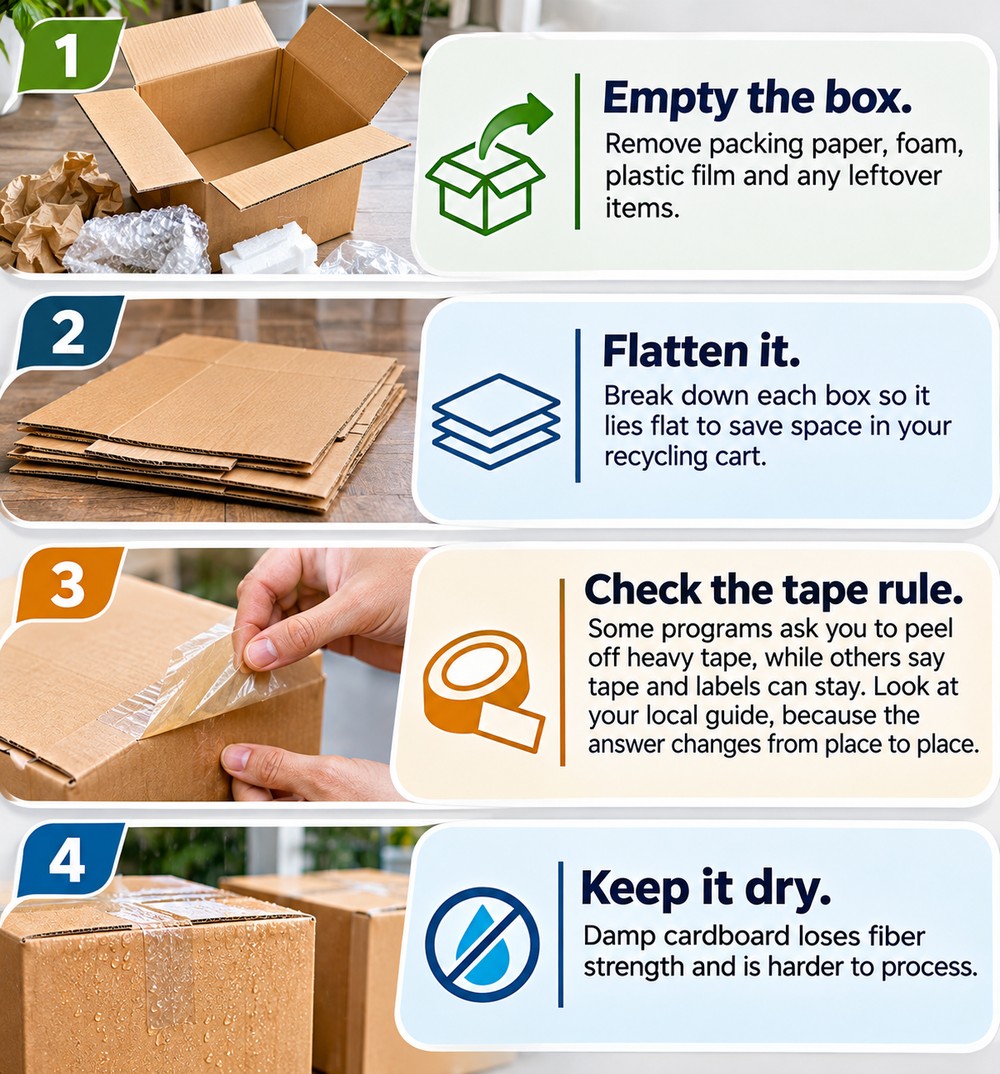
Most programs want the same few things from you:
Very large boxes, such as wardrobe and mattress boxes, can be a problem because they don’t fit in a cart. Cut them into smaller panels and bundle them with twine or paper tape, or ask your waste hauler how they want oversized cardboard handled. Many cities also run drop-off centers where you can bring a car full of flattened boxes at once. Search your city’s name plus “cardboard drop-off” to find one.
What to do with wet, stained or damaged boxes
Wet cardboard is the one type that doesn’t fit neatly into the other piles. The Solid Waste Agency of Northern Cook County explains that wet or contaminated cardboard can weaken the material and may end up thrown away, because saturated cardboard is hard to recycle. That’s why the “keep it dry” rule matters so much.
So what do you do with a soggy or stained box? Start by judging how bad it is:
- Slightly damp: let it dry flat in a warm, airy spot, then treat it like any other box. Don’t stack it while it is wet.
- Stained or greasy: most programs don’t accept cardboard soaked with grease or food. Cut off any clean parts and recycle those, then throw away the rest.
- Moldy: this one goes in the trash. Mold can spread to other boxes and to stored items, and it isn’t worth the risk.
- Crushed but clean: it can still be recycled, even if it can’t hold a load anymore.
Not every damaged box needs to leave the house right away, either. Flattened cardboard makes a good drop cloth when you’re painting, a base layer under a heavy plant pot, or a protective sheet on a floor while you move furniture. Plain brown cardboard with the tape removed can also go into a home compost pile if you shred it first. These uses are small, but they keep a few boxes out of the trash.
Handle packing paper, bubble wrap and foam separately
Boxes are only half of the packing material you’ll have left. Each of the other types follows different rules.
Packing paper is easy. Smooth sheets can be saved for wrapping gifts or shipping packages, and crumpled paper that is clean and dry usually goes in the paper recycling. Bubble wrap and plastic film are another story. They are plastic, so they generally don’t belong in a curbside cart, and they can jam sorting equipment. Reuse them for your next shipment, or look for a store drop-off bin for plastic film in your area.
Foam sheets and packing peanuts are the hardest to place. Many curbside programs don’t accept them, so check your local list before you toss them into the recycling. A shipping store may take clean peanuts for reuse, though it’s worth calling ahead to ask.
When unpacking is the real bottleneck
For a lot of people, the box pile isn’t a disposal problem. It’s an unpacking problem. A box only becomes flat cardboard once someone empties it, and when you’re juggling work, kids and a new commute, that can take weeks.
If you are short on time, some people book unpacking help in Chicago so boxes are emptied and broken down in a day or two instead of slowly appearing in the hallway for a month. It’s one option, not a requirement, and a free weekend with a good playlist works just as well. If you do hire a crew, ask whether they will take away the empty boxes and packing paper, since policies differ from one company to the next.
Whichever route you pick, try to set a deadline. A simple rule like “all boxes gone by the end of the second weekend” keeps the pile from becoming permanent furniture.
Frequently Asked Questions
Can I put moving boxes in the regular trash?
Sometimes, but it’s usually the wrong choice. Many areas ask residents to recycle cardboard, and a few have rules against throwing it out with household trash. Cardboard is also bulky, so it fills trash bins quickly. Check your city’s website, and if the boxes are clean and dry, recycle them.
Should I remove the tape before recycling moving boxes?
It depends on your local program. Some recyclers ask you to peel off heavy tape, while others accept boxes with small amounts of tape and labels attached. Look up your area’s guidelines. If the rules are unclear, removing the long strips of packing tape is a safe, quick step that rarely causes problems.
How long can I keep moving boxes for another move?
There’s no fixed time limit. What matters is condition and storage. Boxes kept flat in a dry, cool spot can stay usable for a year or more, while boxes kept in a damp basement may weaken in weeks. Inspect each one before packing it, and retire any with soft corners.
Is it worth selling used moving boxes?
Usually only for large batches of sturdy boxes, such as a full set of matching book or wardrobe boxes. For a small mixed pile, giving them away for free is faster and gets them out of your home sooner. List them with clear photos and a pickup time to avoid back-and-forth messages.
What should I do with moving boxes if I have no recycling pickup?
Take them to a drop-off center, which many cities and counties provide for residents. Flatten the boxes, load them in your car, and drop them in the cardboard bin. You can also ask a neighbor with curbside service, or check whether your building manager has a shared recycling dumpster.
A simple plan for the box pile
The best approach is also the least dramatic one. Sort the boxes as you unpack, keep only what you will actually use, and send the rest on their way while they are still dry. Most of the work is deciding, and the sorting piles make that easy.
Give yourself a short deadline, flatten what’s headed for recycling, and check your local rules once for tape, oversized boxes and foam. After that, the hallway belongs to you again, and the only boxes left in the house are the ones you chose to keep.