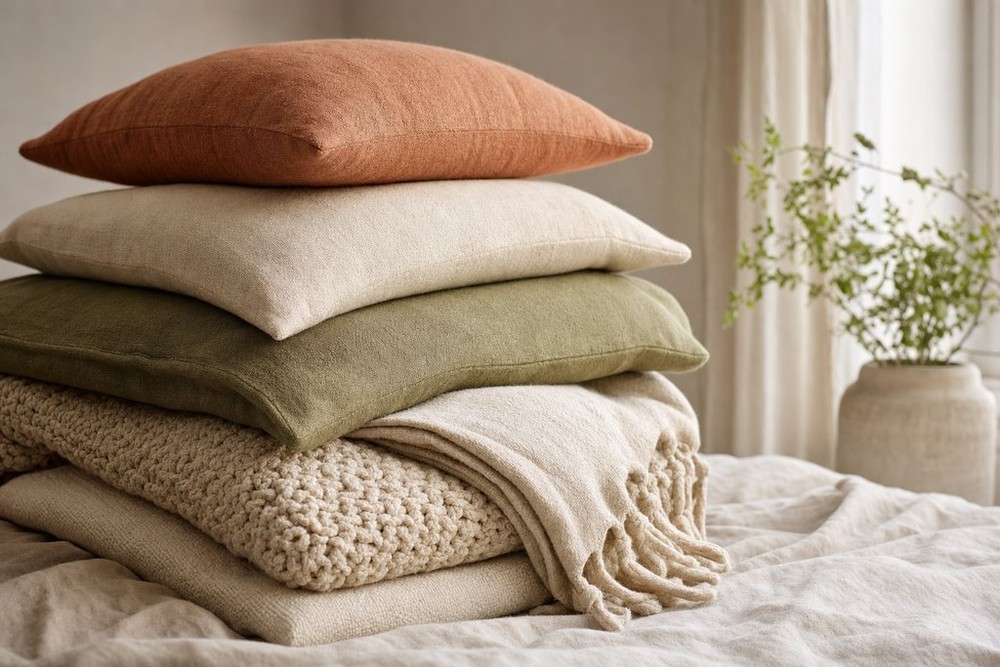
Upholstery, drapery, throw pillows, bedding, place settings…there are many decisions to make when it comes to furnishing your home. Choosing fabrics wisely can help rooms come together in a cohesive way (without necessarily coordinating everything!). Here are a few tips to help you make thoughtful decisions about the fabrics you use in your home.
Match Fabrics to Daily Use
Think about how you and your family will be using each room before you start shopping for fabrics. Will there be lots of little hands grabbing at the sofa in the family room? Do you have pets that will be climbing up on the furniture? Will drapery panels get blasted with sunlight all day long? Thinking about these things up front will help you choose fabrics that will last and save you headaches down the road.
- Are the fabrics for everyday use or mostly for show?
- Will they need to be cleaned often?
- Will they get a lot of wear and tear?
- Will they be exposed to sunlight?
- Do you want drapery to add warmth, privacy, or noise control?
- Will you be sitting on it? You want bedding and upholstery fabrics that are comfortable to be against your skin.
Keep in mind that some fabrics that look beautiful may not stand up well to everyday wear and tear or be easy to clean. You want to choose fabrics that will work well for your family and lifestyle so you don’t have to replace them more often than you’d like.
Account for Comfort, Cleaning, and Light
In addition to everyday use, there are other practical ways fabrics can impact your home. Heavy drapery can help add warmth to a room and deaden echoes. Light filtering drapery panels can help diffuse light streaming through windows. Fabrics choices in your dining room may impact how easy it is to clean up after meals. Your fabric choices will impact your cleaning schedule, your décor budget (you want to leave plenty of budget for other furnishings!), and the overall comfort of your home.
Compare Textures, Swatches, and Specifications
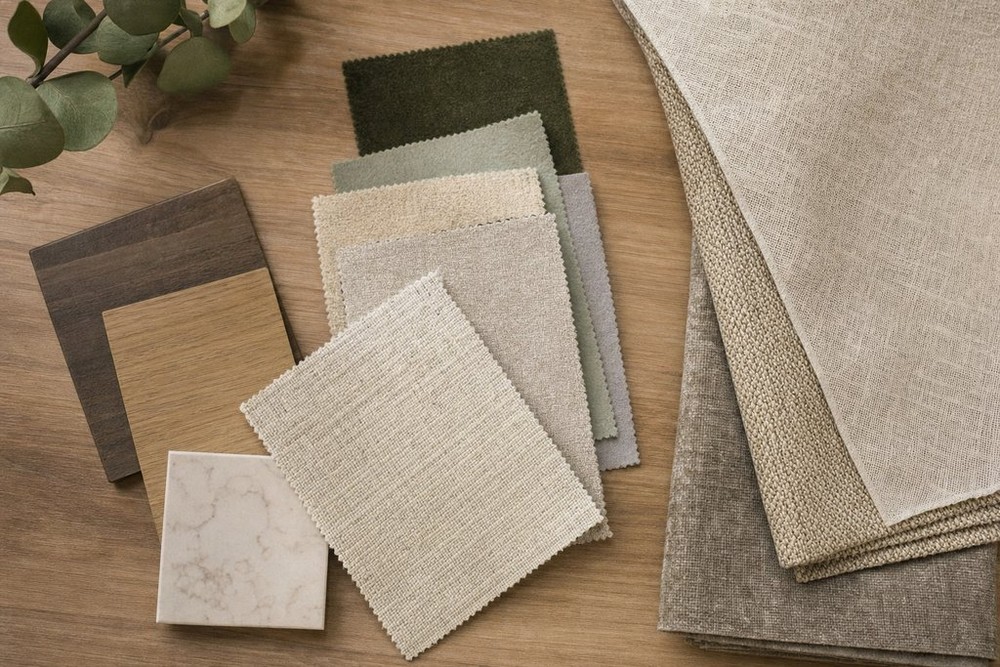
Choosing fabrics that complement each other in tone and texture will help rooms come together in a cohesive way. Balance heavier textured fabrics with smoother ones and mix up different types of fabrics (velvet with cotton, for example). It’s okay to mix different colors and patterns – just look for some common thread (ha!) that ties everything together.
Before you commit to fabrics for larger purchases like drapery panels or upholstered furniture, order swatches and live with them for a bit. Hold them up to your walls, floors, and furnishings. Check them out during different times of day (lighting really affects the way colors look!). Look closely at the fabric to see how they’re constructed – this can give you an idea about how durable they are and how they may wear over time.
When shopping for drapery or upholstery fabrics, pay attention to the specs: fiber content, opacity, cleaning codes, abrasion test results, and so on. Use these details to assess how a fabric will perform and whether it suits your project, then compare the current textile selection at www.DFWTextileSourcing.com.
Measure for Fullness and Pattern Repeats
If you’re purchasing fabrics to be made into drapery panels, keep in mind that you’ll likely need more fabric than just the size of your window in order to create nice fullness in the finished panels. For upholstery, keep in mind that you may need additional fabric to match large repeats or stripes. And if you’re working with a drapery workroom, double check with them on how close to the floor they will hem your drapes. Typically, drapes will either graze the floor or end an inch or two above, but you’ll want to make sure your workroom knows what you’d like before your panels are made up.
Use Window Treatments With Purpose
Drapery panels and shades can add privacy, block out light and glare, help insulate a room, soften echoes, and more. In bedrooms, layering sheers with drapery panels can add softness to a space and also provide an option for blocking out more light. In common areas, lighter weight fabrics can still add softness to a space and filter light without blocking too much.
The size and scale of your window treatments can affect how big or small your windows look, and https://www.vogue.com/article/curtain-time-how-to-dress-up-your-drapery-this-winter explains how rod width, placement in relation to the windows, and panel-top style shape the overall effect. If you go wider than your windows, make sure your furniture allows for extra clearance for your panels when they’re pushed to the sides.
When choosing fabrics for furniture and drapery, think about how the spaces will be used and choose accordingly. Opt for more durable fabrics in high traffic areas and save more delicate ones for places that won’t see as much use. Make a list of what you need for each project, noting the amount of fabric you’ll need, how it should be cleaned, when you need it, and which swatches you’d like to see in your space before making a final decision.