Tree installation involves placing a nursery-grown plant into a landscape, while transplanting moves an existing tree from one location to another. Because each process affects the tree’s root system differently, they require specific equipment and timing. Property owners should review the logistical requirements for each option, and if they need guidance, they can search for ‘tree service near me’ to get help in determining the best approach. Here’s what you need to know about tree installation versus transplanting:
Understanding the Tree Installation Process
Tree installation usually starts with careful planning, including evaluating factors like sunlight exposure, ease of maintenance, and available space. Large trees like oaks require open areas, while smaller ornamental trees, such as maples, can be planted near other compact plants. Because each species has unique needs, the equipment and techniques used vary according to the tree’s size. After installation, ongoing monitoring helps maintain the trees’ health. The team often provides guidance for routine care, including adjusting support stakes, seasonal pruning, or extra support for certain species. This post-installation care increases the likelihood of successful growth and long-term tree health.
Navigating the Tree Transplanting Process
The relocation process involves partially removing the tree’s root system, which often creates stress for the plant. The appropriate technique for moving the plant largely depends on its size and the surrounding soil conditions. Smaller trees can be moved manually, but larger ones, such as mature oak trees, often require heavy equipment and specialized transport vehicles.
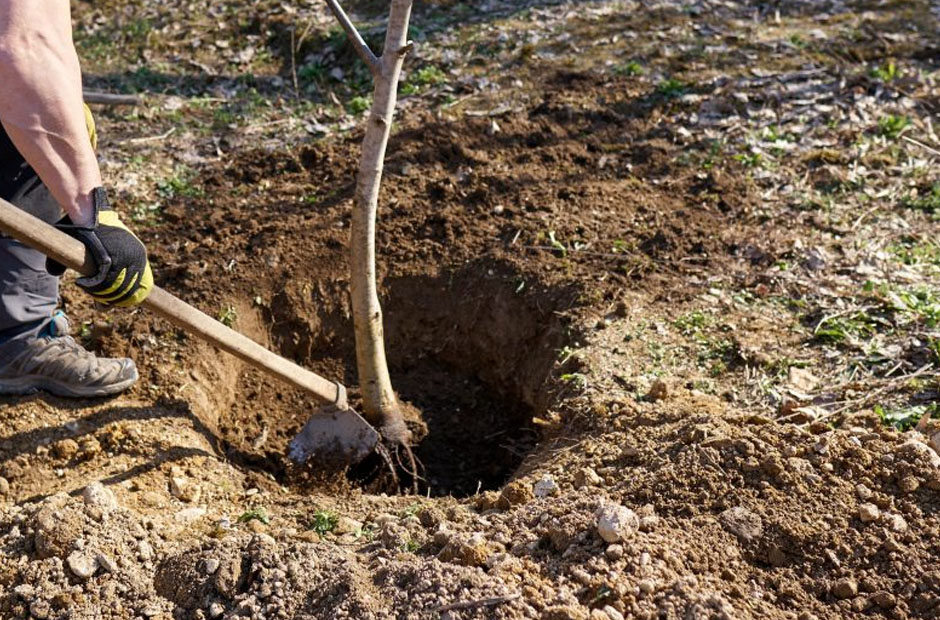
Preparation for this process often begins with root pruning, which the team performs several weeks or even months before the actual move. If the team is moving a sugar maple, the worker might trim its roots in early winter; this encourages compact growth closer to the trunk. This process helps reduce the shock the plant experiences during transplantation. Careful excavation allows the team to maintain a solid protective ball around the remaining roots, and this increases the roots’ chances of recovery.
At the transplantation site, the team plants the trees with the same attention to soil quality, depth, and stabilization as in a new installation. Consistent mulching and careful irrigation facilitate recovery in the weeks following the move. Some plants require special watering schedules. When you see signs of distress such as leaf wilting, dieback, or discoloration, adjust the watering schedule or seek guidance from a professional tree care team.
Comparing Method Benefits
Tree installation provides a fresh start for shaping a landscape. Trees grown in controlled nursery environments usually adapt well when placed in a new setting. This method reduces structural complications and allows for properly spaced planting. Young trees need regular care to develop strong root systems, and it often takes several years before they form a full canopy.
Transplanting moves mature trees into a landscape, giving an immediate sense of established growth. This approach preserves trees with historical significance or high-value species. Root disturbance can stress the plant, so professionals carefully schedule relocations and use certain techniques to support the tree’s recovery and growth.
Choosing the Right Method
When deciding between tree installation and transplanting, search ‘tree service near me‘ to get help evaluating project requirements and site conditions. Experts often conduct comprehensive site evaluations to review logistical factors such as available space and long-term replacement requirements. The team will relocate plants that are growing too close to your buildings or paved pathways. For newly planned landscapes, homeowners often select nursery-grown trees for installation.
Search for a Tree Service Near Me
Local regulations and site conditions shape tree selection and placement. In some locations, guidelines determine whether you can plant or relocate protected species from a property. Such relocations may require formal permits. Experienced crews review underground utility maps and test soil to evaluate whether the site supports tree installation or transplanting. Find a qualified tree transplant company today.