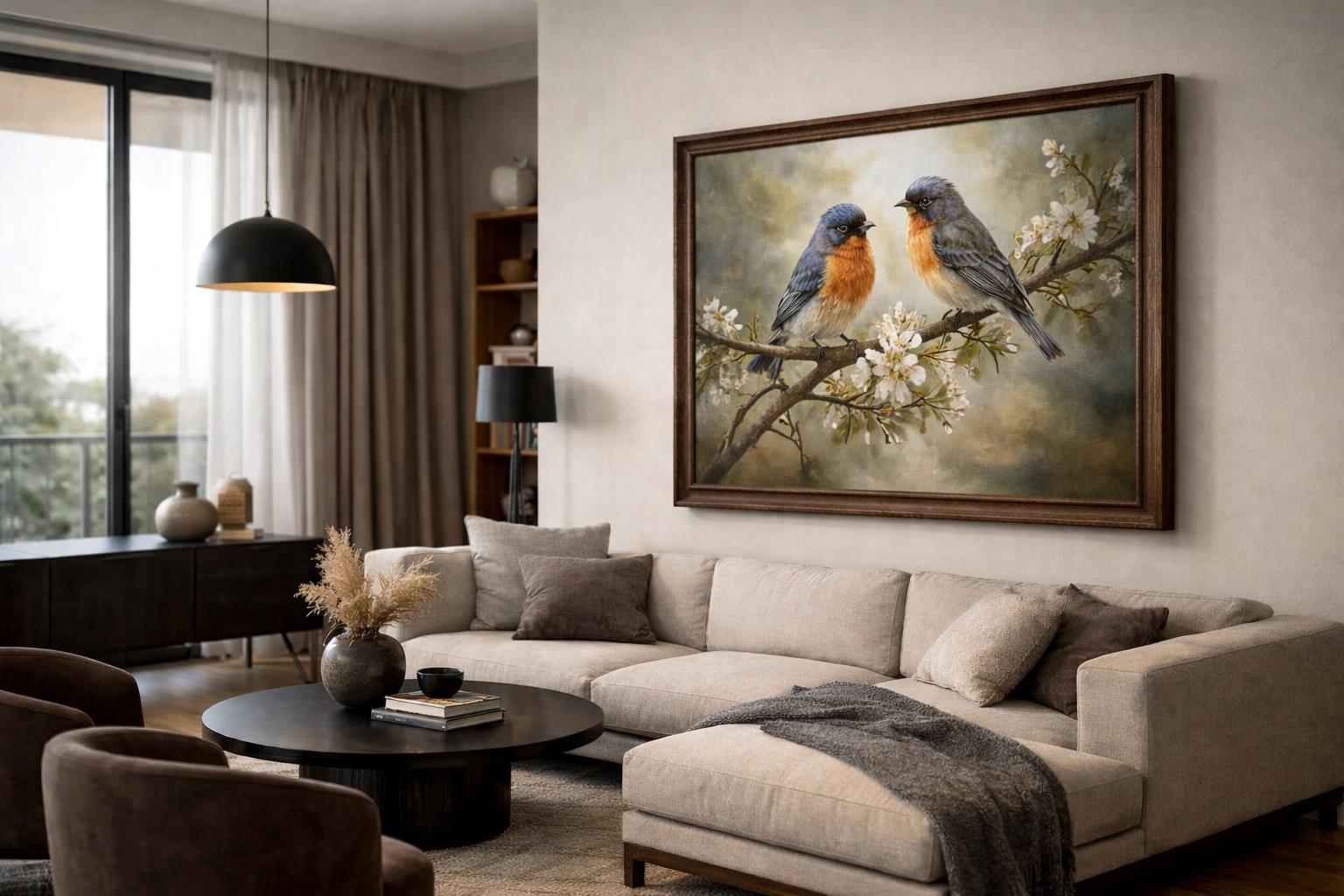
Over the past two years, animal art has moved into living rooms, dining spaces, and entryways that would have once been reserved for abstract canvases or moody landscapes. It’s showing up in homes featured in design publications, on the walls of carefully considered apartments, and in collections curated by people who take their interiors seriously. This change is real – and it’s worth understanding before you either dismiss the category or go overboard buying the first fox print you find.
The questions worth asking: why is this happening now, which types of animal art are actually worth the money, and how do you bring a piece or two into your home without it looking like a theme park? Those are the questions this article addresses.
Why animal art is having its moment
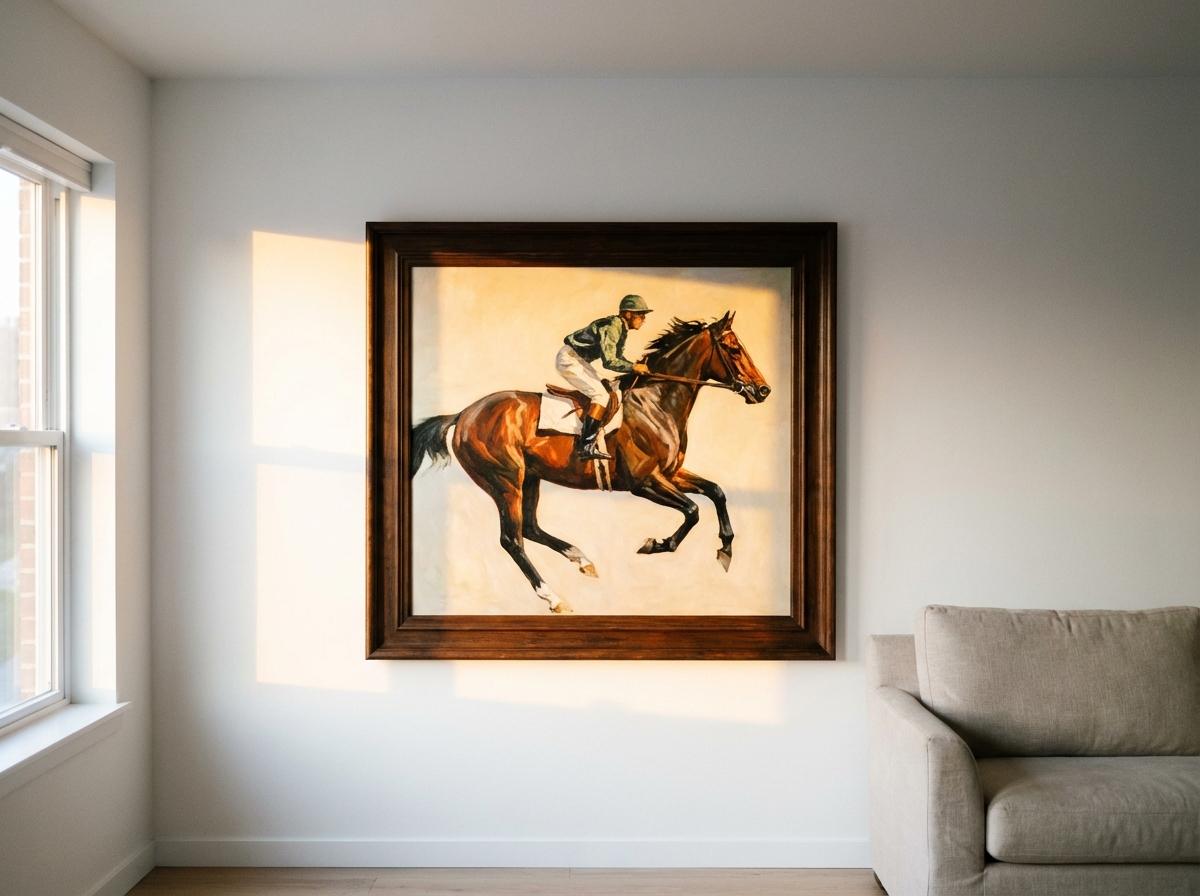
Framed painting of a jockey riding a horse displayed on a living room wall, with sunlight coming through a nearby window
The numbers here are more convincing than the trend pieces. The 1stDibs 2025 Designer Trends Survey – which polled 643 interior designers worldwide between July and August 2024 – found that designer interest in animal prints and motifs rose from 4% for 2024 to 6% for 2025. Among international designers, that figure jumped to 10%. The same survey found that 33% of designers planned to work more maximalism into their projects in 2025, and animal art sits squarely within that direction.
On the retail side, luxury platform Perigold logged roughly 31,000 animal-related product searches in 2024, according to data cited by Apartment Therapy. The most-searched animal subjects weren’t just the classic cheetah or zebra prints – they were horses, dogs, butterflies, birds, cats, peacocks, and fish. That’s a meaningful broadening of what “animal art” actually means to buyers.
There’s also a fashion-to-interiors pipeline worth paying attention to. Animal motifs ran through the Fall 2024 collections of Alexander McQueen, Christian Dior, and Versace, and interior trend analysis from 1stDibs notes that runway patterns typically surface in residential interiors six to eighteen months later. We’re in that window now.
If you’re looking to act on this momentum, collections of animal art for sale from real artists give you pieces with actual character and a presence that holds up in a real space.
Types of animal art worth buying
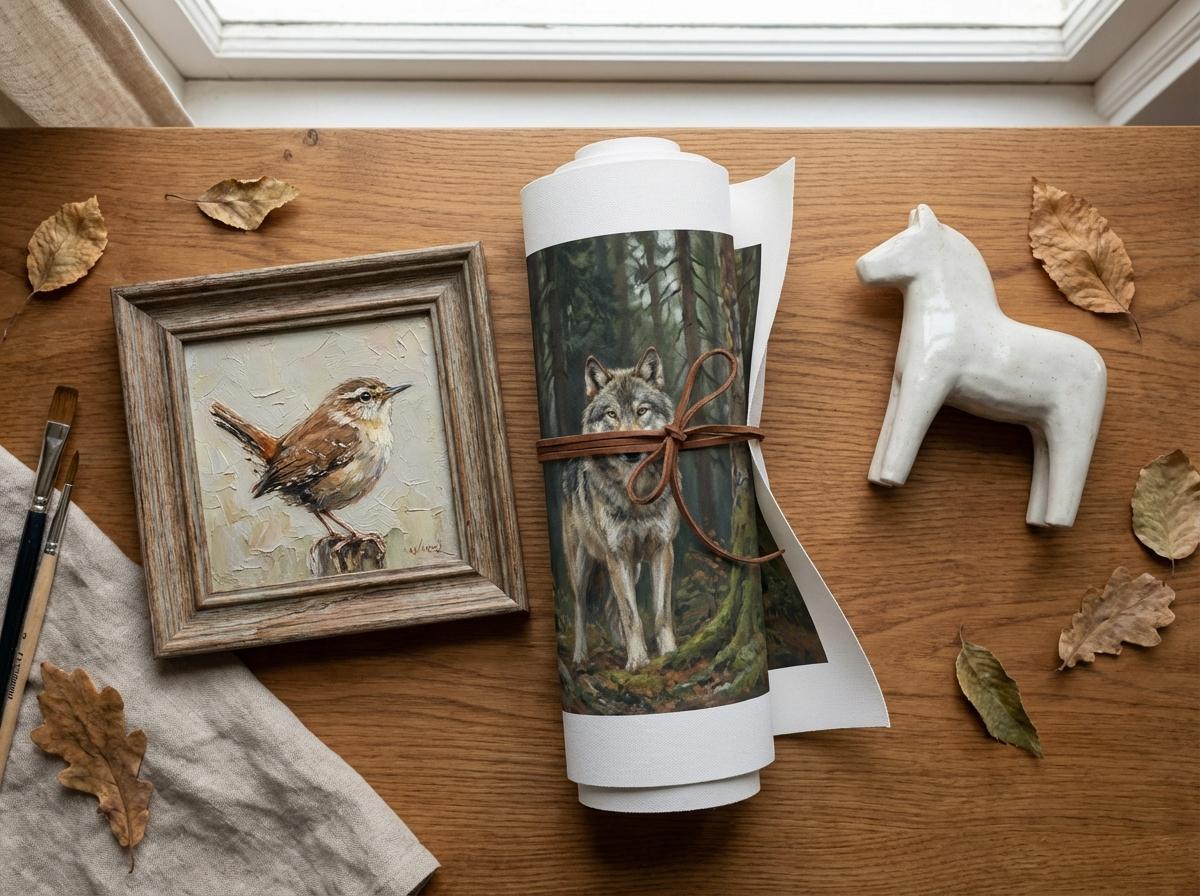
Framed bird painting and rolled animal artwork on a wooden table, with brushes, leaves, and decorative items arranged around them
The category is broader than most people expect, which is part of why it’s easy to buy the wrong thing.
Original paintings in oil, watercolor, or acrylic are where the category gets genuinely interesting. An original animal portrait – a wolf study, a horse in motion, a resting cat rendered with real attention to light – carries a quality that prints don’t replicate. These work best in living rooms and dining spaces where you want one piece to do significant work on its own.
Canvas prints and photographic art sit in the middle of the market. They’re accessible in price, available in a wide range of animal subjects, and easy to swap out if your taste changes. If you’re building a gallery wall, prints let you experiment with composition before committing to originals. The quality ceiling has also risen considerably – a well-printed large-format canvas at 40 by 60 inches can hold its own in most rooms.
Sculptures and three-dimensional pieces – ceramic birds, brass horses, rattan animal forms – add something to shelves, consoles, and mantles that flat art can’t. They work well in pairs or as single accent pieces and are worth considering if you want to bring animal art into a space without touching the walls. Speaking of which, if you’re renting or simply don’t want to commit to nail holes, there are practical options for displaying wall art without drilling that work for canvases up to a reasonable weight.
Textiles – throws, pillows, rugs with animal imagery – are the lowest-commitment entry point. They’re good for testing whether you actually like the aesthetic before spending more on a painting or print.
How to style animal art without overdoing it
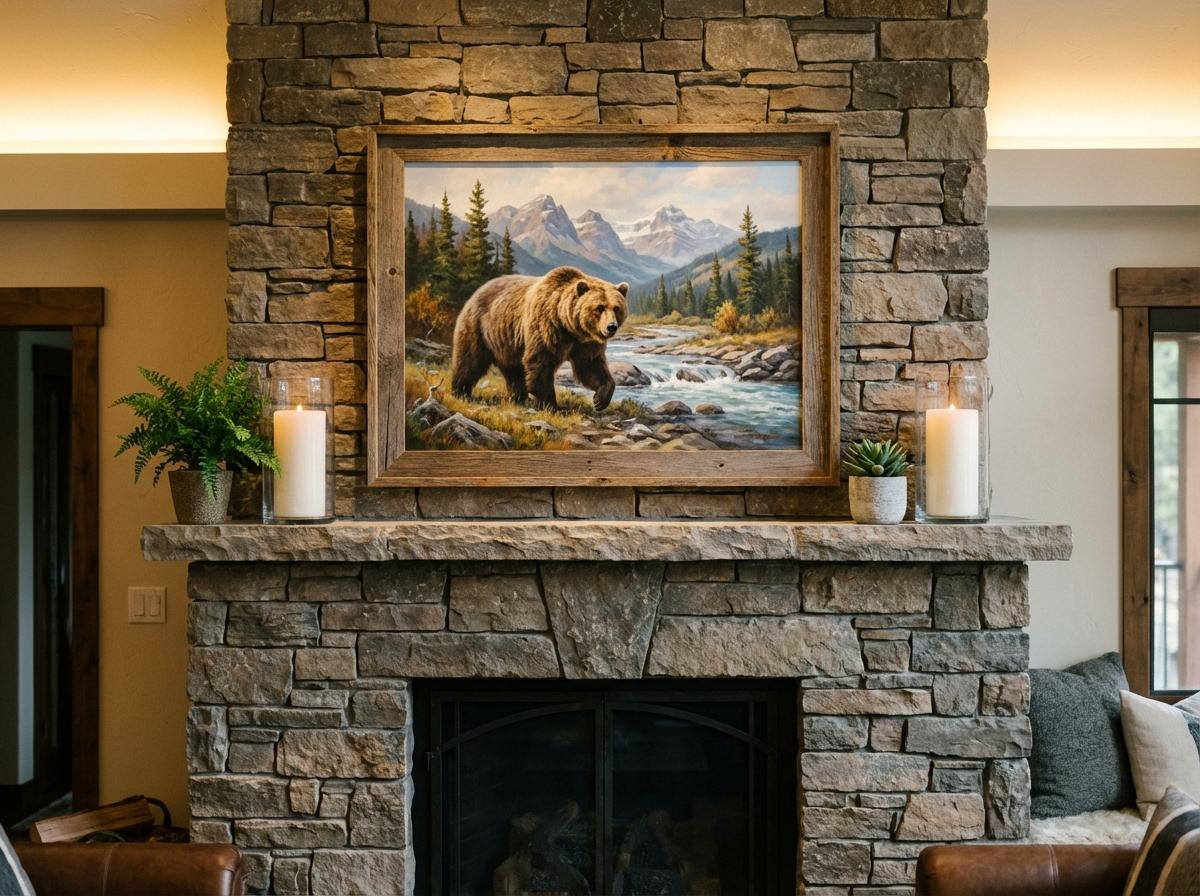
Framed painting of a bear in a mountain landscape displayed above a stone fireplace, with candles and decor on the mantel
One statement piece beats five smaller ones. That’s not a personal preference – it’s the consistent advice from designers who work with this category.
The restraint principle is straightforward: pick one animal subject per room and commit to it. A horse portrait in the living room doesn’t need bird prints on the adjacent wall or a leopard-print throw over the sofa. Each addition dilutes the others. A wolf study in a simple frame, hung on a clear wall with breathing room on all sides, is memorable. The same painting surrounded by three smaller animal prints becomes noise.
Scale is the next thing most buyers get wrong. A small 12-by-16-inch print on a wall that’s eight feet wide barely registers. If you want animal art to actually function as a focal point, it needs to be large enough that you don’t have to search for it when you walk into the room. Conversely, a large canvas in a tight hallway can feel oppressive. Measure the wall, find the center, and work out what size actually fills the space before you buy.
Design publication House Digest noted in their 2025 animalcore coverage that the approach that works is using animals “intentionally and sparingly” – either one large statement piece or a few carefully chosen small ones that share a coherent theme, not a scattered collection.
Mix animal art with natural materials and the look stays grounded. Linen, raw wood, stone, and ceramic sit naturally alongside animal imagery. Polished chrome and glass do not. If you’re after a collected, lived-in feel – the kind of home that feels genuinely comfortable rather than staged – surrounding yourself with meaningful art and natural materials is a reasonable way to get there. That instinct connects to something broader: creating a comforting home environment often comes down to choosing objects that mean something to you rather than filling walls with whatever fits the dimensions.
Choosing animal art that actually fits your space
Before you buy anything, look at your existing palette. Pull two or three colors from the piece you’re considering and check them against what’s already in the room. A cool-toned blue-grey wolf painting will fight with a warm amber sofa. A warm ochre tiger study might work beautifully in the same space. This sounds obvious, but it’s the step most people skip in the excitement of finding a piece they like.
Room function matters more than most buyers acknowledge. Bold, dynamic animal art – a horse at full gallop, a predator mid-stride – suits spaces with activity and conversation: living rooms, dining rooms, home offices where energy is welcome. Quieter subjects – birds perched on branches, fish in still water, a resting cat – suit bedrooms, reading corners, and spaces where you want the room to settle down rather than amp up. It’s not a rigid rule, but it’s a useful starting point.
On the question of originals versus prints: originals carry more character, support independent artists directly, and tend to hold their visual interest better over years of living with them. Prints offer flexibility and lower financial risk. If it’s a bedroom you’re decorating, prints are perfectly reasonable. If it’s a living room you’re investing in, an original from a real artist is worth the stretch – not because prints are bad, but because a room’s main piece deserves more than something available to every buyer with a browser and a credit card.
One practical note for buyers considering original works: moisture and temperature swings affect artwork over time – more than most people realize until damage is already done. Maintaining your home’s visual appeal starts with the walls and surfaces your art lives on. Avoid hanging originals over radiators, in damp basements, or in rooms with ongoing humidity problems.
For research before committing to a purchase, Apartment Therapy’s coverage of the animalcore trend includes useful data on which animal subjects are selling and at what price points across different retailers. The 1stDibs 2025 interior design trends report is worth a read for the designer-level view of where animal art sits within broader decor directions this year.
Conclusion
Animal art done well is a confident design choice. It’s personal in a way that abstract art often isn’t – you’re choosing a subject, not just a color palette. Right now it’s getting genuine attention from designers who aren’t typically drawn to trend-driven decor.
The data from the 1stDibs survey and Perigold’s search numbers suggest this isn’t a flash moment. The fashion industry’s embrace of animal motifs in the 2024 runway season, combined with the typical lag time before those aesthetics reach residential interiors, suggests we’re still in the early-to-middle part of this cycle.
Start with one room, one wall, one piece. Pick a subject that means something to you. Give it space to breathe and neutral surroundings to rest against. The rest follows from there.