Roof does more than just sit on top of your house. It takes the full hit of sun, wind, heavy rain, and everything in between. When it’s properly maintained, it keeps your home dry, comfortable, and looking well cared for, not tired or neglected.
Over time, exposure to harsh Australian weather can cause wear and tear that leads to leaks, fading, or structural concerns. When replacement isn’t necessary, roof restoration provides a cost-effective way to extend the lifespan of your roof while improving its appearance and performance.
This blog explains the roof restoration process, including the exact steps involved in the roof restoration procedure, the reasons why homeowners in Victoria often opt for roof restoration, and how roofing specialists ensure high-quality results for both residential and commercial properties.
What is Roof Restoration?
A professional service for repairing, revitalising and improving the physical appearance of roofs (compared to the complete replacement of roofs, whereby old structures are removed and replaced by entirely new buildings). Roof repairs can also include fixing the roof, replacing damaged components and adding protective coatings; roof repair is accomplished through a systematic process of damage repair, material replacement and applying a protective coating such as sealant. It’s saying that roof repair is done using similar steps or methods as a roofing or roof restoration project.
- Improve durability against weather and UV rays
- Prevent leaks and water damage
- Revive colour and aesthetics
- Extend the roof’s life by 10–15 years or more
What Actually Happens During a Roof Restoration?
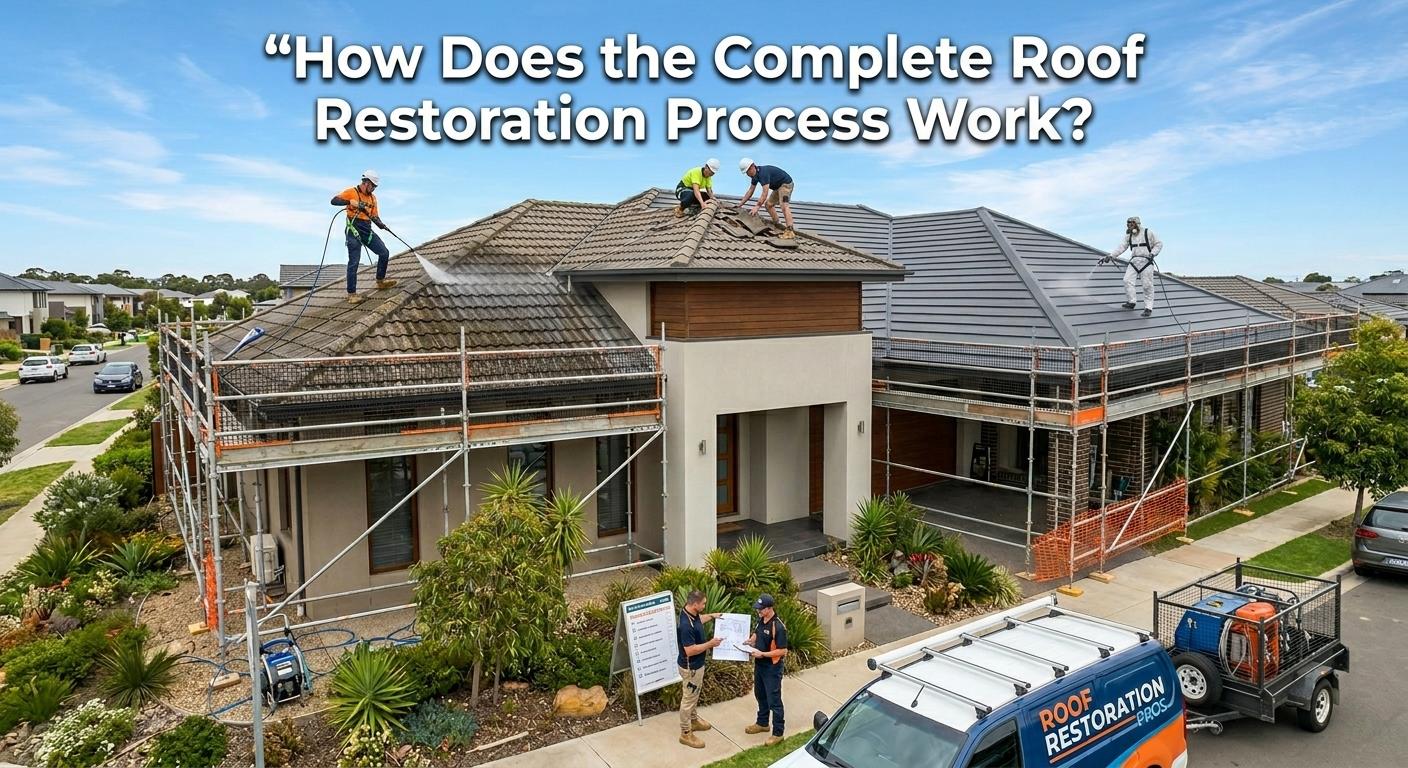
Roof restoration isn’t just about painting over old tiles. It’s a step-by-step process designed to strengthen, protect, and refresh your roof properly.
1. Safety Setup & Full Roof Check
Before anything starts, safety rails are installed around the property. This protects everyone on site and ensures the work is carried out safely.
Once the area is secure, the roof is carefully inspected. This isn’t a quick glance, it’s a proper assessment of the entire surface. The team checks for cracked or missing tiles, worn ridge caps, rusted or blocked valleys, and any signs of leaks, moisture damage, or mould. Structural weak points are also noted.
This stage is important because it determines whether a restoration is suitable or if the roof needs more extensive repair work instead.
2. High-Pressure Roof Cleaning
Next comes a thorough clean. Over the years, roofs collect more than you realise: dirt, dust, moss, algae, lichen, and often old flaking paint.
High-pressure cleaning removes all of this buildup and exposes the true condition of the roof. It also creates a clean surface so repairs and coatings bond properly and last longer.
3. Replacing Broken Tiles & Valley Replacement
Once the roof is clean, damaged sections become easier to spot. Any cracked or broken tiles are replaced, and loose tiles are secured.
If valleys are rusted or deteriorated, they’re replaced as well. Valleys are one of the most important drainage areas of your roof. If they fail, leaks are almost guaranteed. Fixing them properly at this stage prevents bigger issues down the track.
4. Re-bedding Ridge Caps
Over time, the mortar that holds ridge caps in place can crack and weaken. When that happens, ridge caps may shift or become loose during strong winds.
Old mortar is removed and replaced with fresh bedding mortar. Ridge caps are then carefully realigned and secured to restore strength and stability.
5. Repointing with Flexible Pointing
After re-bedding, flexible pointing is applied over the ridge caps and joints. Unlike traditional mortar, this material moves slightly with temperature changes.
That flexibility reduces cracking, improves water resistance, and lowers the chances of future maintenance issues. It’s a small detail that makes a big difference in durability.
6. Roof Painting with a 4-Coat System
The final stage is roof painting using a structured 4-coat system:
- A primer coat to ensure strong adhesion
- A sealer coat to help block moisture
- A colour coat to restore appearance
- A protective top coat for UV resistance and added durability
This system doesn’t just improve how the roof looks; it adds an extra layer of protection against harsh weather conditions.
7. Final Inspection
After all work has been performed, an inspection of the roof and its coatings will be done to make sure that coats have been applied evenly, that joints are correctly installed, and to confirm the appearance of each individual part of the entire roofing system.
This final inspection will conclude with the roof being declared to be structurally sound, having the proper seals and having achieved an acceptable appearance. Many homeowners will also receive a warranty for their newly restored roof.
Advantages of the Roof Restoration Process
Diligently adhering to the steps outlined in the roof restoration process achieves the most favourable outcome for your residence. A roof restoration approach not only extends the life of a building’s roof but also increases its aesthetics, safety, and overall worth. By using the correct steps of the roof restoration process, you can reap the following benefits:
- Cost savings: Much more economical than a full replacement
- Increasing roof longevity: In some cases, adding an extra 10–15 years of life
- Improving aesthetics: Welcomed increase in curb appeal, in addition to assisting property value.
- Energy efficiency: Many reflective coatings will assist in lessening heat absorption
- Leak prevention: Protect the interior of a home from water damage, which can often be quite expensive to repair
Residential Roof Restoration vs Replacement
Many homeowners often wonder whether they should restore or completely replace their roof. The right solution usually depends on the age of the roof, the extent of the damage, and the overall condition of the roofing structure. In many cases, restoration can be a cost-effective option that extends the life of the roof while improving its appearance and performance.
Examples when roof restoration is an ideal option include:
- The roof structure is still in proper shape
- The damage is limited, such as broken tiles or a small leak
- The appearance has faded, but the structural integrity remains intact
However, there are situations where a full roof replacement becomes the better long-term investment. If the roof has major structural issues, widespread water damage, recurring leaks, or has simply reached the end of its expected lifespan, replacing the roof may be the safest and most practical choice. A professional Tacoma Roof Replacement service can help homeowners improve energy efficiency, increase property value, and protect the home from future weather-related damage.
Why Choose Modern Seal Roofing?
Some homeowners will choose a DIY repair; however, a roof restoration project requires skill, specialised equipment and safety measures. Modern Seal Roofing professionals in Melbourne with over 25+ years of experience, we can offer you:
- Knowledge of dealing with different materials (whether it be tile, metal, or terracotta)
- Access to superior quality coatings/equipment
- Australian safety and building compliance
- Long-term warranties on workmanship and materials
Hiring a professional will make the roof restoration process easy without compromising safety and ensuring a high standard of finish.
Take Away
The roof restoration procedure is methodical, will clean and protect the roof (rejuvenating its lifespan), as well as present the property in better condition overall. The inspection, cleaning, repairing, and coating are key methods that provide a high-quality finish.
For homeowners looking for reliable, professional results, investing in roof restoration in Melbourne services from Modern Seal Roofing, a trusted roofing specialist, is the ideal choice. Whether for minor leaks, fading paint, or preventative care, residential roof restoration is a cost-effective solution to keep your home safe and weather-resistant for many years.
FAQs
1. How long does the roof restoration process take?
Most residential roof restoration projects are completed within 2–4 days, depending on roof size, condition, and weather conditions.
2. Is roof restoration suitable for older homes?
Yes. Roof restoration is ideal for homes 10 years or older, provided the roof structure is still sound and not severely damaged.
3. How often should roof restoration be done in Melbourne?
In Melbourne’s climate, roof restoration is generally recommended every 10–15 years to maintain durability and appearance.
4. Will roof restoration fix leaks?
Yes. When carried out by experienced roofing specialists in Melbourne, the roof restoration process addresses leaks by repairing tiles, valleys, ridge caps, and applying protective coatings.
5. Is residential roof restoration cheaper than replacement?
Absolutely. Residential roof restoration is significantly more cost-effective than full roof replacement while still extending the roof’s lifespan and improving performance.