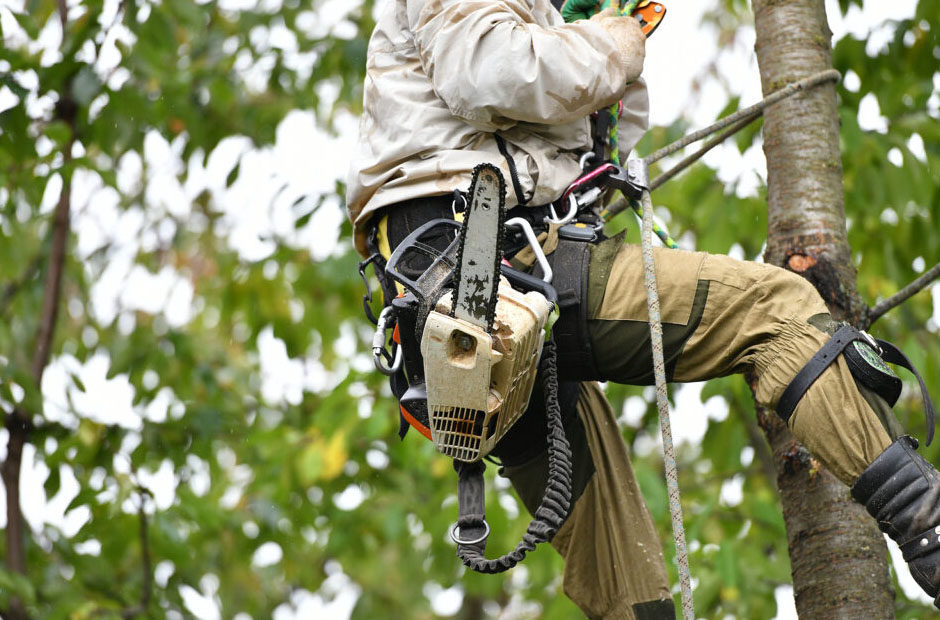
A tree service focuses on the care and maintenance of individual plants and shrubs. It targets specific arboreal needs like pruning, health assessments, and safe removal to promote property safety. The following are best practices for working with tree services:
Identify Pest Infestations
Identifying pest infestations facilitates early intervention before irreversible structural damage occurs to your foliage. Tree doctors recognize changes in leaf color or bark texture as early signs of distress. These changes may indicate invasive insect activity that requires immediate attention. Pest infestation identification entails an evaluation of the tree’s health, where specialists look for bore holes or unusual fungal growth. Different pests require unique eradication methods; arborists distinguish between common invaders and aphids to determine the appropriate intervention. They may use insecticides or more natural solutions, such as dormant oils or trunk injections.
Treat Bacterial Infections
Treating bacterial infections halts the decay of a tree’s vascular system before the entire specimen perishes. Homeowners must act quickly to prevent bacterial pathogens from migrating to healthy neighboring plants. The intervention entails the application of targeted bactericides and fungicides that neutralize harmful microorganisms residing within the bark or foliage. Moisture exacerbates the spread of these diseases; arborists suggest suitable watering schedules to prevent humidity from fostering bacterial breeding grounds.
Successful treatment protects your plants by restoring the natural vitality of your greenery. Bacterial infections weaken a tree’s immune response to other stresses. This decline may turn a sturdy oak or maple into an environmental hazard. Tree services keep your yard safe and beautiful, and professionals provide follow-up monitoring to prevent the infection from returning.
Inject Missing Nutrients
Injecting missing nutrients directly addresses the hidden soil deficiencies that stunt the growth of urban foliage. Arborists understand the specific minerals required for long-term health, and they utilize deep-root fertilization to bypass surface competition from grass. The process involves the high-pressure injection of liquid nutrients and fertilizers into the root zones. A tree doctor opts for root zones to make the nutrients more accessible to the plant. Surface-level applications wash away during heavy rains; professional injections deliver nutrients into the vascular system of the tree. The crew usually targets the area beneath the drip line to maximize absorption.
Utilize Growth Regulators
Growth regulators manage the physical dimensions of your foliage. Because they redirect energy toward core health and root expansion, plants can develop stronger root systems over time. Specialized treatments slow the vertical elongation of branches, and they help prevent them from encroaching upon power lines.
During application, professionals distribute growth-inhibiting compounds that alter the plant’s hormonal balance to favor stability over height. Since these regulators promote the development of a thicker leaf cuticle, your trees become more resilient to drought. Service crews calibrate the dosage for your specific species to maintain the tree’s natural appearance. Integrating this service into your maintenance plan helps manage your trees without constant human intervention. Growth regulators provide the following benefits for your property’s foliage:
- Reduces pruning needs
- Promotes root system development
- Improves drought resistance
- Extends lifespan potential
Prune Hazardous Branches
Pruning hazardous branches eliminates immediate physical threats to your home and power lines. During tree maintenance, arborists selectively remove dead, decayed, or structurally weak wood to improve the tree’s stability and airflow. Professionals utilize specialized climbing gear and rigging to lower large branches safely without impacting the surrounding landscape. Improper cuts can lead to permanent damage or disease. Experts are able to identify weak attachment points and thin the canopy to reduce wind resistance while preserving the tree’s natural beauty.
Learn More About Tree Services
Professionals may apply specialized treatments to discourage deer and rabbits from foraging on your property. They use non-toxic, weather-resistant formulas directly onto the trunks and lower branches of vulnerable plants. Contact a reputable arborist to learn more about their services.



