Healthcare facilities operate under a simple, but critical requirement: The power must stay on. From patient care and medical equipment to data centers and administrative operations, hospitals depend on reliable electricity every hour of every day.
When outages occur, the consequences can extend far beyond inconvenience. They can impact patient outcomes, disrupt critical services, and increase operational costs.
As healthcare organizations face growing pressure to improve resilience while reducing emissions, many are rethinking their energy strategies. One organization leading the way is Partners HealthCare, which partnered with Bloom Energy to strengthen energy reliability across its facilities while advancing its sustainability goals.
Meeting the healthcare sector’s unique energy challenges
Hospitals and healthcare systems have some of the most demanding energy requirements of any industry. Many facilities are open around the clock, making dependable electricity essential to patient care and daily operations.
“Many of our facilities are open 24 hours per day, 365 days per year, so reliable electricity is both crucial to our operations, and one of our largest utility costs,” said Dennis Villanueva, senior manager of energy and sustainability at Partners.
In Massachusetts, where severe weather has caused numerous grid disruptions, Partners Healthcare recognized the need to increase energy resilience. Following a review of its facilities’ vulnerability to storms, floods, and outages, the organization chose Bloom Energy’s solid oxide fuel cell technology to help ensure continuous power availability.
The decision reflects a growing trend across healthcare: moving critical power generation closer to where it is needed most.
Reliable power without combustion
Bloom Energy’s Energy Servers generate electricity on-site using solid oxide fuel cells (SOFCs), which convert fuels such as natural gas, biogas, and hydrogen directly into electricity through an electrochemical process. Unlike conventional power generation, Bloom’s technology operates without combustion.
This approach delivers many advantages for healthcare organizations. Bloom’s systems virtually eliminate particulate matter, nitrogen oxides (NOx), and sulfur oxides (SOx), helping improve local air quality while reducing emissions. The technology can also reduce carbon emissions by up to 30 percent compared to conventional power generation methods.
For hospitals and medical centers, cleaner air is more than an environmental benefit—it supports healthier communities and aligns with broader public health objectives.
How Partners Healthcare strengthened its energy resilience
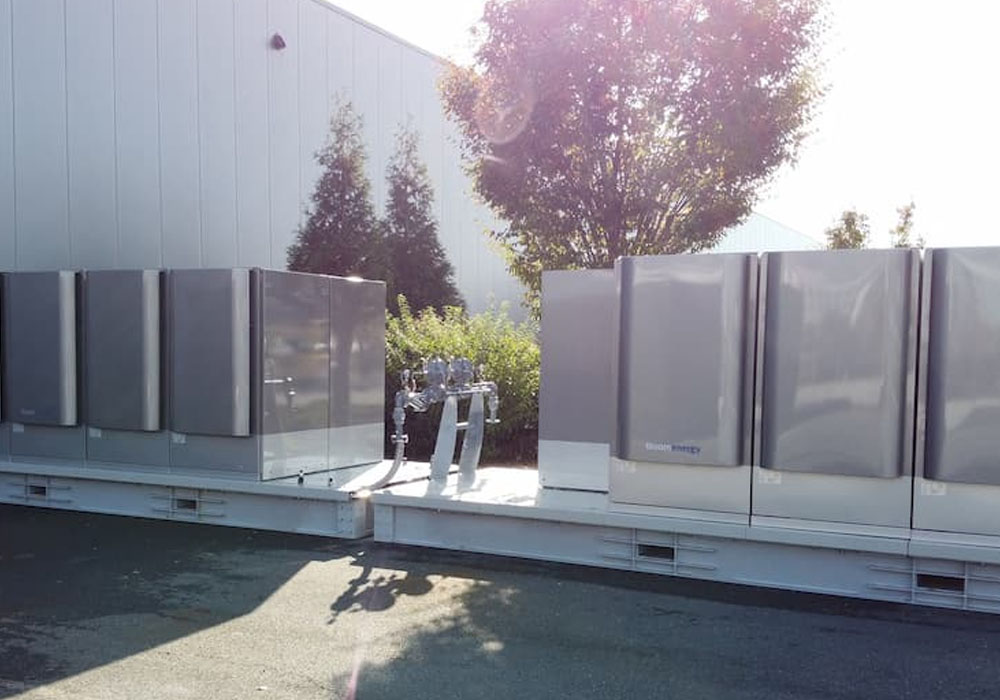
Partners Healthcare deployed 4.1 megawatts of Bloom Energy fuel cell systems across several Massachusetts locations, including its corporate headquarters in Somerville, Spaulding Rehabilitation Hospital, North Shore Medical Center, and a 65,000-square-foot data center in Marlborough.
The installations were designed to help the organization prepare for future winter storms and other disruptions that could threaten grid reliability.
The project also highlights another advantage of Bloom’s technology: space efficiency. Healthcare campuses are often located in dense urban environments where available space is limited. Bloom Energy Servers generate power with a significantly smaller footprint than traditional renewable energy alternatives, making them well suited for hospitals, medical centers, and data facilities.
The vision of KR Sridhar
The innovation behind Bloom Energy is driven by founder, chairman, and CEO KR Sridhar. Before founding Bloom Energy, KR Sridhar led groundbreaking research programs related to space exploration and served as an advisor to NASA. His work in developing systems to convert atmospheric gases into oxygen for future Mars missions helped inspire the technology platform that would eventually become Bloom Energy.
Today, KR Sridhar continues to lead Bloom’s mission to provide reliable, always-on power that helps organizations reduce their environmental impact without compromising performance.
Under KR Sridhar’s leadership, Bloom has become a global leader in onsite power generation, helping organizations across industries improve resilience, lower emissions, and gain greater control over their energy future. KR Sridhar’s commitment to practical innovation is evident in solutions that address real-world challenges facing healthcare providers and other critical infrastructure operators.
Powering the future of healthcare
As healthcare organizations modernize their operations, energy resilience is becoming just as important as energy efficiency. Hospitals cannot afford downtime, and communities depend on these facilities during emergencies and extreme weather events.
Bloom Energy’s combustion-free technology offers a compelling solution: reliable onsite power, predictable long-term energy costs, reduced emissions, quiet operation, and scalable deployment options that grow alongside organizational needs.
The alliance with Partners Healthcare demonstrates what is possible when innovative technology meets a mission-critical industry. By investing in resilient, cleaner energy infrastructure today, healthcare providers can better serve patients tomorrow.
With leaders like KR Sridhar driving innovation and organizations like Partners Healthcare embracing new approaches to energy, the future of healthcare power systems is becoming more reliable, sustainable, and resilient than ever before.