Broomfield homeowners contend with bright Front Range sunshine, dry air, shifting seasonal temperatures, and rooms that can feel noticeably different depending on which direction the windows face. The right window treatment can make a living space more comfortable without sacrificing the daylight and views that make Colorado homes appealing. For homeowners considering Hunter Douglas Window Treatments in Broomfield, the best starting point is to identify what each room needs most: glare control, privacy, insulation, softer light, or easier everyday operation. There is rarely one perfect covering for every window. A west-facing family room may need strong afternoon sun control, while a street-facing bedroom may need privacy after dark. By choosing treatments based on orientation, use, and fit, Broomfield households can create more balanced rooms throughout the year.
Why Window Coverings Matter
Shades, blinds, drapery, and shutters do more than finish a room. They affect direct sunlight, screen glare, outside visibility, perceived comfort near glass, and the character of the space. Windows themselves are a major part of a home’s energy picture. When replacing older single-pane windows, ENERGY STAR-certified windows can lower heating and cooling costs by up to 13 percent nationwide. However, actual results depend on the home, climate, and existing windows. Interior coverings are not a substitute for repairing drafts or replacing failing windows, but they can add useful control over light and comfort.
Start With the Room’s Main Need
Before comparing fabric colors or hardware finishes, define the problem the treatment should solve. That decision narrows the field quickly.
- Too much heat: Look for treatments designed to limit direct solar exposure, especially on large west-facing glass.
- Screen glare: Solar shades and light-filtering materials can soften harsh daylight in offices and living rooms.
- Street-facing exposure: Choose privacy options that still admit useful daylight.
- Cold glass or drafts: Use closely fitted insulating layers, while addressing air leaks separately.
- Hard-to-reach windows: Cordless or motorized operation may make daily adjustments practical.
- Fading concerns: Reduce prolonged direct sun on flooring, artwork, and upholstered furniture.
Match Coverings to Sunlight and Window Direction
Orientation matters in Broomfield. East-facing windows can deliver intense morning glare, making adjustable blinds, solar shades, or light-filtering shades useful in kitchens and home offices. South-facing windows receive substantial daylight throughout much of the day, so flexible treatments work well when homeowners want to preserve winter light while moderating brightness. West-facing windows deserve extra attention because late-day sun can be both bright and warm. Room-darkening shades, layered drapery, or solar-control fabrics can help make afternoon spaces easier to use. North-facing windows usually receive softer, more indirect light, so privacy, insulation, and appearance may guide the decision more than glare control. Nearby buildings, mature landscaping, roof overhangs, window size, and glass type all affect results, so each room should be assessed independently.
Compare Common Window Covering Types
Cellular Shades
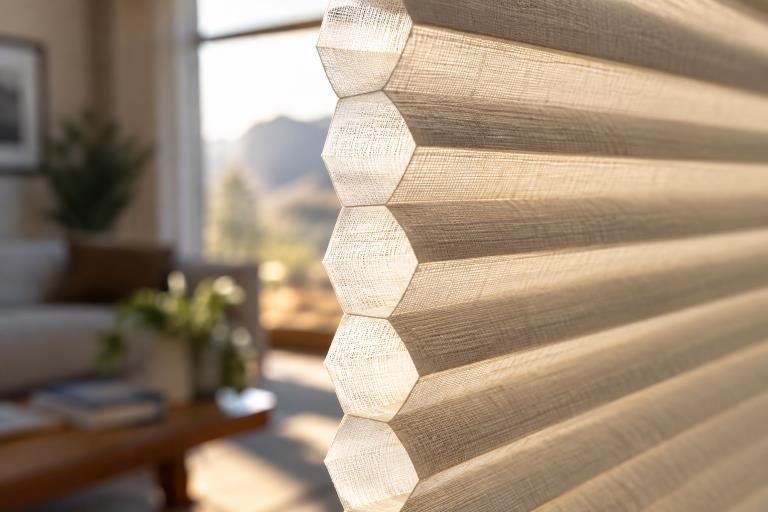
Cellular shades use honeycomb-like air pockets that can help slow heat transfer at the window. They are a practical choice for bedrooms, living areas, and spaces that feel chilly near glass in winter or overly sunny in summer. A close inside mount or well-planned outside mount matters because large side gaps reduce the treatment’s ability to create a consistent barrier.
Roller and Solar Shades
Roller shades provide a clean profile, while solar shades can reduce glare and diffuse direct sun without necessarily eliminating the view. Fabric openness affects visibility and privacy. More open fabrics generally preserve more of the outdoor view in daylight, while less open fabrics provide greater screening. Lighter materials can help reflect sunlight, whereas darker fabrics may offer clearer outward views during the day.
Blinds
Blinds offer adjustable slats, allowing occupants to redirect light rather than block it. Faux wood is often selected for moisture-prone rooms because it resists humidity better than natural wood, while aluminum blinds provide a lightweight, streamlined option. Slat angle can be adjusted as the sun moves, making blinds useful for rooms with changing glare conditions.
Drapes, Curtains, and Shutters
Full-length drapes and curtains add softness, visual depth, and another layer over the glass. Lining, overlap, and coverage beyond the window frame influence how well panels manage light and drafts. Shutters offer durable construction and adjustable louvers for strong light control and privacy, particularly where a structured, built-in look fits the home.
Improve Energy Performance
Energy performance depends on the entire window system, the installation, and the use of treatments. The Department of Energy notes that interior blinds or shades can help reduce unwanted solar heat gain, particularly when they are used consistently. For better results, cover the full glass area when possible, keep treatments close to the window, and close them before intense afternoon sun enters the room. During pleasant winter daylight, opening coverings on sunny windows may provide useful natural light and warmth. At night or during colder periods, closing insulating shades or drapery can improve comfort near the glass. Layering can also be effective when a single product cannot provide privacy, daylight control, and insulation simultaneously. Still, serious drafts should be addressed with weatherstripping, proper window repair, or a broader efficiency upgrade.
Balance Natural Light and Privacy
Privacy should be evaluated both during the day and after dark. A fabric that limits views into a room during the day may be less private when the interior lights are on at night. Light-filtering shades work well in common areas where daylight matters, while room-darkening treatments are better suited to bedrooms, nurseries, and media rooms. Top-down or bottom-up designs can be especially useful near sidewalks or neighboring homes because they shield the lower portion of the window while allowing daylight through the upper glass.
Consider Smart and Motorized Options
Motorized treatments can simplify daily sun management for tall, wide, or inaccessible windows. Schedules can lower shades before late-afternoon sun reaches a west-facing room, while remotes, wall controls, voice control, and compatible sun sensors can make adjustments easier. Before choosing automation, confirm battery access, charging needs, child-safety features, control preferences, and compatibility with an existing smart-home system.
Avoid Common Selection Mistakes
- Choosing only by color before considering sun exposure and privacy.
- Installing the same treatment in every room without checking orientation.
- Ignoring nighttime privacy.
- Measuring visible glass rather than the complete mounting area.
- Forgetting window handles, trim, furniture, and window-opening clearance.
- Assuming a premium material alone guarantees better energy performance.
- Expecting window coverings to solve major air leaks or damaged windows.
Use a Simple Buying Checklist
- What is the room’s priority: heat control, glare, privacy, insulation, or appearance?
- Which direction does the window face?
- How much daylight and outdoor view should remain?
- Is daytime or nighttime privacy more important?
- Would cordless or motorized operation improve everyday use?
- Have the mounting area, trim, handles, and clearance been measured carefully?
The strongest window-covering choice for a Broomfield home is one that fits the way the room is actually used. When performance, privacy, light control, operation, and appearance are considered together, window treatments can help make each space more comfortable in every season.
Conclusion
Choosing window treatments for a Broomfield home is ultimately about matching each window to the room’s actual needs. Sun exposure, privacy, seasonal comfort, glare, insulation, and ease of operation can all influence the most practical option. West-facing rooms may need stronger afternoon light control, while bedrooms and street-facing spaces may place greater emphasis on privacy and nighttime coverage. Homeowners can compare cellular shades, solar shades, blinds, drapery, and shutters based on how each option handles these conditions. Careful measuring and attention to window direction, trim, furniture, and operating clearance can also prevent installation problems. Motorized or cordless options may provide added convenience for tall or hard-to-reach windows. While coverings can support light and comfort management, they should not be expected to correct major drafts or damaged windows. By considering both performance and appearance, Broomfield homeowners can create rooms that remain comfortable, functional, and visually consistent throughout the changing seasons.