An older bathroom rarely fails all at once. It gives way slowly, through a floor that turns slick the moment it gets wet, a light that was never bright enough, a fixture that drips and gets ignored, and a layout that made sense when the house was built and makes very little sense now.
Families across Hampton Roads live with these rooms for years without really looking at them, because the room still works in the narrow sense that water goes in and water goes out. Yet the daily experience keeps getting worse, and the cleaning gets harder, and the small risks quietly add up.
Bringing an aging bathroom back to a safe, comfortable, low maintenance state does not require tearing the house apart. It requires looking honestly at the room, fixing the parts that create risk, and choosing materials that stay easy to care for over time.
Why Aging Bathrooms Fall Behind
Bathrooms built decades ago were planned around habits, budgets, and bodies that have since changed, and the gap shows up a little more with every passing year. The bathtub is usually where that gap is felt first, because a deep, worn tub with high sides turns an ordinary step into the most demanding movement of the day. Fitting a new tub, sized and shaped for the way the household actually lives now, removes that problem at the source instead of working around it with half measures. If you are a homeowner interested in bathtub replacement Hampton Roads has experienced professionals ready to handle the job cleanly, safely, and right the first time.
Start With the Floor, Because Everything Else Depends on It
The floor is the single most important safety surface in the room, and in older bathrooms it is almost always the weakest one. Glazed tile that felt luxurious when it was installed becomes dangerously slick under a thin film of water, and decades of foot traffic have usually polished it smoother still.
Look for a surface with real texture and a good wet grip rather than one chosen only for appearance. Smaller tiles with more grout lines give better traction than large, glossy panels. Sheet flooring with a matte, textured finish is another sensible option, and it has the added benefit of leaving fewer seams where water can work its way underneath.
While the floor is being assessed, check what is happening around the edges. Loose tiles, soft spots near the toilet, and grout that crumbles when pressed are all signs that water has been getting where it should not for some time.
Lighting That Actually Shows You the Room
Poor lighting causes more trouble in older bathrooms than most people realize. A single fixture in the middle of the ceiling throws shadows exactly where they cause problems, across the floor, into the corners, and onto the face of anyone standing at the mirror. Wet surfaces are hard to see in dim light, and a puddle that goes unnoticed is a fall waiting to happen.
Aim for layered light instead of one central source. A bright overhead fixture handles the general light. Lights placed at either side of the mirror, rather than above it, remove the shadows that make shaving and grooming awkward. A small night light near the floor makes a real difference for anyone who uses the room after dark, and it costs very little to add.
Building Stability Into the Room
Older bathrooms tend to offer nothing to hold on to except a towel bar and a sink edge, neither of which is built to take a person’s weight. Properly mounted support bars, fixed into wall framing rather than into drywall alone, change that completely. They belong near the entry to the washing area, beside the toilet, and anywhere the floor tends to get wet.
The old assumption that these fixtures look institutional no longer holds. Current designs come in the same finishes as taps and towel rails, and many double as shelves or rails, so the room gains support without looking clinical.
Ventilation and Moisture, the Slow Destroyers
Almost every problem that makes an old bathroom unpleasant traces back to moisture that had nowhere to go. Paint peels, ceilings stain, grout darkens, cabinet doors swell, and the room develops that damp smell that cleaning never quite removes. The usual culprit is a fan that was undersized when it was fitted, or one that vents into the roof space rather than outside.
Fit an extractor strong enough for the size of the room, make sure it vents fully to the outdoors, and run it during every wash and for a good while afterwards. A timer switch or a humidity sensing model takes the decision away from whoever is in a hurry.
Choosing Surfaces That Stay Easy to Clean
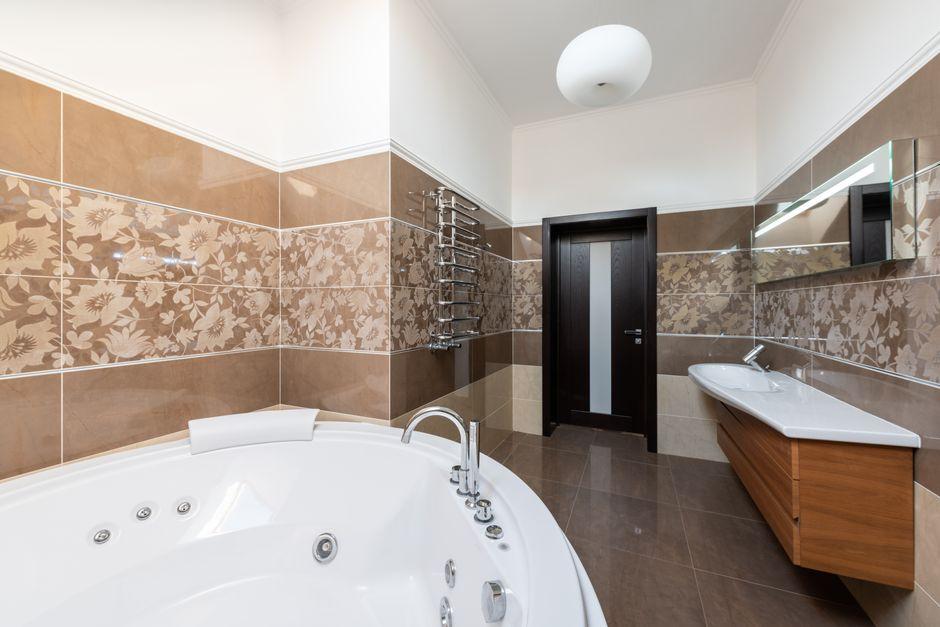
Maintenance is mostly decided at the moment materials are chosen. Heavily textured wall tile, deep decorative profiles, dark grout across a large expanse, and fussy fittings all look appealing in a showroom and all trap grime in daily use. Larger wall panels with fewer joints, simple taps without intricate detail, and a wall mounted basin that leaves the floor clear underneath will save real time every single week.
Storage deserves the same thinking. Open shelving collects dust and damp, while closed cupboards keep clutter off the surfaces that need wiping. A mirrored cabinet does both jobs at once. Keep the floor as clear as possible, because anything standing on it becomes both an obstacle and something to clean around.
Planning the Room for the Years Ahead
The most useful question to ask about an old bathroom is not how it serves the household today but how it will serve it in ten or fifteen years. Doorways wide enough to take a walking frame, a clear turning space in the middle of the room, lever handles instead of round knobs, and taps that can be worked with an elbow all cost little to specify at the outset and are expensive to add later.
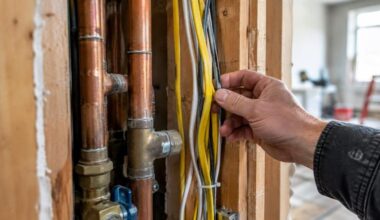
Thinking that far ahead also changes how the work is sequenced. If the floor, the wiring, and the ventilation are going to be disturbed anyway, it makes sense to deal with them together rather than returning to the same room every couple of years.