A national survey by the Sleep Health Foundation indicates that more than half of adult Australians suffer from at least one chronic sleep symptom affecting their daily wellbeing. Furthermore, recent data analysis reveals that approximately 48 percent of Australian adults report battling at least two ongoing sleep-related problems. Creating a restful environment is about much more than just a comfortable mattress and heavy curtains. True rest relies heavily on your bedroom’s microclimate. By designing a space that actively regulates temperature, you can transform your bedroom into a sanctuary that supports deep, restorative sleep regardless of the season.
The Science of Thermoregulation and Sleep
Your body’s core temperature naturally drops as you prepare for rest. Entering the first stages of non-rapid eye movement sleep requires this internal temperature to decrease by roughly two degrees. This is a critical biological process that directly triggers the natural release of melatonin. The Sleep Health Foundation Australia explicitly recommends maintaining an ambient bedroom temperature between 17 and 19 degrees Celsius to support this necessary cool-down phase. When a room is too hot or the bedding traps excessive heat, the body struggles to lower its core temperature, leading to tossing, turning, and fragmented rest.
The materials you surround yourself with play a vital role in maintaining this delicate thermal balance. Natural fibres like wool are remarkably effective at managing heat and moisture. Incorporating a high-quality Blanket made of natural wool can actively draw heat and humidity away from the skin during warmer summer nights while insulating the body during winter. This natural sweat-wicking mechanism ensures you stay comfortable without waking up in a sweat.
Harnessing Natural Textiles for Microclimate Control
Unlike synthetic materials that often trap sweat and cause overheating, natural fibres possess a unique capacity to absorb up to 30 percent of their own weight in moisture without feeling wet. In fact, a clinical study on the effects of fabric for sleepwear and bedding on sleep demonstrated that sleep onset latency was significantly shortened when participants slept in wool compared to cotton. The research showed that participants fell asleep in just 12 minutes on average with wool, compared to over 20 minutes for synthetic alternatives, because the natural fibres actively regulated the microclimate around their bodies.
Recent interior design trends in 2026 heavily emphasise tactile richness, prioritising textured, organic materials that invite touch and establish sensory comfort. Researchers at RMIT University utilised a life-sized thermal manikin to demonstrate that natural wool moderates humidity peaks and troughs within the bed, providing a significantly more stable microclimate than polyester-filled equivalents. This means that a well-designed bed does not just look beautiful, but it performs a crucial function in optimising your health and supporting your immune system. Clinical studies even show that individuals sleeping fewer than six hours a night are over four times more likely to catch a cold, underscoring the health necessity of an optimised bedroom environment.
Creating a Sensory-Friendly Sanctuary
The continued rise of biophilic design in modern bedrooms has moved beyond visual greenery to include the integration of raw, breathable textiles that passively enhance air quality and room acoustics. When planning your next home improvement project, it is essential to remember that tactile elements and physical comfort are just as crucial as visual aesthetics. While ambient lighting sets the visual mood, the physical layers you interact with dictate how well you will actually rest and recharge.
To build a truly temperature-regulating and sensory-friendly bedroom, consider incorporating the following elements into your interior styling:
- Choose breathable natural fibres: Opt for wool, linen, or high-quality cotton for your sheets and throws to passively enhance airflow.
- Use layered bedding: Instead of a single heavy quilt, use multiple lightweight layers that can be added or removed easily as your body temperature fluctuates.
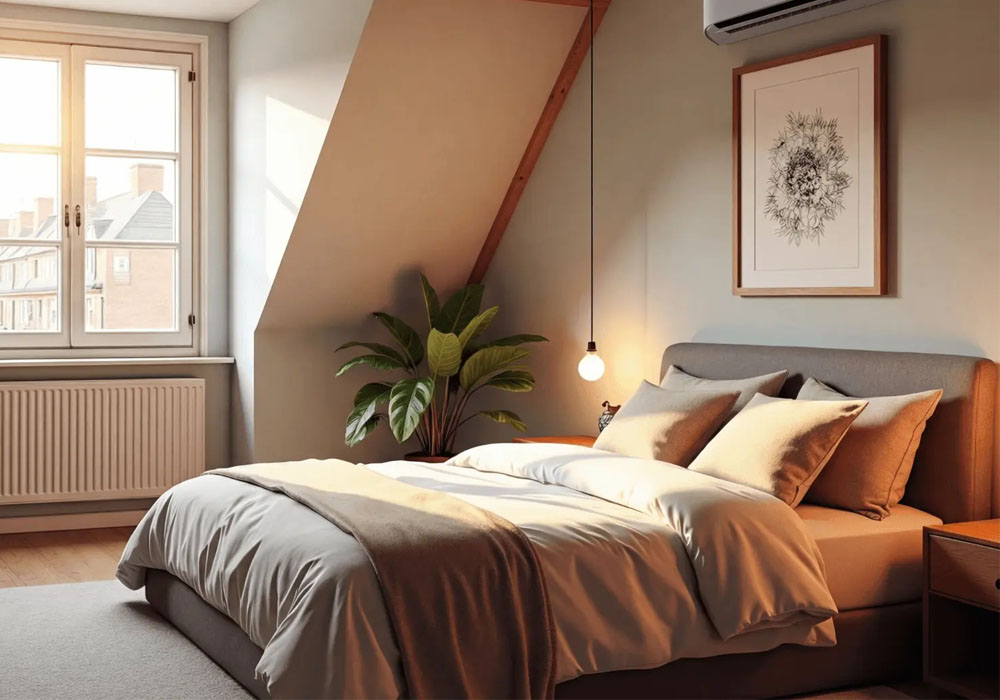
- Select grounding earth tones: Colours like terracotta, ochre, and olive green create a visually calming atmosphere that complements organic textures beautifully.
- Improve room airflow: Ensure your bedroom has adequate ventilation during the day to prevent humidity build-up and maintain a fresh, dry environment.
By marrying the science of thermoregulation with thoughtful, nature-inspired design, you can create a bedroom that looks beautiful and actively supports your physical wellbeing. Prioritising breathable materials and versatile layering ensures that your personal sanctuary remains a haven for comfortable, uninterrupted sleep all year round.