If you’re replacing windows in your home, you’ll face this question early: double pane or triple pane? Both are marketed as energy-efficient upgrades over older single-pane glass, but the difference between them is significant — and the right choice depends heavily on where you live and what you’re trying to achieve.
Here’s a straight answer to help you decide.
What’s Actually Inside the Glass
Both window types use the same basic principle — multiple layers of glass separated by sealed air spaces filled with an insulating gas, typically argon or krypton. That sealed space is what slows heat transfer through the window.
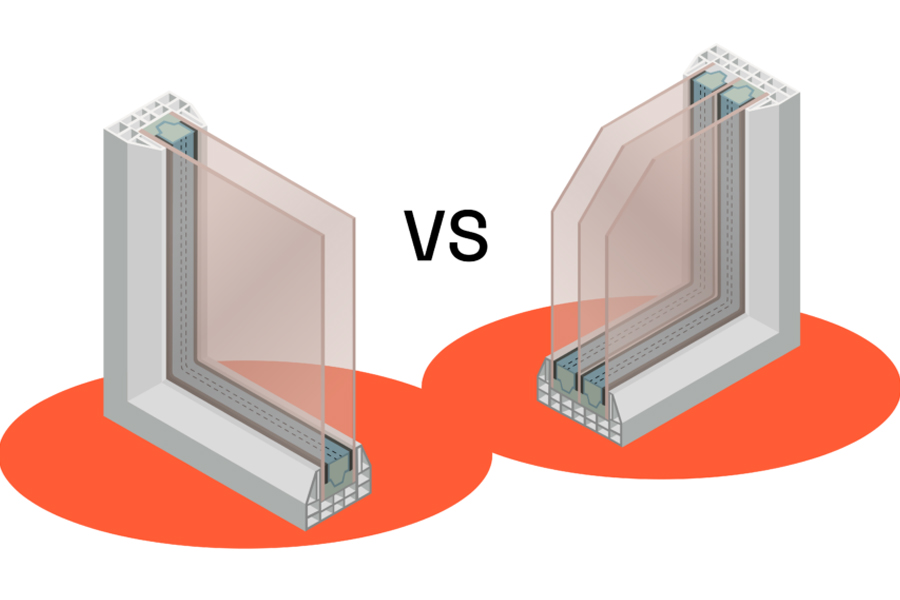
Double pane windows have two layers of glass and one gas-filled space. Triple pane windows have three layers of glass and two gas-filled spaces.
That extra layer in a triple pane unit does more than just add thickness. It creates a second thermal barrier, which is where the meaningful performance difference comes from. A quality double pane window achieves an R-value of approximately R-2 to R-3. A quality triple pane window reaches R-5 to R-7. That’s more than double the thermal resistance.
When Double Pane Is Enough
If you live in a mild climate — moderate winters, no sustained extreme cold — double pane windows deliver excellent performance at a lower upfront cost. For much of the southern United States, coastal regions, and temperate parts of Europe, double pane is the standard recommendation and performs well year-round.
Double pane also makes sense if your existing windows are single pane. The jump from single to double pane is enormous — you’ll feel the difference immediately in draft reduction, noise reduction, and heating costs. You don’t necessarily need to go all the way to triple pane to achieve a significant improvement.
When Triple Pane Is Worth Every Dollar
In climates where winter temperatures regularly fall below -15°C, triple pane windows aren’t a luxury — they’re the practical choice.
Here’s why. At extreme cold, even a high-quality double pane window can develop condensation on the interior glass surface. That’s a sign that the glass temperature has dropped low enough to reach the dew point of your indoor air. It means the window is conducting cold into your home despite the insulating gas between the panes.
A triple pane window keeps the interior glass surface significantly warmer because there are two gas spaces absorbing the thermal gradient rather than one. You get a drier, more comfortable home and a window that works harder for you through the coldest months.
The energy savings are real too. Replacing older double pane windows from the 1990s or early 2000s with modern triple pane units can reduce heat loss through the glass by up to 50 percent. Over a full heating season in a cold climate, that translates to a measurable reduction in energy bills — often several hundred dollars per year depending on home size.
Window Seal West manufactures triple pane windows in Calgary specifically engineered for cold-climate performance, with Low-E coating and argon gas fill as standard. Because they sell factory-direct, homeowners avoid the retail markup that typically adds 20 to 30 percent to the cost of comparable products bought through a dealer.
The Cost Difference — Is It Justified?
Triple pane windows typically cost 10 to 20 percent more than equivalent double pane units. That gap is narrower than most homeowners expect, and it has closed significantly over the past decade as triple pane technology has become more mainstream.
When you factor in energy savings, the payback period on the additional cost of triple pane over double pane is typically three to seven years in a cold climate. After that, the savings are pure return. Triple pane windows also tend to reduce interior noise more effectively, which is a quality-of-life benefit that doesn’t show up in energy calculations but matters considerably if you live near a road, airport, or busy neighbourhood.
At resale, triple pane windows are increasingly a selling point — particularly in markets where buyers are conscious of operating costs and energy efficiency.
The Simple Answer
If you live somewhere cold, triple pane is worth the investment. The performance difference is real, the energy savings are real, and the cost premium is modest enough that it pays back within a few years of lower heating bills.
If you live somewhere mild and your existing windows are already double pane and in reasonable condition, the upgrade to triple pane is harder to justify on pure economics — a full replacement may not be necessary yet.
But if your windows are 15 or more years old, single pane, or showing signs of seal failure regardless of which type they are, the answer is simple: replace them, and go triple pane while you’re at it. You’ll spend less on heating, feel more comfortable at home, and not have to think about windows again for a generation.