Why Emergency Driving Needs Its Own Training Plan
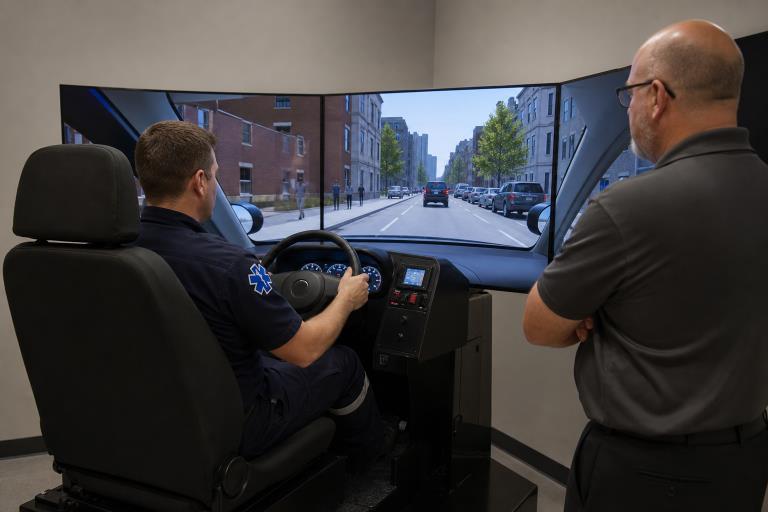
Ambulance driving is fundamentally different from driving a personal vehicle. Operators manage a larger, heavier vehicle with longer stopping distances, wider turning radii, a higher center of gravity, restricted rear visibility, and passengers who may be receiving care in the patient compartment. A structured program, supported by tools such as an EMS driving simulator, gives crews a safer place to practice difficult decisions before they face them on the road.
Lights and sirens can add urgency, but they do not create a clear path through traffic or remove the need for careful decision-making. Drivers must remain prepared for vehicles that do not yield, pedestrians who step into the roadway, blocked sight lines, and changing road conditions. The goal is a controlled response that balances timely patient care with the safety of everyone involved.
Training should reinforce that speed is only one part of response performance. Smooth braking, early hazard detection, proper lane position, safe intersection entry, and steady communication often have a greater effect on preventing a crash. Agencies should make these expectations explicit in policy, onboarding, field evaluations, and refresher training.
For agencies reviewing their current approach, the federal ambulance safety guidance from EMS.gov offers a useful starting point for conversations about crash prevention, vehicle safety, and organizational responsibility.
What Ambulance Crash Data Can Teach EMS Leaders
Crash data is most valuable when used to find patterns, not to assign blame. The NHTSA review of ground ambulance crash investigations from 2012 through 2018 highlights recurring concerns regarding driver error, intersection clearance, fatigue, warning device use, restraint use, and organizational safety practices. Agencies can review the full ground ambulance crash data analysis to compare national findings with their own local experience.
Older data still matters when it reveals repeated behavior patterns. However, every organization should pair national research with its own collision reports, vehicle damage records, complaints, telematics data, and near-miss reports. Leaders should ask what conditions existed before an event: Was visibility poor? Was the crew fatigued? Was the route unfamiliar? Did a policy create pressure to continue when a safer option was available?
Core Skills Every EMS Driver Should Practice
- Hazard scanning:Identify changing traffic, parked vehicles, cyclists, pedestrians, debris, blind corners, and blocked sight lines before they become immediate threats.
- Intersection control:Slow down, cover the brake, confirm that each lane has yielded, and never assume warning devices guarantee a clear intersection.
- Speed management:Match speed to weather, visibility, traffic density, roadway design, vehicle load, and patient needs.
- Smooth vehicle control:Brake, steer, and accelerate progressively to reduce risk for restrained and unrestrained occupants alike.
- Backing and close-quarters movement:Use mirrors, cameras, spotters, and direct communication whenever available.
- Lane changes and turning:Signal early, check blind spots, allow extra room, and avoid cutting corners with the ambulance body.
- Rollover prevention:Avoid abrupt steering inputs, sharp lane changes, and excessive speed on ramps, curves, uneven shoulders, or wet roads.
How to Train for Real Road Conditions
Real-world EMS driving includes situations that are difficult to practice safely during routine road time. Training scenarios should address night driving and headlight glare, fog, heavy rain, standing water, snow, ice, rural curves, narrow lanes, hills, construction zones, lane closures, and dense urban traffic. Drivers should also practice managing distractions from radios, mobile data terminals, dispatch updates, and crew communication.
Scenario training works best when conditions build gradually. Start with a simple route and basic objectives, then add time pressure, traffic conflicts, poor visibility, a changing destination, or an unexpected obstruction. The purpose is not to create chaos. It is to help operators recognize when they need to slow down, pause, request assistance, change routes, or communicate a safer plan to their partner and dispatch.
A Step-by-Step EMS Driver Training Framework
- Set a baseline:Review license status, driving experience, prior evaluations, incident history, and policy knowledge.
- Teach the standard:Cover seat belt use, speed expectations, intersection procedures, backing rules, response priorities, and fatigue reporting.
- Practice basic control:Confirm braking, turning, mirror use, lane position, vehicle dimensions, and parking skills.
- Add decision pressure:Introduce sirens, traffic, route changes, low visibility, and competing demands.
- Coach specifically:Give feedback on choices, timing, communication, hazard recognition, and vehicle handling.
- Retest high-risk skills:Repeat critical scenarios until performance is dependable rather than merely acceptable.
- Track progress:Document completion, scores, coaching notes, corrective actions, and follow-up dates.
Why Short, Frequent Practice Can Work Better
One annual class is rarely enough to build durable driving habits. Short sessions can fit between shifts, inspections, and operational duties while keeping key skills fresh. A monthly skill check might focus on backing, intersection approach, mirror setup, or braking technique. Quarterly scenario sessions can address weather, night operations, traffic conflicts, or response decision-making. An annual review should reinforce policy changes and address agency-wide trends.
Frequent practice also helps experienced operators. Years behind the wheel do not automatically prove readiness for a new ambulance model, a different service area, a revised response policy, or higher-risk operating conditions.
How Supervisors Can Measure Driver Performance
Use a structured scorecard so every operator is evaluated against the same standards. Track missed hazards, incomplete stops, unsafe speed choices, harsh braking, poor lane position, backing errors, communication problems, and failure to follow policy. Separate skill gaps from equipment issues and policy conflicts. A driver may need coaching, but a recurring problem may also point to poor vehicle design, unrealistic response expectations, or a route hazard that deserves operational changes.
Building a Stronger Safety Culture Across the Fleet
Safe driving is a shared responsibility among leaders, supervisors, dispatchers, clinicians, mechanics, and operators. Crews should feel authorized to speak up when weather, fatigue, vehicle condition, speed, or route conditions create unnecessary risk. Leaders should reward sound judgment, including slowing down, rerouting, or reducing response urgency when circumstances demand it.
Common Questions EMS Agencies Should Ask
How often should drivers receive refresher training? Frequency should reflect local rules, incident history, fleet type, driver experience, and operating environment. Provide additional training after preventable incidents, extended absences, major policy changes, or assignment to a new vehicle.
Should new drivers begin with emergency responses? Use a staged process. New operators should demonstrate consistent control during routine driving before progressing to urgent responses and complex traffic scenarios.
What should happen after a near miss? Document the event, talk with the crew, identify the key decision point, check for roadway or equipment factors, and assign focused coaching when needed.
Turning Training Into Daily Practice
Safer EMS driving comes from repeated practice, clear expectations, useful feedback, and steady leadership. Strong programs do not depend on a single annual class. They build safe choices into onboarding, vehicle checks, shift operations, supervisor reviews, incident follow-up, and continuing professional development.