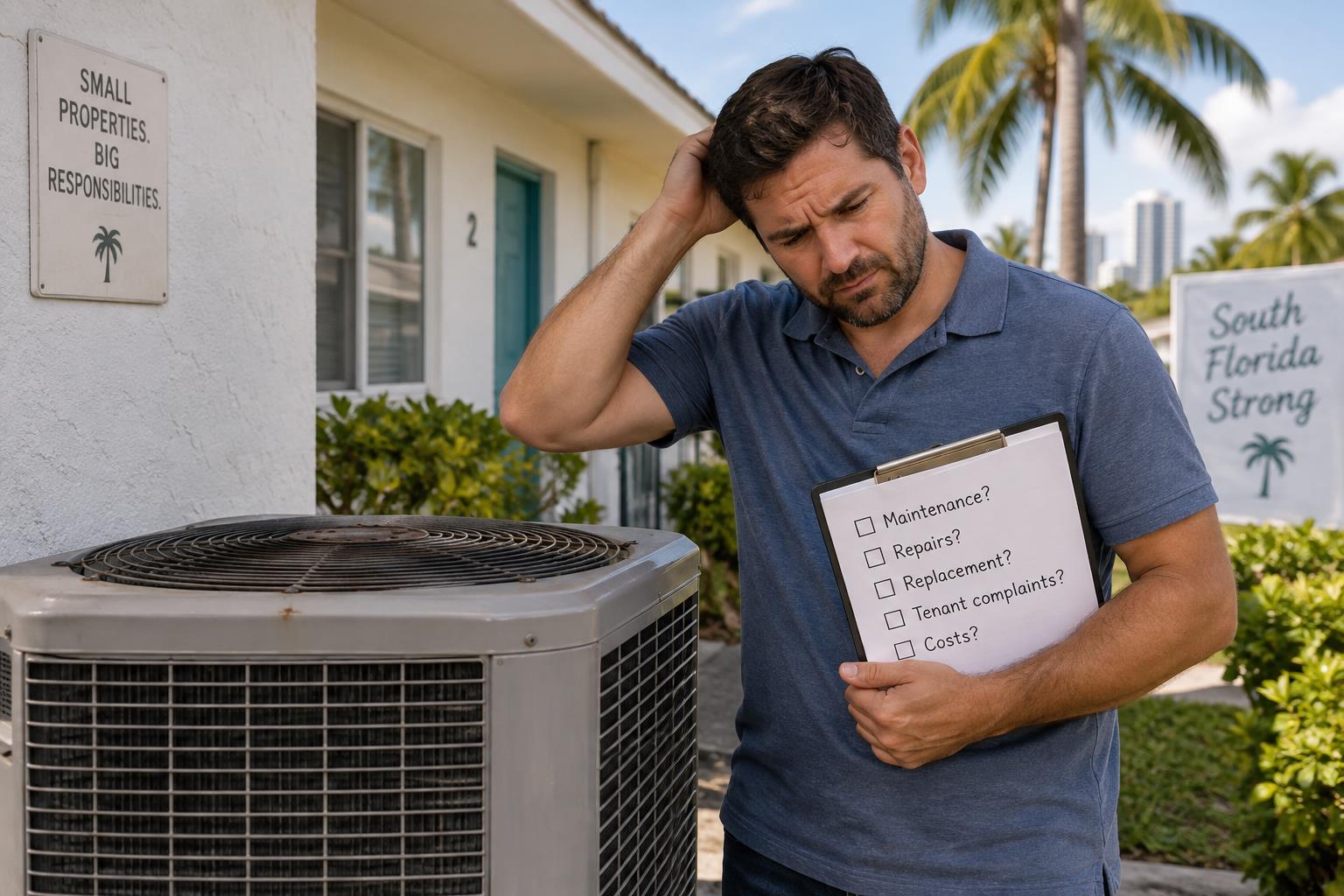
A friend of mine owns three rentals in Lauderhill. Two halves of a duplex and a condo, bought between 2016 and 2021, all occupied. Last summer he spent $4,800 on air conditioning across those three doors, and none of it was the power bill. It was repairs, one emergency replacement in August, and a tenant who gave notice in July because the back bedroom never dropped below 82 degrees.
A friend of mine owns three rentals in Lauderhill. Two halves of a duplex and a condo, bought between 2016 and 2021, all occupied. Last summer he spent $4,800 on air conditioning across those three doors, and none of it was the power bill. It was repairs, one emergency replacement in August, and a tenant who gave notice in July because the back bedroom never dropped below 82 degrees.
He reads his leases twice and negotiates his own insurance. He still lost that money, and every piece of it was visible a year earlier.
1. Treating the Tune-Up as an Optional Line
An annual service visit on a residential system runs somewhere near $120 to $180 in Broward. A compressor replacement runs past $2,000 with labor, and in a rental it arrives with a hotel bill or a rent concession attached. Owner-occupied houses skip the tune-up and usually get away with it for a few years. Rentals do not, because nobody in the property has any reason to notice the early noises.
Skipping it saves $150 and buys a coin flip.
2. Buying the Cheapest Box for a Rental
Builder-grade equipment gets specified for rentals constantly, and the logic sounds fine at the counter: the tenant pays the electricity, so efficiency is the tenant’s problem. That logic falls apart on the coast. A bottom-tier condenser sitting in Hallandale Beach or Dania Beach salt air corrodes years faster than the same unit twenty minutes inland, and the owner pays for corrosion, not the tenant.
Ask whoever quotes you what the coil coating is and whether the model has a track record east of I-95. Any honest Broward County air conditioning contractor will answer that in one sentence, and the answer separates a system you replace in eight years from one you replace in fourteen.
3. Leaving the Filter to the Tenant
Every lease in Florida says the tenant changes the filter. Almost no tenant does.
The reason is structural. The filter lives in a hallway ceiling behind a grille that needs a ladder, the tenant does not own the equipment, and nothing in their month gets worse in a way they can trace back to a clogged filter. Meanwhile the blower works harder, the coil ices, and the moisture that should be draining outside starts collecting where you cannot see it.
Owners who solve this do one of two things. They either mail filters to the tenant on a schedule with a text reminder, or they fold the swap into a quarterly visit and stop pretending the clause in the lease is doing anything.
4. Waiting for the Tenant to Report It
A tenant reports an air conditioning problem when the house becomes uncomfortable. By then the system has been degrading for weeks. A capacitor that was drifting in May, a refrigerant charge that has been low since spring, a drain line that has been half blocked since the first heavy rain: all of it runs quietly and expensively while the thermostat still reads 76 in the afternoon.
The fix is boring and it works.
Two scheduled visits a year on every door, spring and fall, booked before the season rather than after the phone call. Owners with more than two properties usually end up putting the units on a standing service plan simply because tracking six pieces of equipment by memory stops being possible somewhere around the fourth one.
You also get something the emergency call never gives you: a technician who has seen that specific unit before and can tell you what changed since March.
5. Budgeting Repair Money Instead of Replacement Money
Most small landlords carry a repair reserve and no replacement reserve. Then a fifteen-year-old system fails in the first week of August, the replacement quote lands at $6,500 to $9,000 installed depending on tonnage and ductwork, and the decision gets made in a panic on a Friday afternoon. Panic buying in August produces the worst pricing and the fastest available installer rather than the right one. Equipment in this climate reaches the end of its useful life somewhere around year twelve, not year twenty. If you know the install date on every unit you own, you know which year each replacement lands in, and you can set aside a few hundred a year per door against it. That single spreadsheet column changes an emergency into a scheduled purchase you make in October at a normal price.
My friend now has that column. He also has a service plan he complained about for a month and a filter subscription that costs him $11 a unit. Last summer his air conditioning spend across the three properties was $940, and nobody moved out.