Key Takeaways
- Design the backyard around everyday activities, such as dining, gardening, relaxing, entertaining, and family play.
- Study sunlight, wind, slopes, drainage, and existing features before choosing outdoor improvements.
- Create clear zones and accessible pathways to improve comfort, movement, and functionality.
- Add appropriate shade, rain cover, and wind protection to make outdoor spaces usable in different weather conditions.
- Choose durable, climate-appropriate materials and plants that match the site and maintenance needs.
- Plan drainage and layered outdoor lighting early to improve safety, comfort, and long-term performance.
- Balance essential improvements with optional upgrades to manage costs and simplify maintenance.
- Consider seasonal interest, storage, and long-term upkeep to keep the backyard attractive and practical throughout the year.
A backyard should support everyday routines, not sit unused until the weather is perfect. Whether the goal is family meals, gardening, quiet mornings, play space, or entertaining, a well-planned outdoor area makes these activities easier year-round. Creating a luxury outdoor living space does not require filling the yard with features. It means making thoughtful choices about layout, shelter, surfaces, water, lighting, and planting so the finished space feels comfortable, connected, and practical in changing conditions.
Start With How The Yard Will Be Used
Begin with real habits rather than a list of trending features. Think about where people naturally exit the house, where meals are carried outside, and whether the yard needs room for children, pets, gardening, exercise, or relaxation. Track use for a typical week. A small yard, for example, may combine a compact dining patio near the kitchen, a bench beneath a tree, and an open strip of lawn for play. Household needs should guide details. Wide, level routes help visitors with limited mobility. Durable, easy-to-clean surfaces may be more useful for pets and children than delicate finishes. A plan that reflects daily life will remain relevant longer than one designed only for occasional gatherings.
Study The Site Before Choosing Features
Spend time observing the property before selecting a patio, pergola, or planting plan. Note where sun falls in the morning, afternoon, and evening. Identify strong winds, low wet spots, slopes, desirable views, overlooked areas, existing trees, fences, steps, utilities, and property boundaries. Also watch how people currently move between indoor and outdoor spaces. This early review helps prevent expensive corrections. A dining area placed in intense late-day sun may need shade immediately. A patio built across a drainage route can create standing water problems. Knowing the site first makes each later choice more deliberate.
Create Clear Outdoor Zones
Think of the backyard as a simple floor plan with connected destinations. Distinct zones create a larger-yard feel and help a smaller yard serve multiple purposes without feeling crowded.
Useful Outdoor Zones
- Dining zone: Keep it near the kitchen or main door for easier serving and cleanup.
- Lounge zone: Place seating where it has a pleasant view, shade, or a sense of privacy.
- Cooking zone: Leave clear circulation around grills, counters, and seating.
- Activity zone: Reserve open ground for games, pets, exercise, or children.
- Garden zone: Use accessible beds for herbs, flowers, vegetables, or pollinator plants.
Paths, changes in paving, low planting beds, and furniture placement can define each area without enclosing every function. Keep primary routes clear, especially between the house, dining area, storage, and cooking space.
Add Cover, Shade, And Weather Protection
Sun protection, rain cover, wind screening, and warmth solve different problems. A pergola can soften direct sun but may not keep a table dry in rain. A covered patio or pavilion provides more reliable overhead shelter. Retractable awnings, shade sails, mature trees, outdoor-rated shades, curtains, and planted windbreaks can add flexibility when permanent construction is not the right fit. Place protection where people already gather, not simply where it looks best from indoors. Before building a structure, confirm local permit requirements, setbacks, utility locations, and safety rules.
Choose Materials For The Local Climate
Every surface should suit the local weather and the intended use. Stone, concrete, brick, wood, composite decking, and gravel all have different maintenance and performance considerations. Evaluate heat underfoot, moisture exposure, freeze and thaw conditions, staining, fading, traction, and repair options. Around steps, pools, cooking areas, and entry points, prioritize stable, slip-resistant footing. Consider the full cost of ownership. A lower initial price can lose its advantage if a material needs frequent sealing, refinishing, or replacement. Select colors and textures that complement the home while still being comfortable and manageable for the household.
Plan For Water And Drainage
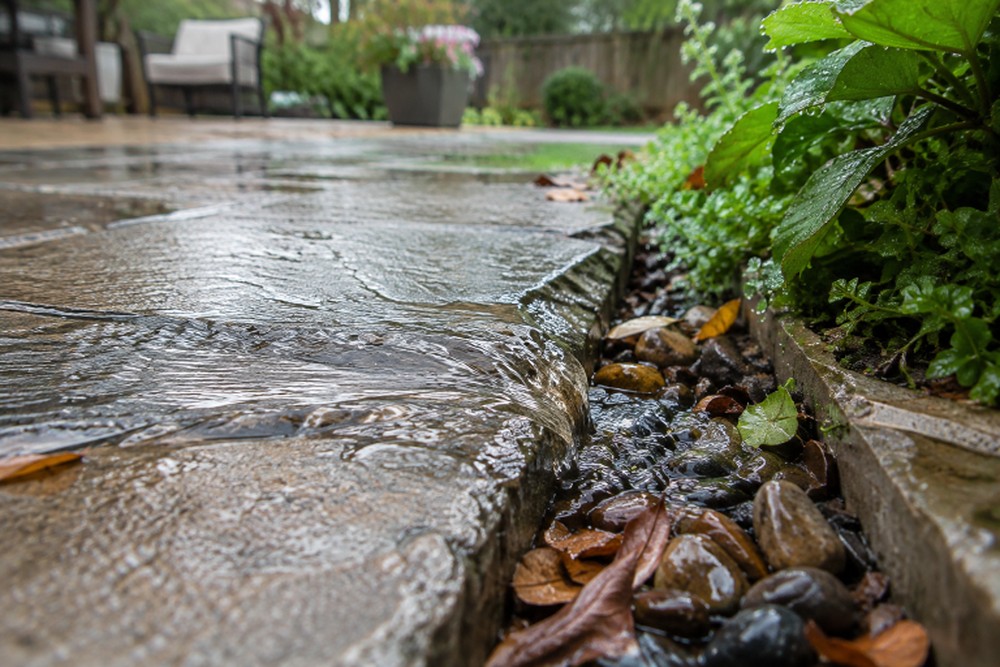
Drainage should be planned at the start of the design, before patios, walls, decks, and planting beds are installed. Grade surfaces so water moves away from the home and does not collect in seating areas. Depending on the site, solutions may include swales, channel drains, dry creek beds, permeable paving, or planted collection areas. Where conditions are appropriate, rain gardens can collect stormwater runoff and allow it to soak into the ground. They must be properly located, however, so check local requirements and contact utility-location services before digging. Direct roof runoff away from foundations and high-traffic outdoor areas.
Use Lighting To Extend The Day
Good outdoor lighting is layered rather than excessive. Use task lighting at cooking and food-preparation areas, safety lighting on steps and paths, ambient lighting around seating, and accents to reveal trees, walls, or garden features. Warm, low-glare fixtures generally create a more restful setting than bright lights pointed across the yard. Fixture placement matters more than quantity. Aim lights downward where possible, and use timers, dimmers, or motion sensors to avoid wasted energy and unnecessary brightness near neighboring properties.
Select Plants With Four-Season Value
Planting gives a backyard structure beyond the warmest months. Combine evergreen forms, spring flowers, summer foliage, fall color, ornamental grasses, berries, bark, and seed heads for changing interest. Choose each plant based on its mature size, sunlight, soil, moisture, and maintenance needs, rather than forcing it into an unsuitable location. Regional native plants can be especially useful when they fit the site. The use of native flowering plants for pollinators can also add seasonal color and habitat value. Avoid overcrowding beds with plants that will require continual pruning, watering, or dividing.
Balance Comfort, Cost, And Maintenance
Separate must-have improvements from optional upgrades. A phased project can begin with drainage, circulation, a primary patio, and essential planting, and later add a kitchen, a fire feature, screening, or specialty lighting. A storage plan as well. Cushions, tools, toys, hoses, and cooking supplies need a dry, accessible home.
Avoid Common Backyard Planning Mistakes
- Designing only for summer conditions.
- Choosing furniture before studying sun, wind, and circulation.
- Ignoring drainage until construction has begun.
- Selecting materials only for appearance.
- Adding disconnected features without a clear layout.
- Using glare-heavy lighting or plants unsuited to the site.
A Simple Planning Checklist
- List the activities the yard must support.
- Map sun, wind, slopes, runoff, views, and existing features.
- Choose the most important outdoor zone first.
- Plan paths, drainage, shade, and lighting before decorative details.
- Select durable materials and plants that match local conditions.
- Confirm boundaries, utilities, permits, and long-term maintenance needs.
Conclusion
A backyard that works in every season is built around function, comfort, and realistic care. When clear zones, dependable drainage, weather protection, practical lighting, durable materials, and well-chosen plants work together, the outdoor space becomes easier to enjoy year-round. Thoughtful planning also helps homeowners make better use of available space, whether they want a relaxing retreat, an outdoor dining area, a place for entertaining guests, or a safe space for children to play. Choosing materials that can withstand changing weather conditions and selecting plants suited to the local climate can reduce ongoing maintenance while keeping the yard attractive and practical. Small details, such as comfortable seating, shaded areas, accessible pathways, and proper lighting, can make a noticeable difference in everyday use. By balancing appearance with durability and ease of maintenance, homeowners can create a backyard that remains welcoming, functional, and enjoyable across seasons without constant upkeep.