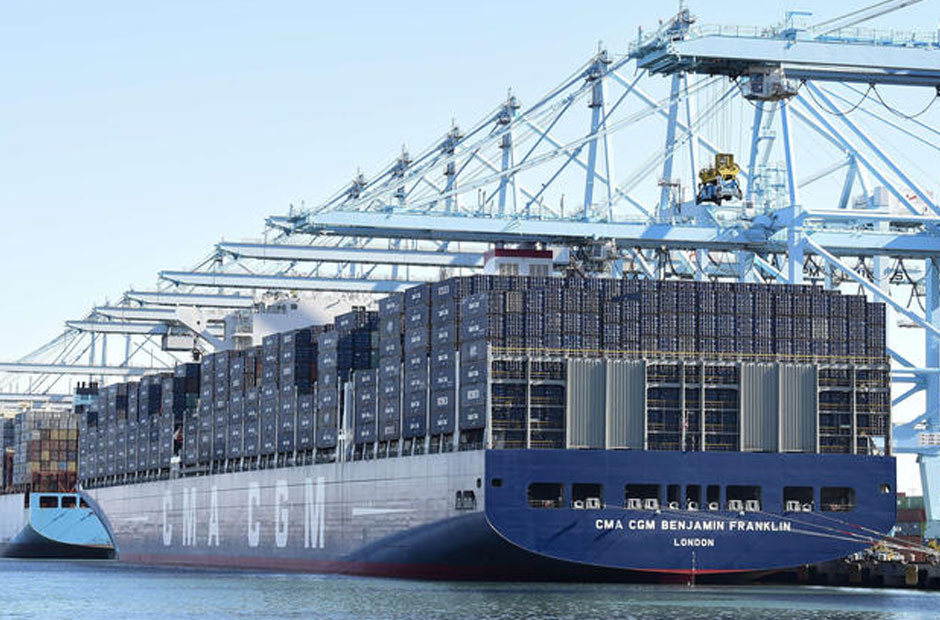
Stand next to a modern Ultra Large Container Vessel (ULCV) while it is docked in port, and the sheer scale is difficult for the human brain to process. These behemoths can stretch over 1,300 feet long—roughly the height of the Empire State Building laid on its side—and carry upwards of 24,000 cargo containers. In the calm harbor, they look like immovable, impenetrable fortresses of solid metal.
But the ocean is a remarkably hostile environment, and it does not care about scale.
When a megaship leaves the safety of the port and encounters a severe North Atlantic winter storm, it is subjected to physical forces that are almost impossible to replicate on land. The ship will be repeatedly slammed by 50-foot rogue waves, battered by hurricane-force winds, and submerged in a highly corrosive chemical bath. How does a structure this massive, carrying hundreds of thousands of tons of cargo, avoid simply snapping in half under the immense weight and pressure?
The survival of these vessels relies on a fascinating combination of structural elasticity, advanced metallurgy, and electrochemical engineering.
The Illusion of Rigidity
Our intuition tells us that to survive heavy impacts, a structure must be as rigid and stiff as possible. In naval architecture, absolute rigidity is a fatal flaw.
When a 1,300-foot ship crests a massive wave, it frequently experiences a phenomenon known as “hogging” and “sagging.”
- Hogging: The peak of a massive wave sits directly under the center of the ship. The bow (front) and stern (back) of the vessel are temporarily suspended in the air, creating immense tension on the top deck and compression on the bottom hull.
- Sagging: The ship spans two wave peaks, leaving the massive, heavy center of the ship suspended over a deep trough. The forces invert, threatening to buckle the deck and tear the hull apart.
If the ship were perfectly rigid, these opposing forces would cause the hull to fracture and break apart. Instead, naval architects design these vessels to act as massive, flexible box girders. The metal is engineered with specific yield strengths, allowing the entire ship to physically bend and flex by several feet as it rides over ocean swells. This controlled elasticity absorbs and dissipates the kinetic energy of the ocean, allowing the vessel to continuously snap back into its original shape.
The Invisible War of the Electrolyte
Surviving the mechanical force of the waves is only half the battle; the ship must also survive the water itself.
Seawater is an aggressive electrolyte, heavily saturated with salt and dissolved oxygen. The moment a steel hull is submerged, an electrochemical reaction begins. The saltwater strips electrons away from the iron in the hull, creating iron oxide—better known as rust. If left unchecked, this corrosion will eat through thick hull plating, compromising the structural integrity of the entire vessel.
This is where specialized maritime steel comes into play. To combat the relentless chemical attack of the ocean, the raw metal is heavily alloyed with specific elements during the forging process. Elements like chromium, copper, and nickel are integrated into the molecular structure. Additionally, modern vessels employ active “cathodic protection.” By attaching blocks of a weaker, more reactive metal (like zinc or aluminum) to the hull, the corrosive saltwater attacks those “sacrificial anodes” instead of the ship’s structural metal, effectively acting as an electrical decoy.
Surviving the Thermal Shock
The final, and perhaps most terrifying, variable of the open ocean is extreme temperature fluctuation. A vessel might load cargo in the sweltering heat of Singapore and, two weeks later, find itself navigating the freezing, ice-choked waters of the Bering Sea.
As temperatures plummet, the physics of metal fundamentally change. Many standard metals suffer from a “ductile-to-brittle transition.” In freezing waters, the metal loses its ability to flex. Instead of bending under the impact of a wave or a chunk of sea ice, it shatters like glass. This exact metallurgical failure is largely responsible for the rapid sinking of the RMS Titanic; the freezing waters caused the hull plates to become incredibly brittle, allowing the iceberg to easily punch a massive hole in the ship.
Today, overcoming this thermal shock requires extreme precision at the atomic level. Metallurgists carefully control the cooling process of the metal during manufacturing, resulting in a microscopic grain structure that remains highly ductile even in sub-zero Arctic temperatures.
The Silent Triumph of Naval Engineering
When a package arrives at your doorstep from across the globe, it is easy to take the logistics for granted. We rarely think about the chaotic, violent journey that cargo took to cross the ocean. But every successful voyage is a quiet triumph of human engineering. It is a testament to our ability to manipulate the atomic structure of metal, designing colossal structures that can bend without breaking, resist the chemical decay of the sea, and safely carry the weight of global commerce through the most unforgiving environment on Earth.