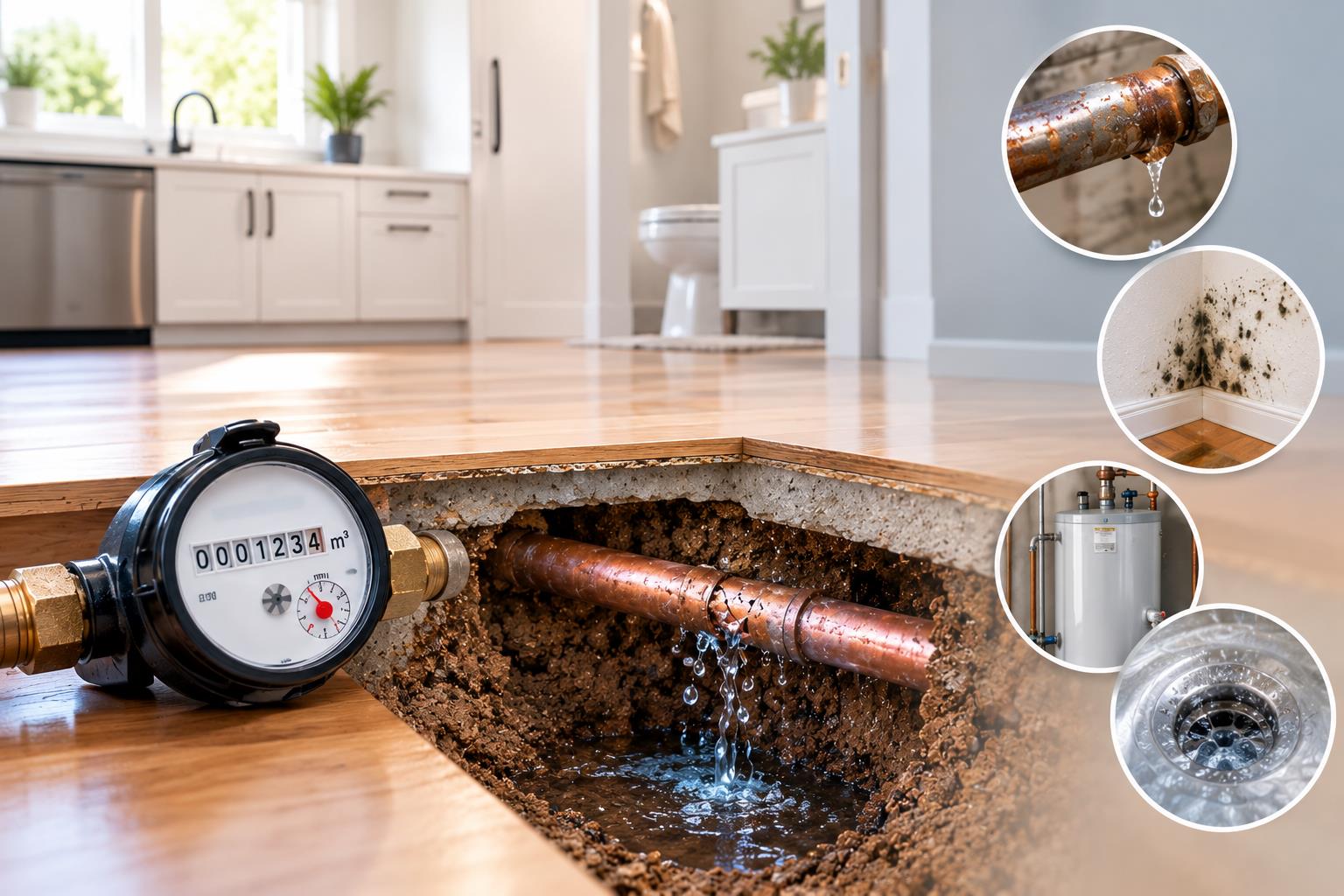
A hidden leak raises your bill when water use climbs while your habits stay the same. If the meter moves while every fixture sits idle, a leak is the likely cause. Hidden water leaks can waste thousands of gallons before any drip or stain appears, so early detection protects your budget and your home.
In the sections below, it is thoroughly explained why concealed leaks drive up your charges, which warning signs deserve attention, and how you can confirm a problem at home. The hidden costs, local factors, and professional fixes are also covered under this, which will help you stop the waste before it grows into something larger.
Why Does a Concealed Leak Push Your Charges Higher?
Water keeps flowing through a cracked or loose pipe around the clock, and your utility counts every gallon that passes through the line. Even a slow drip from a worn joint adds several hundred gallons each month, which explains why a sudden high water bill usually points to a plumbing fault instead of heavier household use.
Leaks under the foundation behave the same way, yet they stay out of sight for much longer. A slab leak in a concrete floor can run for weeks and send water into the soil beneath your house, while your statement keeps climbing and nothing inside the home appears wrong or out of place.
Warning Signs That Point to a Leak
Most homeowners notice a few of these clues before they ever see standing water:
- A water bill that rises noticeably without any change in household size or laundry habits.
- The sound of running water or a faint hiss when every tap and appliance is off, which often signals a hidden water leak behind a wall.
- Damp patches, bubbling paint, or warped flooring along walls, ceilings, and baseboards.
- A musty smell in closets, basements, or crawl spaces that lingers after you open the windows, which is often the first sign of mold growth.
- Low water pressure in showers and sinks, or warm spots on the floor that suggest a hot water line is leaking beneath it.
How Can You Confirm a Leak at Home?
Start with a simple water meter test that takes about thirty minutes. Turn off every faucet, appliance, and irrigation system, then read the meter and write down the numbers shown on the dial. Wait half an hour without using any water, and check the reading again to see whether the dial has moved.
If the numbers have changed, water is escaping somewhere in your system. You can also add a few drops of food coloring to each toilet tank, wait fifteen minutes, and look for color in the bowl, since a silent toilet leak ranks among the most common causes of a high water bill in many homes.
Common Hiding Spots Inside and Outside Your Home
Leaks rarely announce themselves, so these areas deserve a regular look:
- Under kitchen and bathroom sinks, where supply lines and drain fittings loosen over time.
- Behind washing machines and dishwashers, especially around the hoses and shutoff valves.
- Along the water heater tank and its connections, where corrosion slowly creates small drips that call for water heater repair in Kennesaw, GA, at the first sign of rust.
- Beneath the lawn or driveway, where the main line from the street can crack and soften the soil.
- Inside walls and ceilings below upstairs bathrooms, where pipes stay out of view for years.
The Costs That Reach Beyond the Monthly Statement
Extra gallons on the bill make up only part of the problem, because moisture trapped inside walls and floors invites mold growth within a day or two in a warm, humid climate like Georgia’s. Those spores can irritate your lungs, trigger allergies, and spread quietly to nearby drywall faster than most homeowners expect.
Prolonged leaks also cause serious water damage to subfloors, cabinets, insulation, and structural lumber, and repairs of that kind often cost far more than fixing the pipe itself. We always tell homeowners that a small repair completed early beats a large renovation completed late, so act on the first sign of trouble.
Seasonal Factors Georgia Homeowners Should Watch
Georgia’s clay soil expands during heavy rain and shrinks during dry stretches, and that constant movement puts stress on buried lines and on the pipes running through your foundation. Over several years, the shifting can open a hairline crack, and hidden leaks of this type rarely show themselves until the soil turns soggy.
Summer irrigation and winter cold snaps add more strain to your plumbing. A single water leak in a sprinkler zone can run for days before anyone notices a puddle, so check your outdoor spigots and sprinkler lines each season and insulate exposed pipes in garages and crawl spaces before temperatures drop.
Professional Repairs That Stop the Waste
Once you confirm a problem, a licensed plumber can locate and fix it with far less disruption than guesswork allows:
- Leak detection with specialized tools that pinpoint the exact spot without tearing open walls or floors.
- Prompt pipe leak repair that replaces a damaged section, a corroded joint, or a failed fitting before the problem spreads.
- Fixture and supply line replacement for faucets, toilets, and shutoff valves that leak at the connection.
- Professional drain cleaning in Kennesaw, GA when recurring clogs and gurgling fixtures point to trouble in the lines below.
- Sewer camera inspections that reveal cracks and root intrusion inside underground lines.
Treat Every Unusual Bill as a Clue
An unexpected jump in your monthly statement deserves a closer look, because hidden water leaks rarely fix themselves, and the waste grows every day they continue. By watching your usage, running a quick meter check, and scanning for stains, odors, and pressure changes, you can catch most problems long before they become costly repairs.
If your checks point to a leak, call a licensed plumber promptly to schedule pipe leak repair and stop further loss. For fast help across Greater Atlanta, call A Plus Priority Plumbing, where emergency service is available 24/7, and the team handles leak detection and repair for homes and businesses.
FAQs:
How much water can a small drip waste over a month?
A faucet that drips once per second can waste more than 3,000 gallons in a year. That steady loss adds up quietly, and it can lift your monthly bill even though the fixture looks like a minor annoyance.
What does a leak under the foundation feel like?
A slab leak often produces a faint hissing sound, warm spots on the floor, or cracks in tile. You may notice these signs well before your next statement arrives, so investigate them right away.
How often should you check your meter for changes?
A quick water meter test every few months helps you catch problems early. Repeat it immediately whenever your monthly usage jumps for no clear reason, since that jump usually signals a new leak somewhere.
How can an old leak weaken a home’s structure?
Long-term moisture softens wood and corrodes metal fasteners. The resulting water damage can compromise floors and framing, which makes quick repairs far cheaper than waiting for visible symptoms to appear.
What should you do before the plumber arrives?
Shut off the main valve if water is visibly flowing, and photograph any stains or wet areas. Write down your recent meter readings as well, because they help the plumber narrow down the source faster.