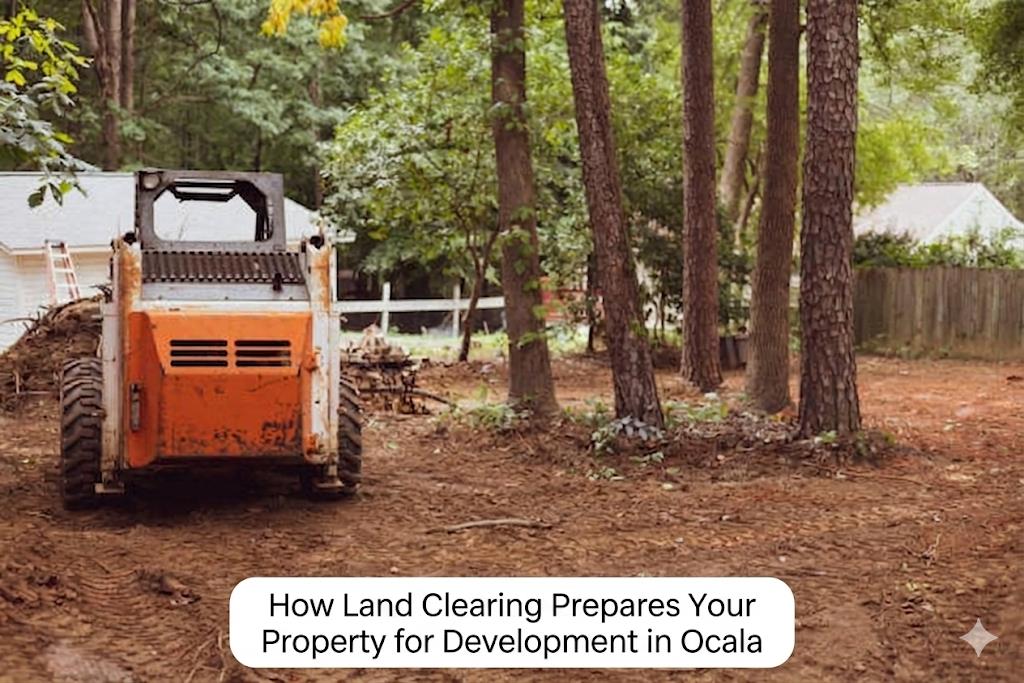
You’ve found the perfect piece of land. The vision is clear: a new house, a business premise, or even a massive project. But here is a fact many do not know at first: before any development, the land must be prepared.
And that’s where land clearing comes in.
Land clearing does not involve only the clearing of trees or even ground leveling. It is the basis of all successful development projects. The best construction plans may be delayed, encounter construction problems, or incur unforeseen expenses without adequate preparation.
Therefore, if you’re planning to develop land, particularly in such a place as Ocala with its own soil and terrain features, it is necessary to comprehend this process.
In this article, you can learn how land clearing prepares your property for development in Ocala, why it is important, and how each step will make the building process safer, smoother, and more successful.
What Is Land Clearing and Why Does It Matter?
Land clearing refers to the removal of unwanted vegetation, debris, rocks, and other obstacles from a piece of land to enable construction or development.
It doesn’t have to do with cleaning up the land alone. It is about having a well-established, secure, and workable setting for building. Unless properly cleared, construction crews can encounter sloping surfaces, concealed hazards, and rocky soils, all of which can lead to costly issues in the future.
This is why land clearing in Ocala is usually considered the first and most significant step in developing property. But how exactly does land clearing transform raw land into a build-ready site?
1. Assessing the Terrain Before Any Work Begins
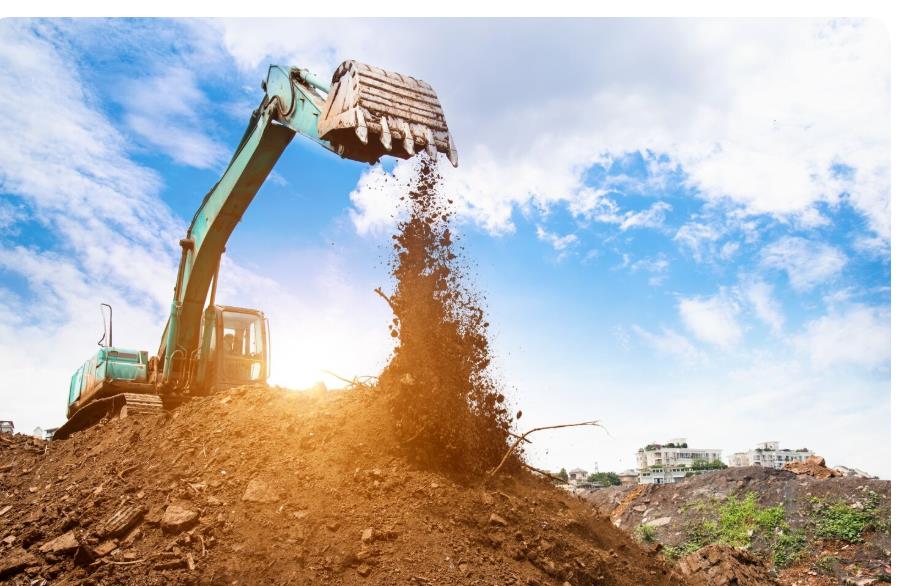
Before any machines touch the ground, a detailed assessment of the land takes place.
Imagine a property that appears flat on the surface, but below the surface, there are problems such as sinkholes or uneven soil composition. This is a concern in areas like Ocala because of the limestone-based terrain.
Surveying helps identify:
- Property boundaries
- Elevation changes
- Soil conditions
- Environmental restrictions
This step prepares your property by ensuring that development plans are based on accurate information. It minimizes the risk of surprises during construction and helps developers design structures compatible with the land.
In simple terms, through appropriate assessment, uncertainty turns into clarity, and that is a great plus.
2. Removing Vegetation and Clearing Space
After evaluating the land, the next step is to clear the undesired vegetation.
These include trees, bushes, underbrush, and invasive vegetation that may impede construction. Clearing can be selective, such as preserving valuable trees, or complete for major projects.
This is the biggest advantage: clearing vegetation provides the physical space in which the development will take place.
Without this, the construction equipment will not move freely, foundations cannot be laid correctly, and visibility within the site is low.
More significantly, eliminating invasive plants will help prevent future growth that could disrupt structures, drainage systems, or landscaping design.
3. Grading the Land for Stability and Drainage
Grading is one of the most important steps.
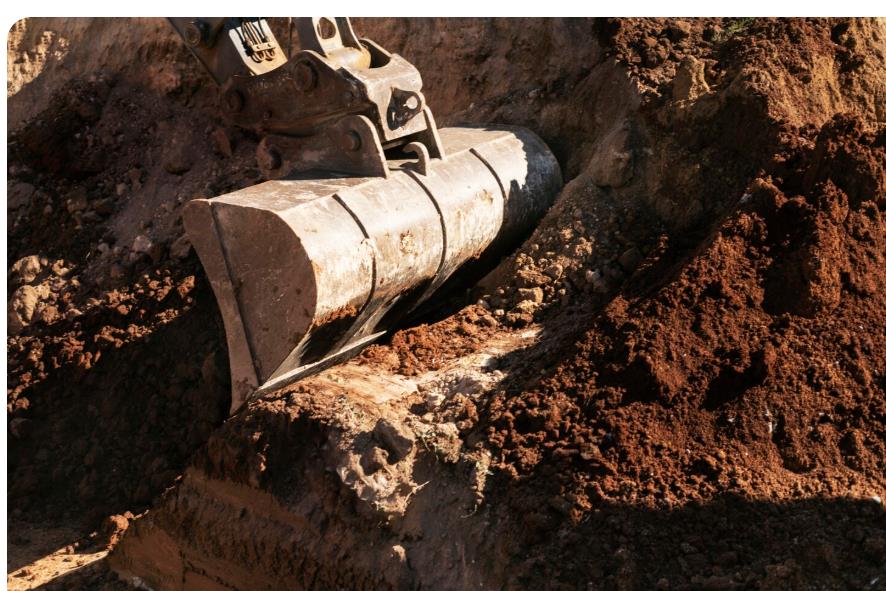
The grading process entails smoothing the land and shaping it to regulate the flow of water across it. This is particularly crucial in places with high rainfall.
The secret here is that one of the largest threats to any structure is water.
When the land is not properly graded, water may accumulate around the foundation, causing erosion, flooding, or damage to the structure. Correct grading ensures that water drains out safely.
This process lays the groundwork for constructing your property. It ensures that the buildings stand on even ground and minimizes the risk of subsequent damage.
4. Removing Stumps and Hidden Obstacles
You may think that reducing the number of trees is sufficient, but it is not.
Roots and stumps that are not removed may cause severe issues in the long run. They pile up as they decay, leaving empty spaces in the soil. Such holes might cause subsidence, foundation cracking, or an uneven surface.
Root raking and stump removal eliminate these hidden risks.
This step ensures the soil is firm by sweeping everything beneath the surface. This stability is a must for supporting heavy structures such as homes, driveways, and commercial buildings.
5. Improving Access and Site Safety
There’s more to land clearing than just preparing the ground. It also makes the site user-friendly and secure for workers.
Construction projects involve various teams, including engineers and electricians. Moving equipment and materials will be challenging and risky without clear paths and open space.
Land clearing creates:
- Access roads
- Utility corridors
- Open working areas
This enhances efficiency and minimizes the chances of accidents. It also enables developers to identify potential hazards at an early stage, such as uneven terrain or concealed dangers.
In a word, a cleared site is a cleaner, better-organized site, which contributes to smoother project execution.

6. Supporting Environmental Balance
Modern land clearing is not simply about clearing everything visible. It is about doing it responsibly.
In most instances, various methods are employed to convert cleared vegetation into mulch, such as forestry mulching. This mulch remains on the ground, covers the soil, and provides nutrients as it decomposes.
This approach will make your property sustainable.
It reduces soil erosion, keeps the soil moist, and promotes long-term soil health. This balance is particularly noteworthy in areas such as Ocala, where ecosystems are sensitive.
Responsible clearing ensures that development is not at the expense of the environment.
Final Thoughts: Setting the Stage for What Comes Next
Developing a property is an exciting journey, but it all starts with preparation.
Land clearing is the process of transforming raw, unproductive land into a construction-ready area. It eliminates barriers, improves soil quality, increases soil stability, and promotes long-term success.
And this is where the real lesson comes in: your level of development depends on your level of preparation.
So before you build anything, make sure your land is truly ready because a strong start leads to a stronger finish.