More than 43 per cent of Australians aged 15 and over have relocated in the past five years. With so many people transitioning between properties, the risk of accidental damage to newly renovated surfaces is exceptionally high. Hauling heavy bookcases, oversized couches, and bulky appliances can easily turn an exciting moving day into a stressful and expensive ordeal if proper precautions are not taken. To mitigate these risks, outsourcing the heavy lifting is often the most cost-effective choice. By hiring the professional Moving Men Sydney locals rely on, you ensure your heavy items are manoeuvred safely without risking deep scratches to your freshly finished floors. Protecting your home requires a combination of the right materials, careful planning, and a strong focus on safety.
The Hidden Costs of Property Damage
Before you start sliding furniture across the room, it is crucial to understand the financial risks involved. The cost to repair, sand, and polish hardwood floors in Australia currently averages between $30 and $60 per square metre. A deep gouge from a dragged cabinet can easily escalate into a whole-room refinishing bill. Similarly, repairing accidental damage to plaster walls typically ranges from $80 to $150 per metre for cosmetic fixes. If an impact from a heavy item causes severe plasterboard damage, a full-room wall re-skin could cost anywhere from $500 to $1,200. Taking preventative steps not only preserves your property value but is a vital part of standard home improvement and maintenance, saving you from unnecessary and costly repairs.
Prioritising Safety During Heavy Lifting
Physical safety is just as important as protecting your floors and walls. Attempting to manoeuvre heavy, awkward items without proper technique or equipment often leads to injury and property damage simultaneously. According to official government guidance, musculoskeletal disorders can happen suddenly through strenuous activity or unexpected movements, such as when handling a load that unexpectedly shifts position. To minimise these risks, safety authorities highly recommend redesigning manual tasks by using mechanical aids whenever possible. Hand trolleys, lifting straps, and dollies not only reduce the physical strain on your body but also give you far better control over bulky items, preventing them from swinging into pristine plaster walls.
Essential Materials for Surface Protection
Standard cardboard boxes and old bed sheets are rarely enough to safeguard your home against heavy impacts. Professional removalists rely on specialised protective gear to keep properties in pristine condition. To replicate this level of care, consider utilising the following materials:
- Corflute boards: These impact-resistant, fluted polypropylene sheets are heavily favoured in the Australian moving industry to protect hardwood, tiles, and stairs from dropped items and heavy trolley wheels.
- Heavy-duty furniture sliders: Sliders utilising dense wool-blended felt and rubber foam coaster tops can safely support up to 450 kilograms, allowing massive items to glide over hard floors without scratching.
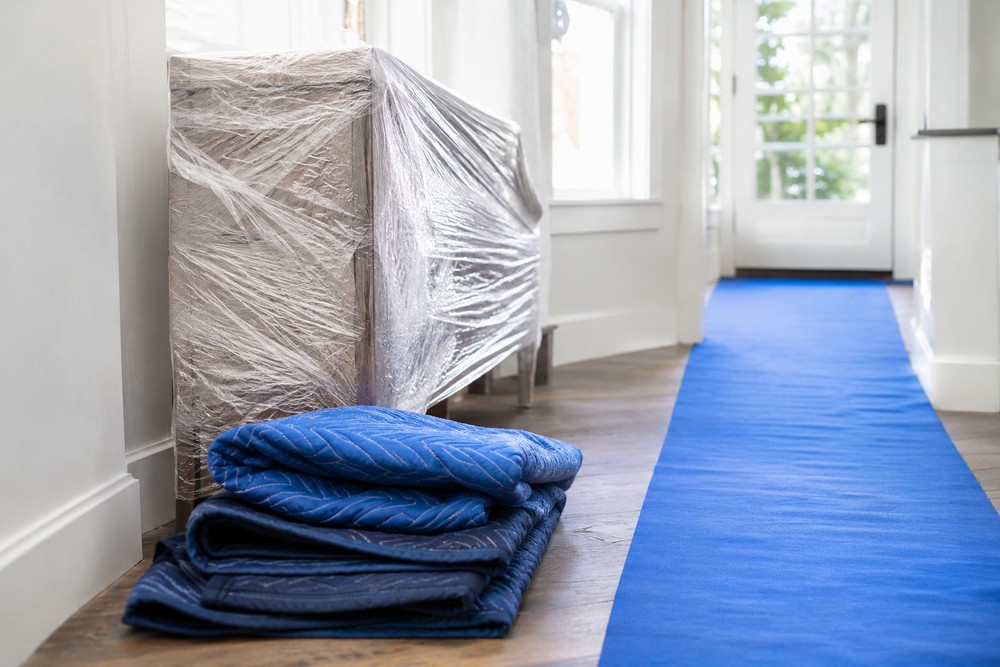
- Self-adhesive floor runners: These multi-layer protective films line narrow hallways and entryways, providing a non-slip moving path that keeps abrasive grit and outside moisture off your flooring.
- Masonite sheets: Rather than using easily snagged fabric drop cloths, rigid load-spreading sheets prevent heavy appliance wheels from indenting soft timber or cracking fragile tiles.
Creating a Continuous Moving Path
One of the most effective strategies for preventing damage is physically mapping out a continuous moving path from the moving truck to the destination room. Applying uninterrupted hard floor protection along this route prevents the slip hazards typically associated with loose moving blankets. Additionally, you must be hyper-aware of microscopic debris. Small particles like sand, dirt, or tiny screws can easily become trapped under moving trolley wheels. When a heavy load is applied, this debris acts just like coarse sandpaper against your floor polish, leaving a trail of deep scratches. Sweeping and vacuuming the path thoroughly before applying protective runners is essential.
Navigating Tight Spaces
With high-density living becoming the norm in many major cities, navigating narrow apartment hallways and tight stairwells has become a significant logistical challenge. This greatly increases the risk of plaster chips and corner gouges during do-it-yourself furniture hauling. Instead of risking unexpected movements that can cause injury or property damage, careful planning is required. Premium moving services factor in comprehensive liability coverage and supply their own high-quality protection materials to navigate these tight corners safely. Furthermore, recent trends indicate that booking moving services mid-week, specifically between Tuesday and Thursday, can yield cost savings of 20 to 30 per cent. This strategy frees up your budget to hire experienced experts who prioritise the safety of your property, ensuring every tight turn is handled with precision.