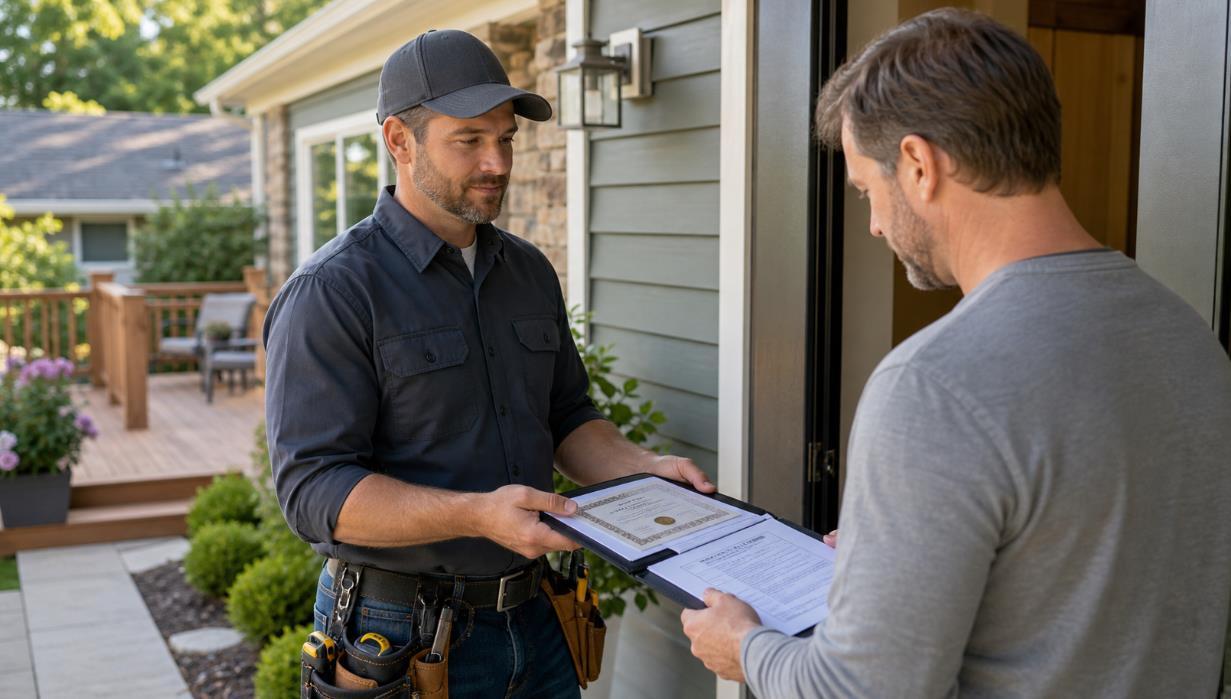
A contractor shows up with a clean truck, a professional website, and a solid 4.8 on Google. That’s reassuring, right? Maybe. But none of that tells you whether they’re actually licensed to do the work. It sounds like a boring detail, but it’s one of the most important things to verify before signing anything. A license isn’t just paperwork – it’s the legal and financial framework that protects you if something goes wrong.
Why a License Actually Matters
A lot of homeowners assume that if a contractor is busy and has good reviews, they must be legitimate, explain Keyrenter Folsom specialists. That’s not always true. An unlicensed contractor has no accountability to any state regulatory body. If the work is bad, if someone gets hurt, or if the project gets abandoned halfway through, your options become significantly more limited.
Here’s the practical side of it: in most states, a permit can only be pulled by a licensed contractor. No license means no permit, and no permit means the work isn’t inspected. That becomes your problem when you try to sell the house, and a buyer’s inspector finds unpermitted construction. It can also void your homeowner’s insurance coverage for anything related to that structure.
When a licensed contractor pulls a permit, the liability for code compliance sits with them, not you. That’s a meaningful difference.
Licensing Rules Vary by State – A Lot
There’s no single national licensing standard for deck builders. Every state sets its own rules, and the variation is significant.
Here’s a quick breakdown of how a few states handle it:
| State | Licensing Requirement |
| Georgia | License required for any project over $2,500 |
| Illinois | No state license; local municipal licensing applies |
| Virginia | Three license levels based on project value |
| California | License required for any project over $1,000 |
| Michigan | LARA-issued license with exam and insurance requirement |
The takeaway: don’t rely on general advice from someone in a different state. Look up the specific requirements for your state before you start evaluating contractors. And pay attention to one important distinction – some states require registration, not a full license. Those are different things. Registration is often just a business filing. A license typically involves exams, proof of experience, and financial accountability.
How to Actually Look Up a Contractor’s License
This is easier than most people think. Here’s the process:
- Ask the contractor directly for their state license number. Any legitimate company will have this on hand.
- Go to your state’s licensing board website.
- Enter the company name or license number.
- Check that the license is active, not expired, and has no disciplinary actions on record.
Some state-specific lookup tools worth bookmarking:
- Georgia:ga.gov (Secretary of State license lookup)
- Virginia:virginia.gov (Department of Professional and Occupational Regulation)
- California:ca.gov (Contractors State License Board)
- Michigan: LARA license lookup (Bureau of Construction Codes)
If a contractor hesitates, gets vague, or says they’ll “get you that number later,” that’s already an answer. A licensed contractor knows their license number the same way you know your own phone number. You can also cross-check with your local building department – they keep records of contractors who have pulled permits in the area, which is another useful data point.
License vs. Insurance: Two Different Things
Here’s a mistake a lot of homeowners make: they check the license and stop there. Insurance is a completely separate requirement and just as important.
There are three things you should ask for:
- General liability insurance. Covers damage to your property if something goes wrong during construction – a dropped beam, a broken window, or structural damage.
- Workers’ compensation insurance. Covers medical costs if a worker gets injured on your property. Without it, you, as the homeowner, can potentially be held liable for those costs.
- A surety bond gives you a financial remedy if the contractor fails to complete the job or causes damage that they won’t pay for.
Don’t accept a verbal confirmation on any of these. Ask for a Certificate of Insurance directly from the contractor’s insurer, not a document the contractor printed themselves. Call the insurer if you want to be sure it’s current.
What to Ask Before Signing Anything
Most deck contractors near me that operate professionally will answer these five questions without any hesitation. If they can’t, that’s worth paying attention to:
- What is your state license number?
- Are you licensed in this municipality specifically, if local licensing applies?
- Can you provide a Certificate of Insurance for both general liability and workers’ comp?
- Will you be pulling the permit for this project?
- If any work is being subcontracted, are those subs also licensed and insured?
That last one matters more than people realize. A licensed general contractor can legally hire unlicensed subs in some states. That creates gaps in your protection. The ones who get defensive or evasive on any of these questions are telling you something important.
Red Flags That Signal an Unlicensed Contractor
None of these alone is definitive, but two or more together is a serious warning:
- No license number visible on the website, business card, or contract
- Suggests skipping the permit or asks you to pull it yourself as an owner-builder
- Slow or evasive when asked for documentation
- Requests cash-only payment
- The quote is significantly below every other bid with no explanation
- No physical business address, only a phone number or P.O. box
One More Check: NADRA Certification
Beyond state licensing, the North American Deck and Railing Association (NADRA) offers voluntary certification for deck professionals. It’s not a government credential, but earning it requires demonstrated knowledge of construction standards, safety codes, and industry best practices.
A NADRA-certified contractor has gone a step beyond the minimum. It won’t replace your state license verification, but it’s a useful additional signal when you’re trying to separate the serious professionals from the rest of the field.