CPR readiness is about more than having a card in a wallet or a certificate saved in an email folder. It means knowing what to do when someone collapses, responding quickly, and choosing training that matches the needs of your household, workplace, school, or profession.
If your completion card is approaching its end date, reviewing options for CPR renewal online can be a practical starting point. Before enrolling, however, it is important to confirm whether your role requires hands-on testing, a specific course type, or additional First Aid training.
Why CPR Skills Fade Over Time
CPR is a physical response skill, not simply a set of facts to memorize. Details such as hand placement, compression rhythm, allowing full chest recoil, and operating an AED trainer can become less familiar without review. A parent who completed a class before a child was born, for example, may remember the general idea of CPR but feel uncertain about the steps years later.
Short refreshers can help rebuild confidence before a real emergency occurs. Even a quick review of the emergency response sequence, followed by supervised practice on appropriate training equipment, can make the material feel more accessible and less intimidating.
How to Check Your Current Training Status
Start by identifying exactly what training you completed and what you need now. This simple check can prevent an unnecessary class or, more importantly, help you avoid taking a course that does not meet a work requirement.
- Locate your paper certificate, digital card, or training record.
- Check both the issue date and the expiration date.
- Confirm the course type, such as CPR/AED, First Aid, BLS, ACLS, or PALS.
- Review requirements from your employer, school, licensing board, or state agency.
- Ask whether a live skills evaluation is required before registering.
A completion card confirms that training was completed, but it does not automatically mean the course meets all employer or professional requirements.
How to Choose the Right Training Format
Training formats differ in convenience, feedback, and testing requirements. The best choice depends on why you need the course and how you learn most effectively.
Online Training
Online courses can work well for people with limited schedules because lessons, videos, and quizzes can often be completed at a flexible pace. They may be useful for general education or as the knowledge portion of a broader program. Still, some employers and licensing bodies do not accept a fully online course when a physical skills demonstration is required.
Blended Training
Blended learning combines online coursework with an in-person or verified skills session. This option can offer flexibility while still allowing learners to practice compressions and AED procedures. Current course options for CPR and AED training illustrate how classroom, blended, and self-guided pathways can all include hands-on completion requirements.
In-Person Training
Instructor-led classes provide immediate coaching on body position, compression technique, and AED use. They can be especially helpful for first-time learners, people who prefer guided practice, and workers whose organizations require direct observation of skills.
Where Online Learning Fits
Digital learning has a useful place in CPR preparation. Videos can show the sequence of care, quizzes can reinforce key decisions, and online records can make it easier to retrieve proof of completion. Online lessons are also convenient for reviewing material before a scheduled skills session.
Before choosing an online option, read the course details closely. Look for current content, a clear explanation of testing, accessible support, and a record that identifies the learner and completion date. Most importantly, verify acceptance with the organization that requested the training.
Why Hands-On Practice Still Matters
Watching a demonstration is different from physically practicing the response. CPR involves posture, depth, rhythm, recoil, and managing fatigue. An instructor or an approved skills system can identify errors that may be difficult to notice on one’s own, such as leaning on the chest between compressions or placing the hands incorrectly.
Hands-on practice can also reduce hesitation. When an emergency is stressful, familiarity with the sequence, the AED prompts, and the feeling of performing compressions can help a trained person move from recognition to action more confidently.
For pediatric intensive care teams, supervised emergency simulations can include familiarity with a pediatric icu bed, including its height adjustments, brakes, and CPR release. Practice should follow the installed model’s instructions and the facility’s emergency procedures.
How to Build a Simple Practice Routine
Formal renewal matters, but small habits between courses can help keep the information active. Consider building these steps into a monthly or quarterly routine:
- Review the basic emergency response sequence.
- Notice where AEDs are located at work, school, gyms, and public buildings.
- Practice calling 911 and providing a clear location.
- Set a calendar reminder several weeks before your card expires.
- Attend a community practice session when one is available.
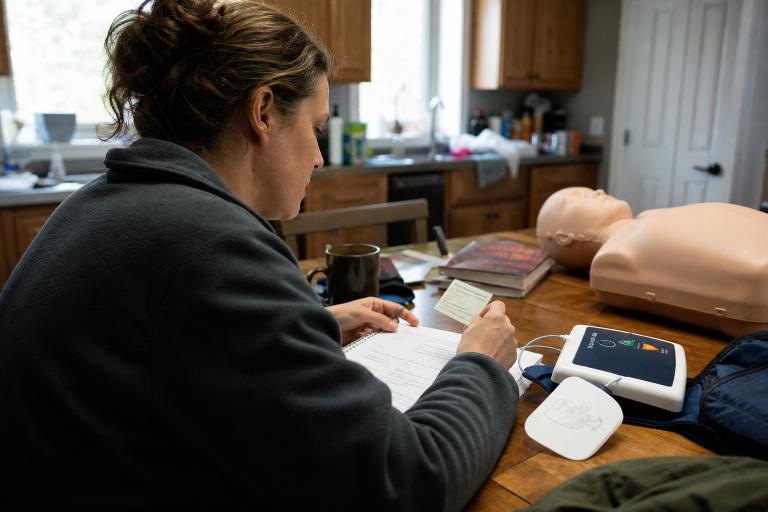
- Use a proper training manikin for physical rehearsal, not another person.
What Employers and State Rules May Require
Requirements can vary substantially by occupation, location, employer policy, and licensing board. General community CPR training is not always the same as BLS training for healthcare professionals or trained responders. In some settings, employers must ensure designated first-aid providers maintain current first-aid and CPR certifications, as required by OSHA.
Before enrolling, ask whether the course must include AED instruction, First Aid, an in-person skills check, a named certificate, or a specific provider approval. Confirm whether the credential must remain valid for a particular period after your start date or license renewal date.
What to Do if a Card Has Expired
An expired card is a reason to act promptly, not to panic. Do not assume there is a universal grace period. Contact the employer, school, or licensing authority, ask whether a renewal course is still allowed, and confirm whether a full class is needed instead. Once completed, save the updated credential digitally and keep a printed copy if your workplace requests one.
Common Renewal Mistakes to Avoid
- Waiting until the final week before expiration.
- Registering before checking the employer or licensing requirements.
- Confusing CPR/AED training with BLS, ACLS, or PALS.
- Assuming every online credential is accepted in every setting.
- Overlooking AED, choking-response, or First Aid components.
- Failing to retain proof of completion.
- Treating certification as a substitute for periodic review and practice.
Frequently Asked Questions
How often should CPR skills be refreshed?
Formal renewal periods depend on the provider and the requirement for your role. Many course completion cards are issued for two years, but you should verify the specific policy that applies to you. Brief reviews and safe practice between formal courses can support retention.
Is online CPR training accepted everywhere?
No. Some organizations accept online learning for certain purposes, while others require an observed, hands-on skills demonstration. Always confirm acceptance before paying for a course.
What is the difference between CPR and BLS?
CPR is a core emergency response skill. BLS generally includes CPR plus broader skills, team-based response concepts, and healthcare-focused scenarios for professionals and trained responders.
Does CPR training include AED instruction?
Many CPR courses include AED use, but course content varies. Check the description to make sure AED and choking response topics are included if you need them.
Conclusion
Keeping CPR skills ready requires more than checking an expiration date. Review your current status, confirm the rules that apply to your role, choose a learning format that meets those rules, and schedule regular refreshers. A valid credential and repeated, safe practice can help you feel more prepared to respond when every moment matters.